- Hits: 2215
The Burma Human Rights Network has collected accounts from locals in Northern Rakhine State regarding recent events in Buthidaung, a majority Muslim Rohingya township in close proximity to Maungdaw -- where human rights violations were reported regularly since October of 2016. According to Rohingya sources in Northern Rakhine State, Burmese Security Forces began raids early in the morning on January 4th, which Burmese state and independent media have also confirmed. The BHRN has since heard reports of sweeping arbitrary arrests, beatings and torture of Rohingya who were detained and the reported abduction of Rohingya women by Burmese security forces. Worryingly there are unconfirmed reports that the Security forces overtly requested women from different households to be kept as “sex slaves”. The presence of security forces has remained in place up until today with reports emerging of continued raids on Rohingya villages involving extortion and detention of Rohingya villagers.
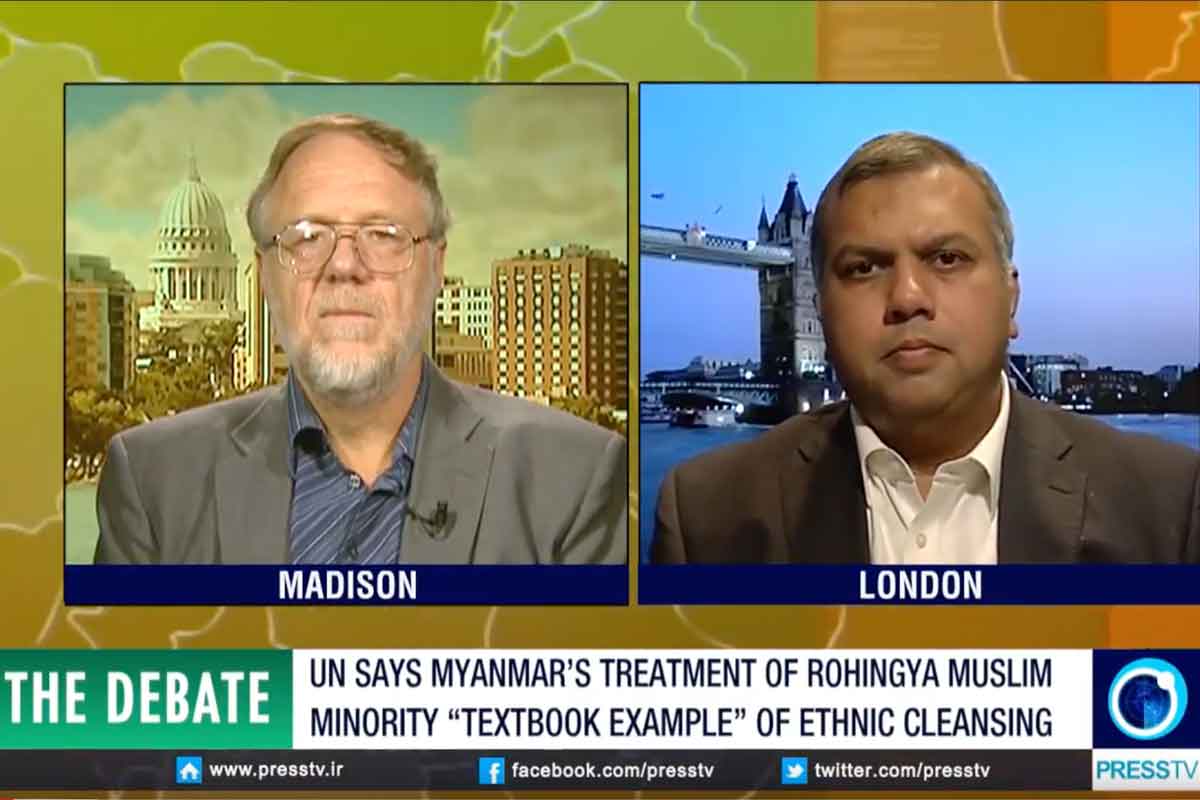
“The Burmese army has been committing Crimes Against Humanity and ethnic cleansing against the Rohingya population since 1978. Disturbingly the current Burmese government is now concealing these crimes and collaborating with the army while the international community has allowed Burma to continually make many excuses. Their latest excuse is that Burma is under Democratic reforms and Burma needs time and space to resolve their issues internally. In doing this international community is, in reality, allowing Burma to eliminate the Rohingya population from the country. Delaying from taking effective action will cost dearly for the already severely persecuted Rohingya population. The international community must urgently consider establishing a United Nation Commission of Inquiry,” Said Kyaw Win, Executive Director of the Burma Human Rights Network.
On January 4th security forces were said to have surrounded Maung Gyi, Taung and Darbine Saya villages and moved in claiming they were searching for militants from the al Yaqeen group. Local sources said that a few days prior to the raids some local men were returning from Bangladesh, where they worked as day laborers, and they had a disagreement with village authorities that they said were trying to extort money from them. The disagreement reportedly resulted in accusations the men were involved with the militants. Reports indicated that men in these villagers were told to come out of their homes and were then gathered and beaten. Sources say that several men were detained, including a primary school teacher. Multiple unrelated people from Da Paing Saya with the same name were also arrested and later all but one were released, indicating authorities may have been searching for a particular person but had little information about him. In Maung Gyi Taung village several men were detained and released but four men remained in custody and their arrest and detention was confirmed by the State Counsellor’s Information Committee’s Facebook page. The men were said to have been found with crude homemade guns, which were shown in a photograph in the same post. Villagers familiar with the men have argued they were not militants and have no ties to any militant group. Another villager suggested to BHRN that the areas in Buthidaung where the army raided were very unlikely places for militants to be hiding as they are too close to military barracks.
At this same time there were many account of soldiers requesting women from villagers who were said to have refused. The BHRN has obtained the names of two women believed to have been raped in their homes in Maung Gyi, Taung on the 8th of January. Local sources, independent of each other, have corroborated the names of the victims. The BHRN has not been able to contact these women or substantiate these claims as contact into Maungdaw has been severely limited with residents in the most affected areas turning off and hiding their phones while security forces are present. However, given their serious nature of the allegations we believe further investigation is desperately needed and will coordinate within the best of our ability with INGOs and Journalists who are able to access these areas.
The situation appeared to ease in the following weeks but villagers said on January 16th the body of a 60 year old Imam was returned to his family following his death in custody after being arrested on January 13th. The death was dismissed as a complication of asthma, which has recently been given as cause of death by authorities of other Rohingya men who died in similar circumstances in Maungdaw as well.
As of January 30th reports continue to emerge of security forces raiding, beating and extorting money from Rohingya in Buthidaung. Unconfirmed video has also emerged appearing to show Myanmar soldiers stealing chickens and ducks from Rohingya property, which they have been widely accused of doing for the past several months.
Notes for Editors
Background on Current Situation:
Several Townships in Northern Rakhine State have been under curfew with a heavy presence of security forces since October 9th, when a Militant group ambushed 3 police border posts and killed several officers. Since October small skirmishes have continued to occur in the Township of Maungdaw and Burmese Security forces have been accused of several severe human rights violations during this time. While Buthidaung is in close proximity to Maungdaw, no militant activity has been known to take place there.
Background on the Burma Human Rights Network (BHRN)
Burma Human Rights Network (BHRN) works for human rights, minority rights and religious freedom in Burma. BHRN has played a crucial role advocating for human rights and religious freedom with politicians and world leaders.
Media Enquiries
Members of The Burma Human Rights Network (BHRN) are available for comment and interview.
Please contact:
Kyaw Win
Executive Director
Burma Human Rights Network (BHRN)
E:This email address is being protected from spambots. You need JavaScript enabled to view it.
T: +44(0) 740 345 2378
BHRN PRESS RELEASE PDF

- Hits: 1603
The Burma Human Rights Network welcomes efforts by the Organization of Islamic Cooperation and the Government of Malaysia and Prime Minister Datuk Seri Najib Razak who are holding an emergency meeting of the OIC Foreign Ministers to address the dire situation within Burma’s Northern Rakhine State. We have taken great hope from the efforts the Prime Minister has made over the past few months and wish to convey our belief that his efforts, along with those of other ASEAN nations, have truly helped reduce the suffering of the Rohingya as pressure seems to have slowed the indiscriminate attacks of the Burmese Security Forces against the Rohingya population in Burma’s Northern Rakhine State.
The situation in the north of Myanmar’s Rakhine State has rapidly deteriorated since October. A violent and disproportionate crackdown has been unleashed on the civilian population in response to attacks on three Border Guard Police posts on October 9th and a few small skirmishes in the months that followed. Since the attacks on the police posts our organization has collected evidence of what we believe should be investigated as Crimes Against Humanity, as defined by the United Nations, carried out by Burmese Security Forces. These crimes, according to witnesses, have included rape, gang rape, sexual humiliation, murder, extra-judicial assassination, destruction of civilian property, forced displacement, torture, killing of suspects in custody and the intentional destruction of civilian food and livestock. It is clearly long past time for the world to act.
“The OIC should support the establishment of a UN Commission of Inquiry into the totality of the situation in Rakhine State, including violence and human rights violations since 2012. We would like to urge the OIC to work with other countries to ensure that as long as human rights violations continue, the UN General Assembly Resolution on Burma will once again be tabled every year,” said BHRN Executive Director, Kyaw Win.We believe an impartial inquiry must be conducted from within the international community. We ask that the OIC and its member states offer their official support to the establishment of a United Nations Commission of Inquiry into the events that have taken place in Northern Rakhine State since October 9th, 2016. We ask also that the OIC use its influence to help ensure that this Commission will be included in the next resolution on Burma at the Human Rights Council.
We believe an impartial inquiry must be conducted from within the international community. We ask that the OIC and its member states offer their official support to the establishment of a United Nations Commission of Inquiry into the events that have taken place in Northern Rakhine State since October 9th, 2016. We ask also that the OIC use its influence to help ensure that this Commission will be included in the next resolution on Burma at the Human Rights Council.
While Aung San Suu Kyi established the Rakhine Advisory Commission chaired by Kofi Anan, its mandate focuses largely on poverty, assurance of basic rights and the promotion of ‘trust, harmony and reconciliation.” The existing commission does not have the mandate required by the situation in Northern Rakhine State to investigate what many believe may amount to Crimes Against Humanity by the Burmese Security Forces. Such a commission should assess the totality of the human rights violations against both Muslims and Buddhists in Rakhine State since 2012, the Identity of the perpetrators, who the instigators of violence were, and a thorough assessment of which laws discriminate against the Rohingya.
Going forward it is difficult to see a peaceful resolution in Rakhine State but we believe an impartial independent investigation has the greatest chance of uncovering the truth, absolving the innocent, addressing grievances of marginalized communities and creating equitable conditions for those living in Rakhine State to move towards a more peaceful future. It is our hope that the OIC can wield its great power and influence to help initiate this process and help bring about transparency, equity and hope for those who’ve too long lived with none.
Notes for Editors
Background on Current Situation:
On the 19th of January, 2017, the Organization of Islamic Cooperation held an emergency meeting to address the situation in Northern Rakhine State as reports of human rights abuses by Burmese Security forces continued to emerge and tens of thousands of Rohingya now displaced, homeless and without food or aid.
Background on the Burma Human Rights Network (BHRN)
Burma Human Rights Network (BHRN) works for human rights, minority rights and religious freedom in Burma. BHRN has played a crucial role advocating for human rights and religious freedom with politicians and world leaders.
Media Enquiries
Members of The Burma Human Rights Network (BHRN) are available for comment and interview.
Please contact:
Kyaw Win
Executive Director
Burma Human Rights Network (BHRN)
E:This email address is being protected from spambots. You need JavaScript enabled to view it.
T: +44(0) 740 345 2378
BHRN PRESS RELEASE PDF
- Hits: 1803
The Burma Human Rights Network (BHRN) has conducted several interviews with Rohingya who fled Maungdaw following the crackdown by Myanmar forces. Those interviewed said they witnessed the Military shooting live ammunition into fleeing crowds – resulting in believed casualties, arson committed by the military against Rohingya properties, arbitrary arrests and looting by security forces of Rohingya possessions, including food and aid. Human Rights organizations as well as international media have similarly uncovered several accounts of extrajudicial assassinations, gang rape, mass arrests, arbitrary detention and death under suspicious circumstances of Rohingya in custody. The BHRN also condemns recent news of Myanmar police preparing to arm and train local non-Muslims in northern Rakhine state, and remains incredibly concerned by reports of human rights violations by police and military in Maungdaw and Buthidaung townships following an attack by militants on Border Guard Police posts on October 9th.
“Arbitrary killings, the use of rape as a weapon in war and the destroying of homes are regular practices of the Burmese army. It has been well documented and reported by other ethnic minority rights groups in the country, including among the Kachin, Chin, Shan and Karen. The lives and livelihood of the Rohingya population in Burma are increasingly in danger and at this point the international community should consider pragmatic measures to ensure their safety and security in Burma,” said Kyaw Win, Executive Director of BHRN.
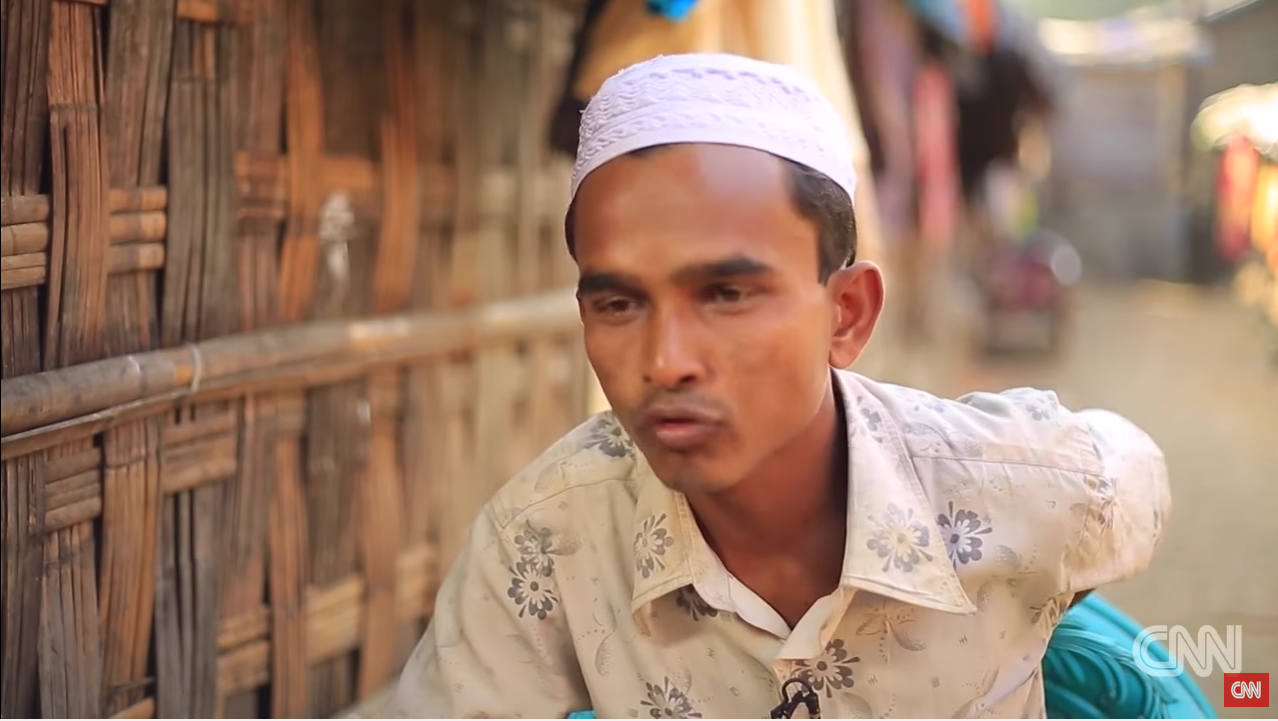
The BHRN has interviewed several Rohingya civilians who fled from Kyet Yoe Pyin (Kiyari Parang) and Ngakhuya villages and managed to take shelter in Bangladesh. They described severe abuses by the Myanmar Military and Police in their respective villages.
In Kyet Yoe Pyin witnesses described a time shortly after the October 9th incident where the Military arrived in the village after claiming to have had their way blocked by trees downed across the road, which they blamed the villagers for placing in their way. They said the incident resulted in sweeping arbitrary arrests. Witnesses said in one instance a crowd ran away from the military, and the military opened fire on them. One man said he saw nine people shot at this time. Another man said he was shot in the incident, and showed a wound on his thigh indicating where he had been hit. Witnesses said at another point the military began firing in the air to scare all the villagers away, and afterwards they saw the military looting houses and then many houses on fire. One man claimed to have to seen the military burning homes with petrol, while most said they had fled and were too far away to see how the fires had started, but said no one else was left to have set the houses on fires but the military.
In Ngakhuya village residents described arbitrary arrests of villagers, particularly elders with standing in the community. All witnesses interviewed by BHRN from Ngakhuya said they witnessed looting of houses by Myanmar soldiers and Police. In some cases they said that this was done coordination with Rakhine civilians, which if true indicates an intentional effort to escalate ethnic and religious tensions between Rakhine and Rohingya in Maungdaw. The villagers said once food and aid had been looted they finally felt they had to flee to Bangladesh to survive.
Late in October, a delegation led by Rakhine chief minister U Nyi Pu and the Number 1 Border Guard Police Colonel, Thu Ra San Lwin visited several villages in northern Rakhine and said that the authorities will arm the local youth so they can defend themselves against ‘terrorists’.The BHRN believes that the arming of civilian vigilante groups to combat real or imagined threats in northern Rakhine State can only lead to an escalation of violence, and create conditions for sectarian riots similar or worse than those witnessed by the region in 2012. In the chaos it is understandable that all citizens wish to feel safe and protected, but this is the responsibility of the police and military, who must do so while obeying international law. To arm one group of citizens during a time of tension with another is an unprecedented step that may easily result in mob attacks, mass killings, and widespread anti-Muslim riots. The BHRN has not read any reports of attacks on Rakhine citizens since the crisis began on October 9th, and efforts to draw ethnic Rakhine into the conflict at a time of military occupation are extremely questionable in judgment and intention.
The BHRN calls on the Myanmar Government to ensure human rights for all citizens in Maungdaw and investigate all reported violations. The Myanmar Government must allow full access to NGO’s and Media to ensure transparency, that further violations do not occur and that civilians trapped in Maungdaw have complete access to all available aid. .The international community has a responsibility to ensure assistance is given to facilitate all humanitarian needs, and must place appropriate pressure on the Myanmar Government and Military to ensure they follow international law. Those found in violation should be considered candidates for targeted sanctions and any potential or ongoing weapons sales to the country should be reconsidered until they are fully compliant.
Notes for Editors
Background on current situation:
On October 9th three Border Guard Police posts near the Myanmar-Bangladesh border were overrun by a group of militants believed to be ethnic Rohingya, a marginalized Muslim ethnic group in western Myanmar. Nine police officers were killed in the attack. In response the Military moved to Maungdaw, near where the attack happened. The subsequent crackdown on the city has been especially harsh.
Background on the Burma Human Rights Network (BHRN)
Burma Human Rights Network (BHRN) works for human rights, minority rights and religious freedom in Burma. BHRN has played a crucial role advocating for human rights and religious freedom with politicians and world leaders.
International Law:
Rape, murder, torture, forced expulsion and other violations the Myanmar Army has been accused of are considered Crimes Against Humanity and in clear violation of Rome Statute at Article 7(1).
Media Enquiries
Members of The Burma Human Rights Network (BHRN) are available for comment and interview.
Please contact:
Kyaw Win
Executive Director
Burma Human Rights Network (BHRN)
E:This email address is being protected from spambots. You need JavaScript enabled to view it.
T: +44(0) 740 345 2378
BHRN PRESS RELEASE PDF