
- Hits: 174
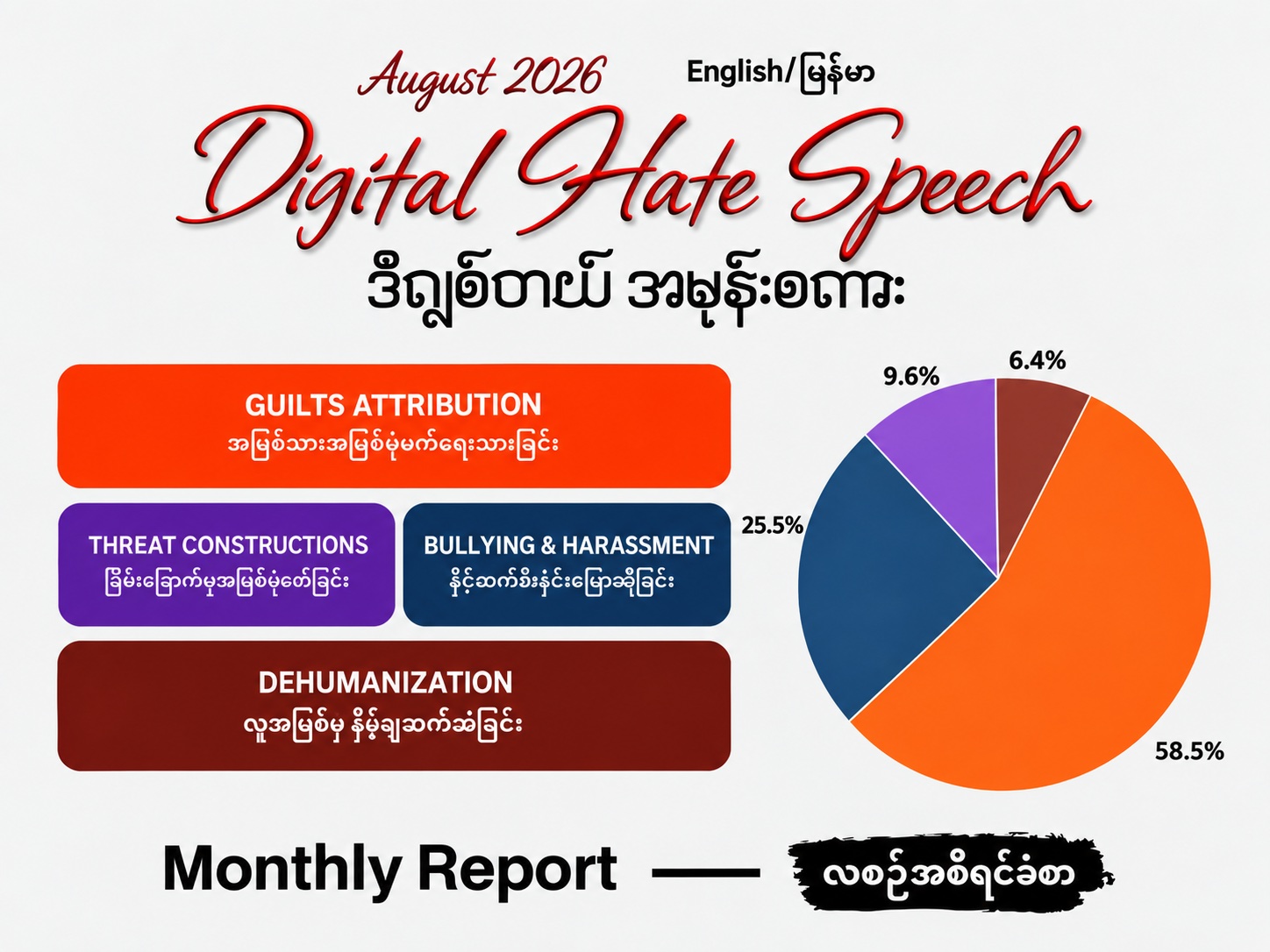
This report presents BHRN’s monitoring of hate speech, fabricated content and misinformation circulating on social media during August 2026. The monitoring covered 3 Facebook groups, 2 Facebook pages, 13 Facebook accounts, 24 Telegram channels and 24 TikTok accounts.
A total of 103 cases were documented during the month. The findings show that Muslims and Rohingya were among the principal targets, with recurring narratives portraying them as security threats, “illegal” residents, outsiders and a danger to wider society. Hate speech targeting Christians and women was also documented.
The report further highlights an increase in hate speech concerning Muslim places of worship and religious schools, as well as misinformation linking Rohingya communities to armed conflict and national security threats. It examines the main narratives, targeted groups, commonly used terms, platform distribution and examples recorded during the monitoring period.
ယခုအစီရင်ခံစာသည် ၂၀၂၆ ခုနှစ် ဩဂုတ်လအတွင်း လူမှုမီဒီယာများပေါ်တွင် ဖြန့်ဝေခဲ့သည့် အမုန်းစကားများ၊ သတင်းတုနှင့် သတင်းမှားများကို BHRN မှ စောင့်ကြည့်လေ့လာထားသည့် တွေ့ရှိချက်များကို တင်ပြထားခြင်းဖြစ်သည်။ စောင့်ကြည့်လေ့လာမှုတွင် Facebook Group ၃ ခု၊ Facebook Page ၂ ခု၊ Facebook Account ၁၃ ခု၊ Telegram Channel ၂၄ ခုနှင့် TikTok Account ၂၄ ခု ပါဝင်ခဲ့သည်။
ဩဂုတ်လအတွင်း အမုန်းစကား၊ သတင်းတုနှင့် သတင်းမှား စုစုပေါင်း ၁၀၃ ခု ကို မှတ်တမ်းတင်ခဲ့သည်။ တွေ့ရှိချက်များအရ မွတ်စလင်များနှင့် ရိုဟင်ဂျာများသည် အဓိကပစ်မှတ်များထဲတွင် ပါဝင်ခဲ့ပြီး၊ ၎င်းတို့ကို နိုင်ငံလုံခြုံရေးအတွက် ခြိမ်းခြောက်သူများ၊ “တရားမဝင်” နေထိုင်သူများ၊ နိုင်ငံခြားမှ ဝင်ရောက်လာသူများနှင့် လူ့အဖွဲ့အစည်းအတွက် အန္တရာယ်ရှိသူများအဖြစ် ပုံဖော်သည့် ဇာတ်ကြောင်းများကို ထပ်ခါတလဲလဲ တွေ့ရှိခဲ့သည်။ ခရစ်ယာန်များနှင့် အမျိုးသမီးများကို ပစ်မှတ်ထားသည့် အမုန်းစကားများကိုလည်း မှတ်တမ်းတင်ခဲ့သည်။
အစီရင်ခံစာတွင် မွတ်စလင်များ၏ ဝတ်ပြုရာနေရာများနှင့် ဘာသာရေးစာသင်ကျောင်းများကို ပစ်မှတ်ထားသည့် အမုန်းစကားများ ပိုမိုများပြားလာမှု၊ ရိုဟင်ဂျာများကို လက်နက်ကိုင်ပဋိပက္ခနှင့် နိုင်ငံလုံခြုံရေး ခြိမ်းခြောက်မှုများနှင့် ချိတ်ဆက်ဖော်ပြသည့် သတင်းမှားများကိုလည်း ဆန်းစစ်ထားသည်။ ထို့အပြင် အဓိကဇာတ်ကြောင်းများ၊ ပစ်မှတ်ထားခံရသည့် အုပ်စုများ၊ အသုံးများသည့် စကားလုံးများ၊ ပလက်ဖောင်းအလိုက် ဖြန့်ဝေမှုနှင့် မှတ်တမ်းတင်ထားသည့် ဖြစ်ရပ်နမူနာများကို ဖော်ပြထားသည်။
Read more: August 2026 - Digital Hate Monthly Report (Eng -Myan)
- Hits: 310

This report was compiled by monitoring online and print media used by the military junta and its supporters to disseminate hate speech. During July 2026, BHRN conducted a monitoring exercise with the following results:
- Facebook: monitored 3 groups, one page, and 13 accounts; identified 68 incidents of hate speech.
- Telegram: Monitored 24 Channels; identified 28 incidents of hate speech.
- TikTok: Monitored 24 Accounts; identified 18 incidents of hate speech.
- Print Media: Monitored 2 newspapers and 1 journal.
In total, 114 instances of misinformation/disinformation and hate speech were documented during May. The findings are presented using tables, graphs, and clear descriptive text. This report further analyses the root causes and impacts of hate speech and offers recommendations for prevention and mitigation. Due to significant limitations in achieving comprehensive coverage of the entire social media landscape, there may be undocumented incidents of hate speech that fall outside the scope of this report.
အမုန်းစကားများ ဖြန့်ဝေရန်အတွက် စစ်အစိုးရနှင့် ထောက်ခံသူများ အသုံးပြုနေသည့် အွန်လိုင်းနှင့် ပုံနှိပ်မီဒီယာတို့ကို စောင့်ကြည့်ခြင်းဖြင့် ဤအစီရင်ခံစာကို စုစည်းထားပါသည်။ အထူးသဖြင့် BHRN သည် ၂၀၂၆ခုနှစ် ဇူလိုင်လ တွင် Facebook group ၃ ခု Page ၁ ခု နှင့် Facebook Account ၁၃ ခု စောင့်ကြည့်မှုတွင် အမုန်းစကားတွေ့ရှိမှု ( ၆၈ ) ခု ၊ Telegram Channels ၂၄ ခု မှ အမုန်းစကားတွေ့ရှိ မှု ( ၂၈ ) ခု ၊ Tik Tok account ၂၄ ခုစောင့်ကြည့်ရာတွင် အမုန်းစကားတွေ့ရှိမှု ( ၁၈ ) ခုကို တွေ့ရှိခဲ့ရသည်။ ပုံနှိပ်မီဒီယာ စောင့်ကြည့်မှု အနေဖြင့် သတင်းစာ ၂ စောင် နှင့် ဂျာနယ် ၁ စောင် တို့ကို စောင့်ကြည့်ခဲ့ပါသည်။
ဇူလိုင်လအတွင်း အမုန်းစကားလေ့လာစောင့်ကြည့်မှုတွင် သတင်းတုသတင်းမှားများ၊ အမုန်းစကားဖြန့်ဝေမှု ( ၁၁၄ ) ခုကို မှတ်တမ်းတင်ခဲ့သည်။ ရလဒ်များကို တင်ပြရာတွင် သုတေသနရလဒ်များကို ဇယားများ၊ ဂရပ်များနှင့် ရှင်းလင်းသော စာသားများဖြင့် တင်ပြမည်ဖြစ် သည်။ အမုန်းစကားများ၏ အဓိကအကြောင်းရင်းများ၊ သက်ရောက်မှုများနှင့် ကာကွယ်တားဆီးရန် နည်းလမ်းများကို အကြံပြုချက်များနှင့်အတူ တင်ပြမည်ဖြစ်သည်။ ဆိုရှယ်မီဒီယာတခုလုံးကို လွှမ်းခြုံနိုင်သည့် လေ့လာစောင့်ကြည့်မှုမျိုးကို လုပ်ဆောင်ရန်အတွက် အကန့်သတ်များစွာရှိသဖြင့် မှတ်တမ်းမတင်နိုင်သည့် အမုန်းစကားဖြစ်စဉ်များလည်း ရှိနိုင်ပါသည်။
Read more: July 2026 - Digital Hate Monthly Report (Eng -Myan)
- Hits: 306
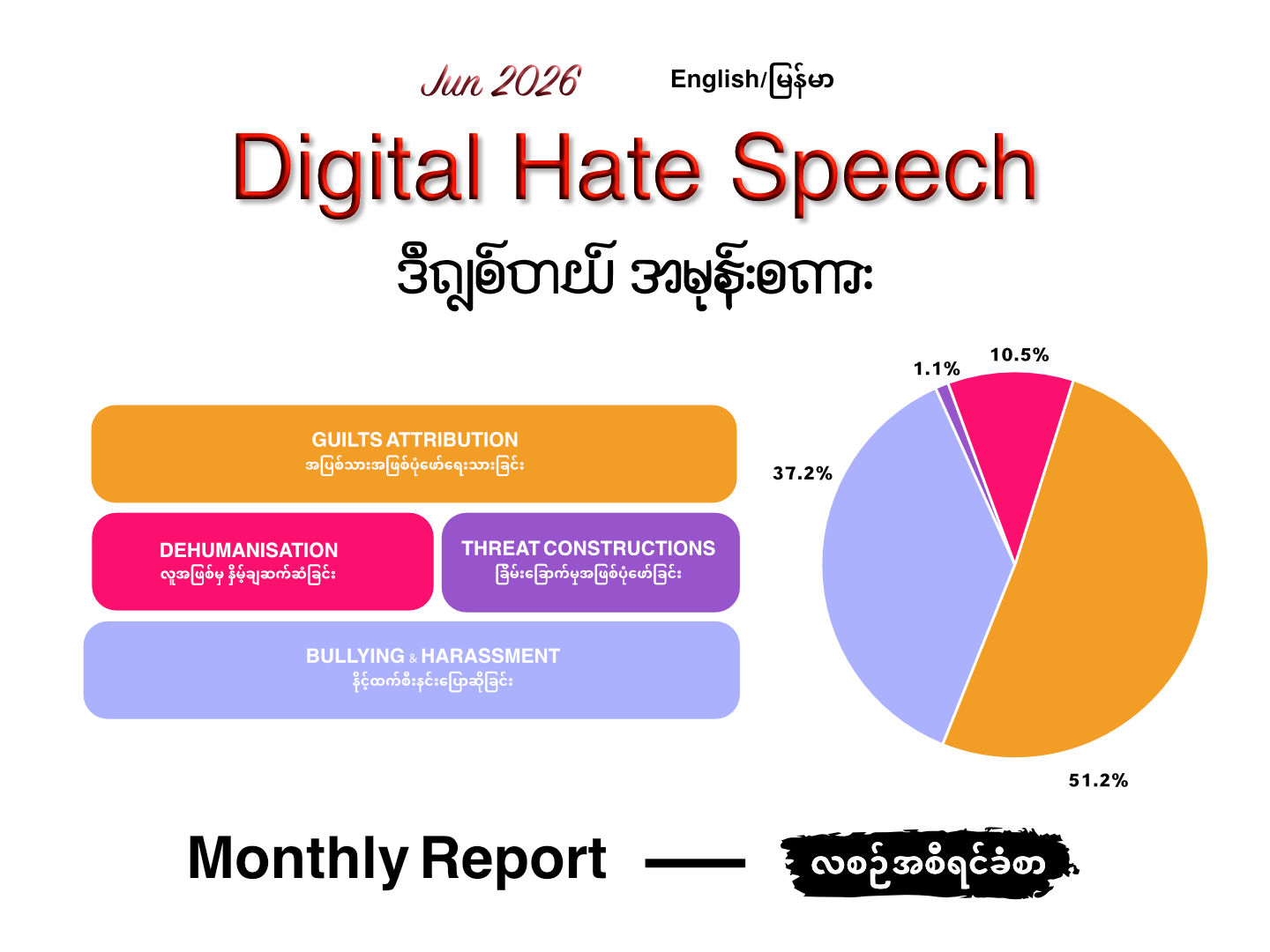
- Facebook: monitored 3 groups, one page, and 13 accounts; identified 40 incidents of hate speech.
- Telegram: Monitored 24 Channels; identified 42 incidents of hate speech.
- TikTok: Monitored 24 Accounts; identified 16 incidents of hate speech.
- Print Media: Monitored 2 newspapers and 1 journal.
In total, 98 instances of misinformation/disinformation and hate speech were documented during May. The findings are presented using tables, graphs, and clear descriptive text. This report further analyses the root causes and impacts of hate speech and offers recommendations for prevention and mitigation. Due to significant limitations in achieving comprehensive coverage of the entire social media landscape, there may be undocumented incidents of hate speech that fall outside the scope of this report.
Read more: Jun 2026 - Digital Hate Monthly Report (Eng -Myan)
- Hits: 280
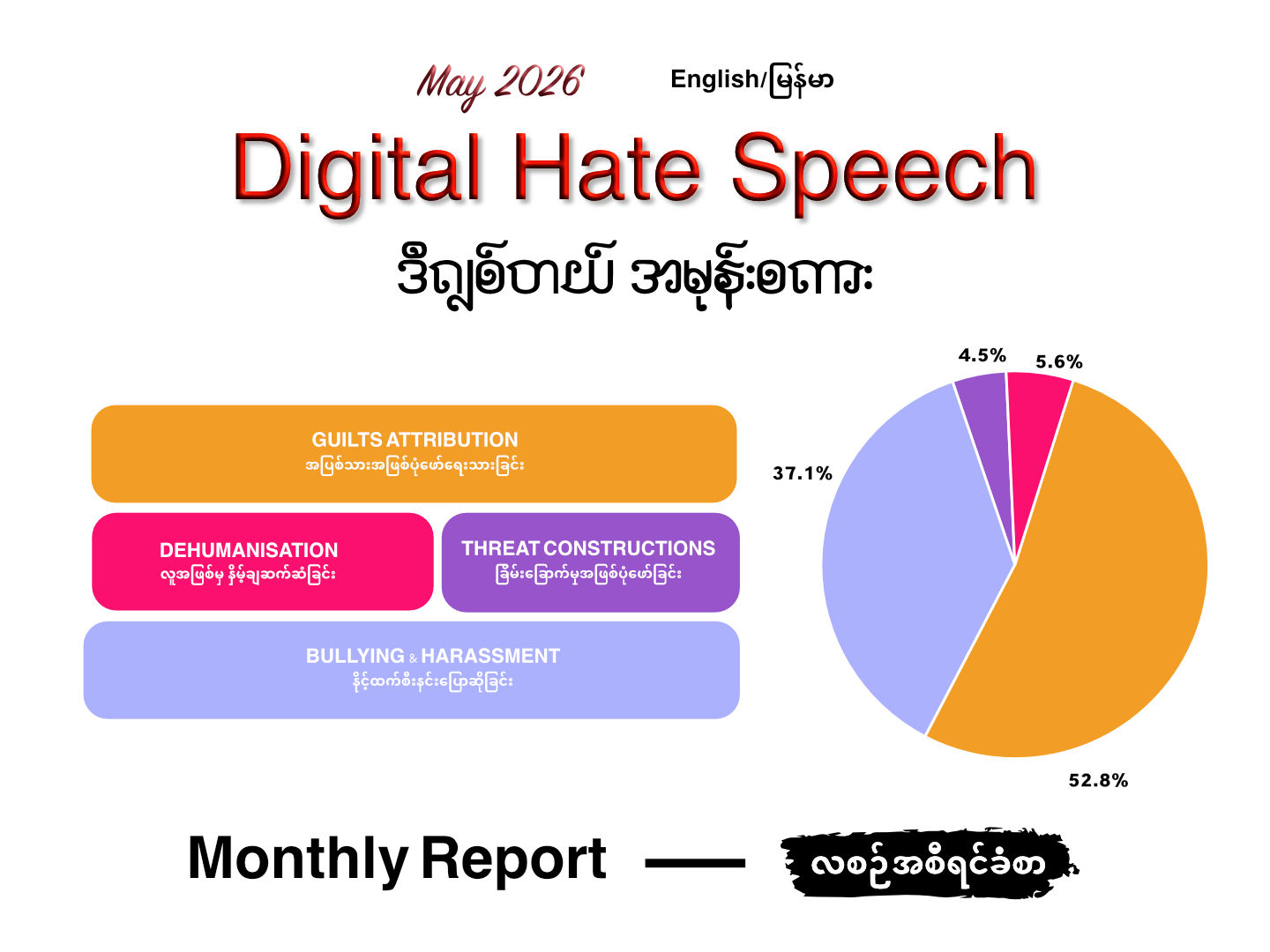
This report was compiled by monitoring online and print media used by the military junta and its supporters to disseminate hate speech. During May 2026, BHRN conducted a monitoring exercise with the following results:
- Facebook: monitored 3 groups, one page, and 13 accounts; identified 43 incidents of hate speech.
- Telegram: Monitored 24 Channels; identified 31 incidents of hate speech.
- TikTok: Monitored 24 Accounts; identified 26 incidents of hate speech.
- Print Media: Monitored 2 newspapers and 1 journal.
In total, 100 instances of misinformation/disinformation and hate speech were documented during May. The findings are presented using tables, graphs, and clear descriptive text. This report further analyses the root causes and impacts of hate speech and offers recommendations for prevention and mitigation. Due to significant limitations in achieving comprehensive coverage of the entire social media landscape, there may be undocumented incidents of hate speech that fall outside the scope of this report.
- Hits: 411
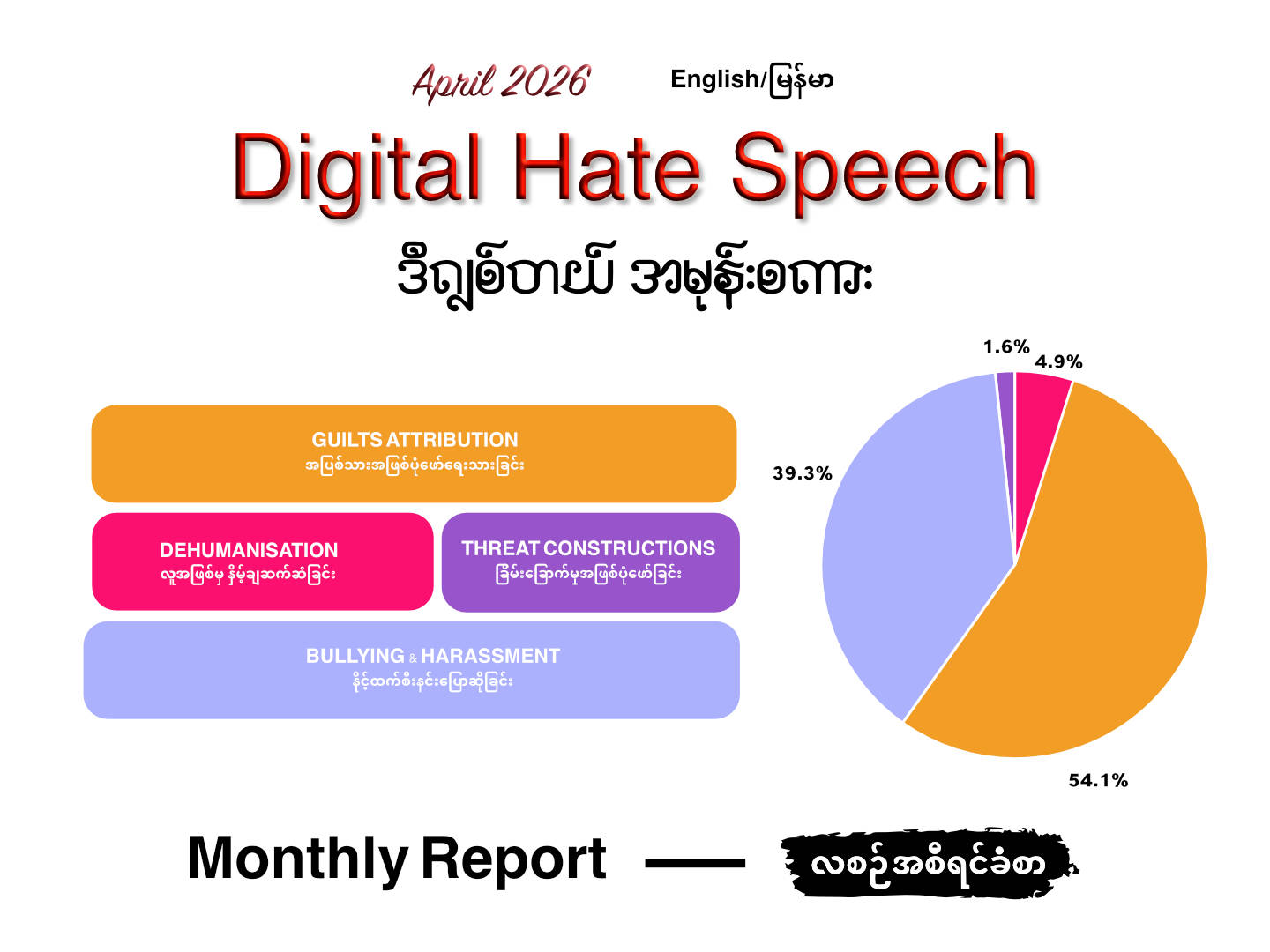
This report systematically monitors hate speech in Myanmar during April 2026. The aims of monitoring hate speech and misinformation are to document patterns of dissemination, identify vulnerable social groups, and assess potential impacts on specific groups.
This study examines the prevalence of incitement to violence and hate speech across major digital and social media platforms, including Facebook, TikTok, and Telegram. The spread of hate speech, misinformation and disinformation on social media and other various communication channels in Myanmar exacerbates ethnic, religious, and political tensions, fueling communal conflict.
By outlining the evolving trends of hate speech throughout April, in the current political, economic, and social landscape of Myanmar, this study aims to serve as a reference and actionable resource. It is intended for use by peacebuilders, conflict resolution practitioners, media professionals, policymakers, and Civil Society Organisations (CSOs).
Read more: April 2026 - Digital Hate Monthly Report (Eng -Myan)
- Hits: 84
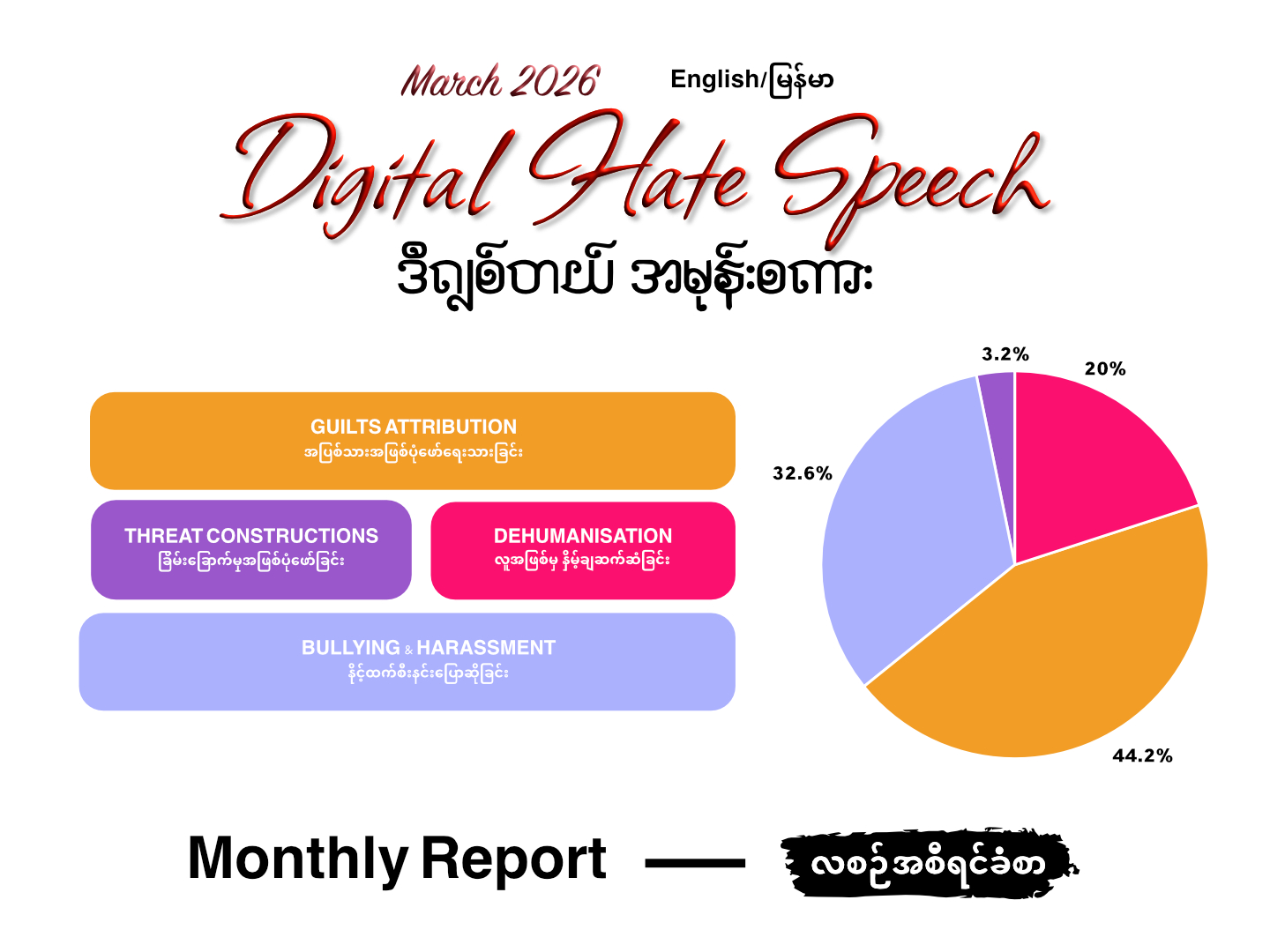
This report was compiled by monitoring online and print media used by the military junta and its supporters to disseminate hate speech. During March 2026, BHRN conducted a monitoring exercise with the following results:
- Facebook: monitored 3 groups, one page, and 13 accounts; identified 13 incidents of hate speech.
- Telegram: Monitored 24 Channels; identified 55 incidents of hate speech.
- TikTok: Monitored 24 Accounts; identified 22 incidents of hate speech.
- Print Media: Monitored 2 newspapers and 1 journal.
In total, 98 instances of misinformation/disinformation and hate speech were documented during March. The findings are presented using tables, graphs, and clear descriptive text. This report further analyses the root causes and impacts of hate speech, offering recommendations for prevention and mitigation. Due to significant limitations in achieving comprehensive coverage of the entire social media landscape, there may be undocumented incidents of hate speech that fall outside the scope of this report.
Read more: March 2026 - Digital Hate Monthly Report (Eng -Myan)