

NATIONAL VERIFICATION CARDS
– A BARRIER TO ROHINGYA REPATRIATION
RICHARD POTTER and KYAW WIN
Edited by Dr Thomas MacManus and Dr Ronan Lee
With assistance from Laura Disley

Burma Human Rights Network
Burma Human Rights Network (BHRN) is working for human rights, minority rights and religious freedom in Burma. We are passionate about human rights for everyone in Burma, which is fundamental to the proper functioning of a democratic society.
BHRN has been advocating international community for Burma human rights situation since 2012. We play a crucial role advocating for human rights and religious freedom with politicians and world leaders and we have earned a reputation for providing credible and reliable analysis.
Decision makers from the EU, UK, US, and UN turn towards us to provide them with reliable analysis about hate speech, religious freedom and minority rights in Burma. BHRN also provides training about how to document human rights abuses.
Freedom and Human Rights for All from Birth
BHRN is funded by the National Endowment for Democracy (NED), Unitarian Universalist Service Committee (UUSC), and private individuals. We have members across Burma including in Rakhine State and the Bangladesh border. We also have journalists and activists working in the field. Any information we receive is checked for credibility by experienced journalists in the organisation. We publish press releases and reports after our own investigations.
Kyaw Win – Founder & Executive Director of BHRN.
This email address is being protected from spambots. You need JavaScript enabled to view it.
T: +44(0) 740 345 2378
www.bhrn.org.uk
facebook.com/bhrnuk
@bhrnuk
© 2019 BURMA HUMAN RIGHTS NETWORK
Company number 09633796. Private Limited Company by guarantee without share capital use of ‘Limited’ exemption, incorporated on 11th June 2015.
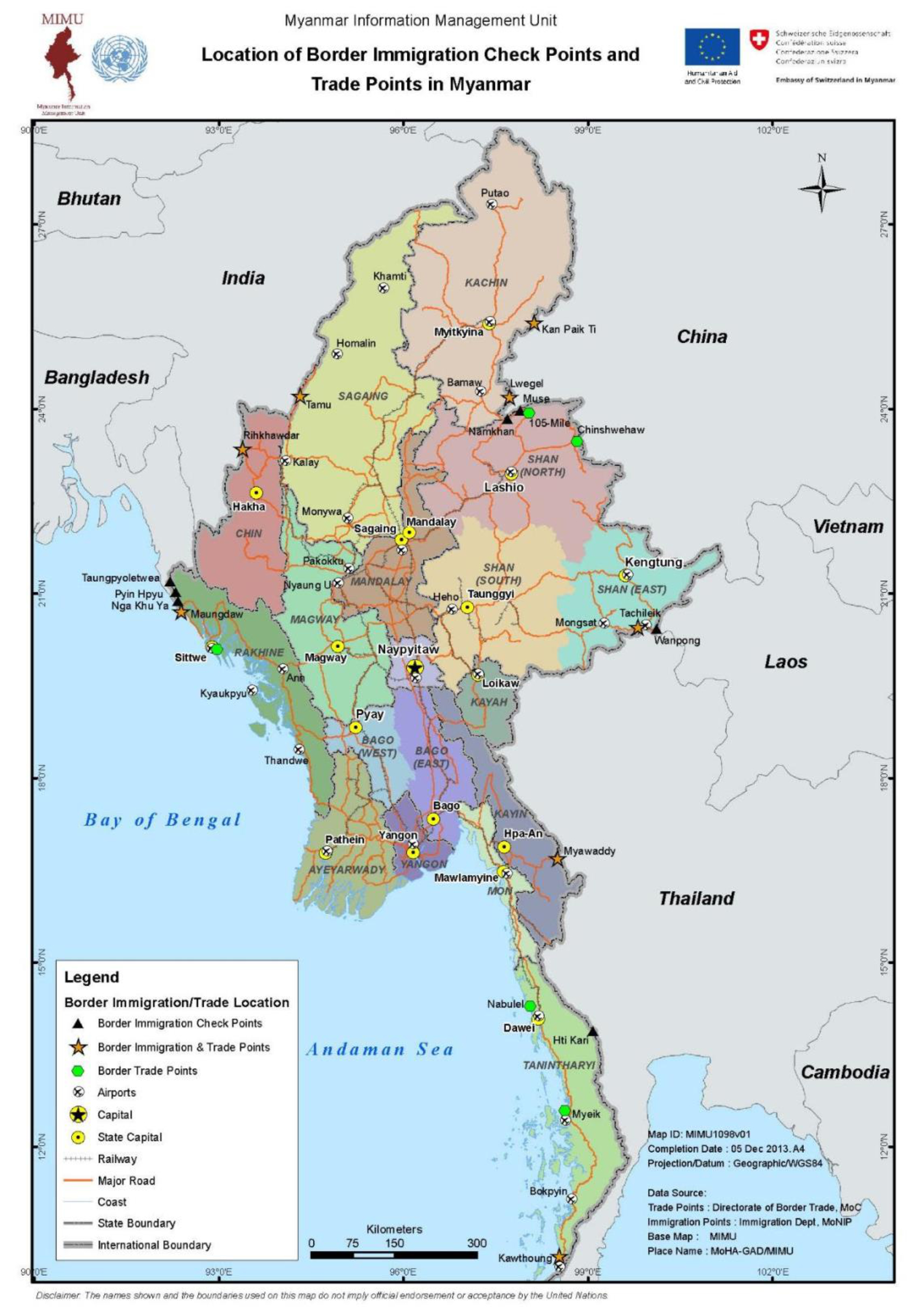
Map of Burma (Myanmar) 1
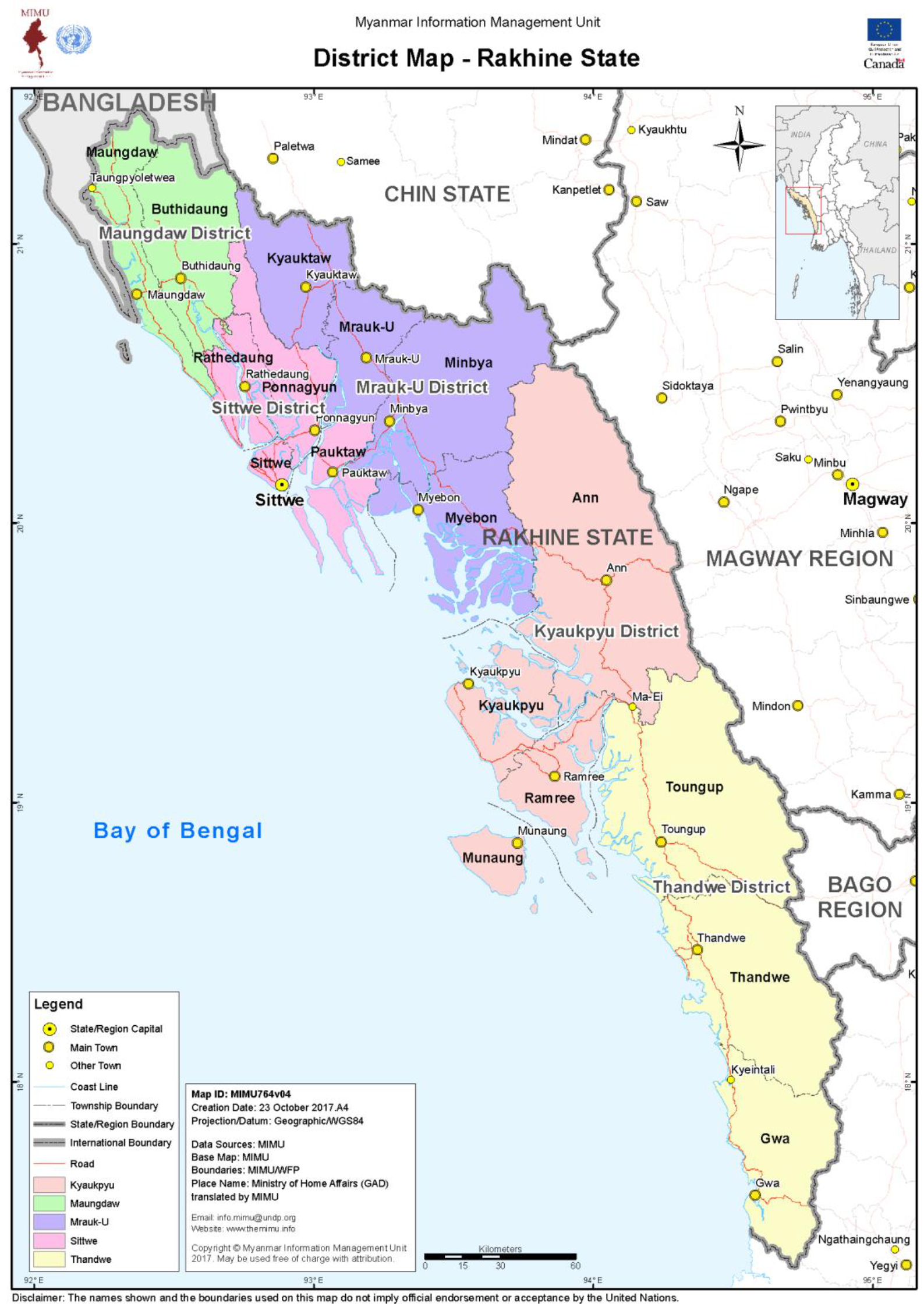
Map of Rakhine State 2
Executive Summary
- BHRN interviewed 18 Rohingyas – 5 from Buthidaung, 6 from Maungdaw and 7 from Ratheadaung about the extensive documentation the Burmese authorities have of Rohingya who lived in Northern Rakhine State since the 1990s as part of an annual survey conducted by authorities called “SweTinSit.”
- BHRN also interviewed 7 Rohingya still living inside of Burma, both with and without National Verification Cards, about how the identification system has affected their day to day lives and the pressures they were under to accept them.
- More than 700, 000 Rohingya have fled Myanmar since August 2017.
- More than 120, 000 Rohingya are confined to camps within Myanmar with no ability to freely leave.
Burma’s citizenship system is based on ethnicity and full rights accrue to members of an ethnic group accepted as having been resident in Burma prior to 1823. - Burma’s authorities refuse to accept evidence of Rohingya residency in Burma before 1823, or to acknowledge the legitimacy of the Rohingya identity and do not allow the Rohingya name to appear on identity documents.
- Rohingya were citizens of Burma since 1948, but the 1982 citizenship law led to a denial of their citizenship rights. In 1991, Rohingya received ‘White Cards’ as a temporary identification and then in 2015 ‘White Cards’ were abolished and the Rohingya received a paper receipt in return as an evidence when they handed them in to authorities.
- Burma’s authorities have made any Rohingya repatriation conditional on Rohingya participation in the National Verification Cards (NVC) scheme.
- NVCs deny Rohingya their right to self-identify as Rohingya.
- Current NVC holders in Rakhine State are still victims of human rights abuse including tight restrictions on their ability to freely travel.
- NVCs are a key instrument of Burmese’s apartheid system in Rakhine State.
- NVCs must not be a condition for Rohingya repatriation to their homes in Burma.
Methodology
The research for this report was conducted between February and June of 2019. 25 Rohingya civilians were interviewed in Rakhine State and refugee camps in Bangladesh. Interviews in Bangladesh were conducted in person by BHRN staff. Because of restrictions in Rakhine State, interviewees in Rakhine State were conducted over the phone or through written correspondence. BHRN focused on refugees and civilians who came from or currently live in affected areas, particularly Rathedaung, Buthidaung, Maungdaw and Sittwe Townships. The questions posed to the interviewees were open ended to avoid leading them to any particular conclusions. Refugees interviewed for this report were interviewed in Rohingya language and informed of the purpose of the interview. Most interviews in Rakhine State were conducted in Rohingya language except for those with community leaders or NGO workers who spoke fluent English. Interviewees who gave pictures for this report gave informed consent to do so. BHRN has declined to publish any photographs or personal details of persons still living inside of Burma to help ensure their safety.
Background
The Rohingya are a Muslim group from Burma’s Rakhine state. Despite centuries of connection to the Rakhine State area, the Rohingya’s heritage is disputed by Burma’s government and military. Rohingya have been denied Burmese citizenship and the rights and protections that accompany it.While there is compelling evidence the Rohingya were acknowledged as citizens of Burma during the democratic era prior to the 1962 military coup, since then the Rohingya’s citizenship standing has been consistently diminished. The 1982 Burma Citizenship Law has been weaponised by Burma’s authorities to deny legitimate Rohingya citizenship claims.
The 1982 Burma Citizenship Law has been weaponised by Burma’s authorities to deny legitimate Rohingya citizenship claims.
Burma’s citizenship laws are based on group rights associated with ethnicity, race, and religion, and key rights accrue to groups accepted as residents in the country before the start of the colonial era in 1823. While British chroniclers documented meetings with Rohingya (spelled Rooinga at that time3) in Burma during the pre-colonial era, Burma’s authorities do not accept the Rohingya as a group resident in Burma prior to the British colonial period. For the Rohingya, the consequences of this have been dire.
Today the Rohingya are collectively without Burmese citizenship rights and many Rohingya in Burma live in pitiable circumstances where they are forced to endure deplorable restrictions on travel, economic activity, marriage and pregnancy outside of marriage. The authorities’ strategy of separating Buddhist and Muslim communities means that, for the Rohingya, large parts of northern Rakhine state resemble an open prison, or worse. Nationalist politicians have called for the incarceration of Rakhine state’s Rohingya in concentration camps, and today as many as 120, 000 Rohingya are confined indefinitely to camps surrounded by armed guards4.
As well as violating Rohingya human rights, Burma’s authorities reject the Rohingya’s right to self-identify using the Rohingya name and instead seek to label the Rohingya as foreigners. Burma’s authorities refused, for instance, to enumerate any resident claiming their identity as Rohingya during the 2014 national census process.
The evidence from northern Rakhine State indicates that conditions for Rohingya there have not improved since the 2017 forced migration, and strict rights restrictions remain in place.
The widely reported Burmese military operation against the Rohingya during 2017 led to the forced migration of around 700, 000 Rohingya from Burma to Bangladesh. This military operation was characterised by crimes against humanity, war crimes and genocidal intent, and the forced migration it created brought the decades of human rights violations of the Rohingya by Burma’s government and military to the attention of the global mainstream. Around 300 Rohingya villages were utterly destroyed during this Burmese military action which the UN High Commissioner for Human Rights Zeid Ra’ad Al Hussein described as, “a textbook example of ethnic cleansing”. A Preliminary Examination by the chief prosecutor of the International Criminal Court into Burma’s 2017 forced migration of the Rohingya is on going.
Rohingya’s Kutupalong refugee camp is the world’s largest and there are now more than one million Rohingya living in temporary camps near Burma’s border with Bangladesh. Bangladesh is not a signatory to the 1951 Convention Relating to the Status of Refugees5, does not formally recognise Rohingya as refugees insisting their camps are temporary and has negotiated with Burma’s government for a Rohingya repatriation. Any repatriation would require the cooperation of the United Nations.
While Rohingya who are now resident in refugee camps have frequently made clear that Burma is their home and has been their people’s home for centuries, their repatriation is challenging because they understandably fear returning to face further violence and abuse from Burma’s unrepentant government and military.
The evidence from northern Rakhine State indicates that conditions for Rohingya there have not improved since the 2017 forced migration, and strict rights restrictions remain in place. Rohingya within Burma continue to have their lives restricted and they are denied rights to freedom of movement. Any return is made challenging because Burma’s authorities have blocked humanitarian actors, independent investigators, and foreign media from much of northern Rakhine State.
Rohingya repatriation is made difficult too because Burma’s authorities have remodelled many destroyed Rohingya villages, obliterating evidence of previous Rohingya residency there. In at least one instance, a former Rohingya village has been remodelled as a Burmese military base. Burma’s authorities have indicated they would require returning Rohingya to initially live in camps surrounded by barbed wire fences and armed guards. Considering 120, 000 of those Rohingya displaced in Rakhine State during 2012 are still confined to camps, there is a high potential returning Rohingya would face a similar fate. Further complicating Rohingya repatriation is ongoing military action in northern Rakhine State where the Burma military is in conflict with a mostly Buddhist ethnic armed militant group, the Arakan Army.
Yet, despite no noticeable improvement in conditions for Rohingya in Rakhine state, the Burmese government has made Rohingya repatriation conditional on Rohingya participation in the National Verification Card (NVC) process.
NVCs have a deeply problematic history in Burma. The authorities refuse to allow participants to self-identify as Rohingya on these identity cards. NVCs have historically recorded Rohingya using religious labels (Muslim/Islam) or foreign identifiers (Bengali). NVCs are widely regarded as another method by Burma’s authorities to diminish the citizenship standing and future rights of Rohingya by indicating they are foreigners. NVCs have played a key role in the apartheid system in Burma’s Rakhine state and have been described by researchers at the International State Crime Initiative as a, “tool of genocide”.6
Senior UN figures, including the Special Envoy of the United Nations Secretary-General on Myanmar, Christine Schraner Burgener, who discussed Rohingya repatriation with Burma’s government, have made statements supportive of NVCs for potential returnees. While the UN Special Envoy claimed to have received assurances from Burma’s authorities that NVCs would no longer include information about the holder’s religion or ethnicity, the use of NVCs is a serious concern and risks UN complicity in Burma’s policies of apartheid against the Rohingya.
The NVC, according to the Rakhine State Minister in conversations with Ms. Burgener, said, “NVC cards are not for foreigners, but for people residing in Myanmar.”7 While the reassurance is meant to be helpful, it also gives the implication that NVCs verify the identity of refugees returning to Myanmar. The secretary of the Arakan Nations Party, Tun Aung Kyaw, reiterated that the NVC should be used to identify who belongs saying, “ There are a lot of people who have entered Rakhine illegally, and if they are given NVCs and allowed to travel freely, it will be very dangerous.”8
SweTinSit (Map Record Check) Surveys

Photo 1 - A family’s collection of SweTinSit photos spanning several years from Buthidaung Township
The Burmese authorities have extensive records of the Rohingya who were living inside of Northern Rakhine State prior to the 2017 forced migration. Annual official surveys of Rohingya households throughout Northern Rakhine State have been undertaken since the 1990s. These surveys monitor who is living in each household and whether new children have been born since the previous survey. These surveys are known as “SweTinSit” or “Map Record Check” surveys.

Photo 2- A Collection of SweTinSit Photos from Buthidaung Township from a family currently in Bangladesh refugee camps.
The SweTinSit process includes photography of those living in the household and the collection of the names of the residents, the head of household and of the township/village they are living in. The surveys exert intense scrutiny of Rohingya Muslims living in Northern Rakhine State and this process was not administered on other ethnicities in the region. The SweTinSit process has established extensive records of Rohingya living in Northern Rakhine State and completely negates the need for any NVC process to accurately verify repatriated Rohingya’s identities.
BHRN interviewed 18 Rohingya refugees in Bangladesh who have copies of their photos from the SweTinSit process. They described the SweTinSit process as beginning during the early to mid-1990s and continuing until at least 2017, at which point they were forced to flee Burma. SweTinSit records specifically documented newborn children in households, while keeping track of other residents. This indicates Burma’s authorities possess extensive records of Rohingya born in Burma.

Photo 3 - A family’s SweTinSit photo from Maungdaw

Photo 4 - SweTinSit photo in Maungdaw Township from a family currently in Bangladeshi refugee camps.
In Maungdaw, BHRN spoke to six refugees from Kaosyit and Kyat Pryan Syit villages who said that they underwent the SweTinSit census every year between 1994 and 2017. They said the survey was conducted by the army, police and customs officials.
In Buthidaung, BHRN spoke to five refugees from Nagran Chaung and Tangana villages. They all recalled the surveys being collected by police, military and customs officials each year from 1995 to 2017.

Photo 5 - A family’s SweTinSit photo from Buthidaung Township
In Rathedaung, BHRN spoke to seven refugees from Attanroa village who said they were surveyed each year from 1996 to 2017 by police, military and customs officials.

Photo 6 - Photos from a family currently in Bangladesh refugee camps.

Photo 7 - Placard reads: Camp (22), Pryin Toung (Rathedaung) / Date 14.3.2016 / ATS No. 96 / (Name withheld) (F) (Name withheld)/ M(5) F (2) Total (7).
Many of those interviewed by BHRN had copies of their family’s SweTinSit photos. These photos include placards stating the name of the head of the household, the village name and the date of the photo.
These comprehensive records collected and held by Burma’s authorities are enough to adequately identify returning Rohingya and ensure they can be settled in their original villages. These records should also negate the need to create displacement camps or model villages for returnees whose original villages are easily verifiable. Similarly, the census process for Rohingya in and returning to Burma must be revisited to ensure they are accounted for under the same process as all other residents, without discrimination, additional fees, or prohibitive measures to prevent them from registering children in the country.
BHRN believes the real purpose of the latest NVC proposals is to further classify Rohingya as foreigners but to achieve this with the cooperation and legitimacy of the United Nations and its agencies.
In arguing for the implementation of the NVC, the Burmese authorities have attempted to convince the international community that they need another mechanism to record and know who a refugee is and should be allowed back in, but the SweTinSit records demonstrate that Burmese authorities already have such records. BHRN believes the real purpose of the latest NVC proposals is to further classify Rohingya as foreigners but to achieve this with the cooperation and legitimacy of the United Nations and its agencies.
Identity Records in Burma
Many Rohingya held Burmese citizenship uncontroversially from the time the country gained independence in 1948. However, the Rohingya’s citizenship situation changed markedly following Burma’s military coup of 1962 as their citizenship rights were incrementally removed from this time. While Burma’s 1982 Citizenship law is often described as having stripped the Rohingya of their citizenship, some Rohingya interviewed by BHRN recall having citizenship cards up until 1992 and as recently as 2010, U Shwe Maung, a Rohingya, was deemed eligible to stand for election and served as a member of Burma’s national Parliament. By 2015 he was deemed ineligible to stand and could not recontest his seat9.
In 1991 Burma began a process to replace trifold citizenship cards with new citizenship cards often called “Pink Cards”. In this process the Rohingya were given temporary registration cards known as “White Cards.”. While other ethnicities were processed for citizenship quickly at this time, the Rohingya’s experience was different. Fifteen years later, there was little evidence that Rohingya citizenship claims had even been considered and most Rohingya in Rakhine State relied on the temporary White Card identifications. In 2015, the government cancelled White Cards and this time a receipt was issued to Rohingya who surrendered their White Cards.
While these processes ultimately left Rohingya who had started with trifold citizenship cards holding just a receipt for their surrendered White Cards, the authorities did document those individuals from whom they removed identity documents. These processes, along with the extensive records which the Burmese authorities possess through the SweTinSit (Map Record Check) process, could be used to aid both repatriation and, if used sincerely, could easily verify the citizenship status of returnees without any need for the controversial NVC process.
In Burma, document verification is not necessarily a marker of discrimination and many residents have been subject to various verification processes. The important difference is that Rohingya claims are often simply not processed at all by the authorities. Rohingya overwhelmingly report their claims to citizenship simply do not get processed and their identity documents removed for verification purposes are generally not returned. Rohingya report having become reliant on increasingly tenuous temporary identification documents and without any of the legal protection citizenship rights – to which they are entitled – ought to provide.
Rohingya report having become reliant on increasingly tenuous temporary identification documents and without any of the legal protection citizenship rights – to which they are entitled – ought to provide.
In Rakhine State, where the overwhelming majority of temporary identification document holders are Rohingya, Burma’s authorities have taken advantage of the situation and placed a range of rights restrictions on holders of temporary identification documents. These rights restrictions include restrictions on travel (even between villages), marriage, pregnancy outside of marriage and economic activity, as well as stipulations on work and forced labour.
The Burma government’s possession of extensive documentation about Rohingya in Rakhine State, including the detailed SweTinSit surveys has not been raised by negotiating parties from the international community when discussing repatriation. It is a serious concern that despite the UN Special Envoy’s endorsement of NVCs as a precondition for repatriation, the Burmese government has not made any official changes to the NVC policy that would guarantee the changes mentioned by the UN Special Envoy.
While the UN Special Envoy stated that the NVC would be a step for the Rohingya towards citizenship and would help them to return home to Burma, there is little evidence from past practice that Burma’s government would allow this to happen. The UN Special Envoy might be sincere in her belief about NVCs but many Rohingya have lived through the experience of Burmese authorities’ use of identity documents like the NVC to downgrade their citizenship standing and deny them the citizenship and consequently the human rights they are entitled to. Furthermore, prominent political figures in Burma have already expressed their strong opposition to providing the Rohingya with a clear pathway to citizenship.
Many Rohingya temporarily resident outside of Burma also feel they have not been consulted in conversations about their own future and well-being and are frustrated that others negotiate on their behalf for compromises they do not want.
There is no need for a further verification process as Burma already has extensive records of Rohingya living in Northern Rakhine State. Burma has documented the presence of Rohingya living in Rakhine State who held various state identity cards for decades and has the ability to verify all returnees without the need to force the use of NVCs. The NVC process has been presented as a legitimate attempt by a sovereign state to monitor returnees and verify their identities but Burma’s authorities already possess extensive identity records, including photographs, of Rohingya. The SweTinSit data should render the NVC process redundant for information gathering.
Many Rohingya temporarily resident outside of Burma also feel they have not been consulted in conversations about their own future and well-being and are frustrated that others negotiate on their behalf for compromises they do not want.
Current NVC Proposals and Repatriation Attempts
The NVC card has long been rumoured to be a likely condition for the Rohingya to return to Burma. In November 2017, Bangladesh and Burma reached an agreement where they planned to repatriate the Rohingya starting in January 201810. The plan was postponed due to the refusal of the Rohingya to be repatriated to a place where their safety could not be guaranteed, and where their human rights are restricted.
International actors like the UN are treating the Burmese requirement for repatriated Rohingya to undergo the NVC process as a compromise that could lead to improved rights for returning Rohingya in Burma. The evidence strongly suggests that this will not be the case.
"I didn't agree to take [NVC] but they forced me while I was in jail. We still haven't gotten freedom. Everything is still difficult. If we want to travel we have to use form 4 from the authorities."
Some Rohingya in Rakhine State have undergone the NVC process and report that their rights, including travel rights, continue to be restricted. Those who have participated in the NVC process but were only in possession of temporary identity documents at the time of their application report that their citizenship applications were denied for lack of documentation. The NVC documents that these applicants did receive labelled them not as Rohingya but as “Bengali” – a foreign identifier11.
A 28-year-old man currently living in Maungdaw Township who has held an NVC since 2017 told BHRN, "I didn't agree to take [NVC] but they forced me while I was in jail. We still haven't gotten freedom. Everything is still difficult. If we want to travel we have to use form 4 from the authorities." Form 4 is a request form Rohingya are required to complete for the authorities when seeking permission to travel. It is notorious for being rejected in most cases. The man said he has had no improvement in rights, has not left his village to travel and has not had any positive impact on his ability to seek work. BHRN asked him if he would recommend the NVC to Rohingya returning from Bangladesh. "No," he said.
Another current NVC holder, a 53-year-old Rohingya man from Maungdaw Township, told BHRN, “NVC means we are alien. So if we hold NVC we can’t vote in the elections. We will never become citizens. We accepted the NVC because of pressure from the government.”
"NVC means we are alien. So if we hold NVC we can’t vote in the elections. We will never become citizens. We accepted the NVC because of pressure from the government.”
On 29th June 2018, a Memorandum of Understanding between the UN and the Burmese Government was leaked to the public and media.12 This Memorandum drew concern from many human rights organizations as it negotiated the return of Rohingya to Burma without any mechanisms to assure their safety, rights, and dignity once there. As is widely known, the situation for Rohingya in Burma has not improved since the 2017 forced migration and there are serious concerns returning Rohingya would be subjected to the same mistreatment that caused them to originally flee.
The Memorandum gave vague assurances of rights for the Rohingya but did not address restrictions on movement that Rohingya who remain in Burma currently face. The document also caused concern because it ignored the serious rights violations that Rohingya currently still face in Burma. The plan was rejected by leaders of the Rohingya community13.
On 30th October 2018, Bangladesh and Burma agreed to begin the repatriation of the Rohingya by mid-November 201814. Again, as conditions in Burma have not improved and their safety cannot be guaranteed, Rohingya broadly rejected this move15. BHRN spoke to some of the Rohingya scheduled to be returned, all of whom had gone into hiding for fear of being forced back to Burma. Many told BHRN they felt betrayed that no one in their community had been consulted about their own future.
The BHRN also spoke with Rohingya still resident in Rakhine State about the experiences of those who have participated in the NVC process. Rohingya fishermen in particular report having been pressured to accept NVCs. Fishing provides essential income for many Rohingya and around Sittwe it is key to survival for many Rohingya. Rohingya report to BHRN that fishermen who have not accepted NVCs are subject to arrest and that extortion has become a requirement to secure their release. Non-Rohingya who hire Rohingya as crew must ensure those Rohingya possess a NVC or the employer too risk similar consequences. For Rohingya in Burma, the possession of an NVC does not necessarily lead to an improvement in rights. Rohingya fishermen who have accepted NVCs still face strict limitations on when they are allowed to fish, with locals reporting to BHRN that Rohingya are only permitted to fish two days a week even if they possess a NVC.
For Rohingya in Burma, the possession of an NVC does not necessarily lead to an improvement in rights.
While the UN Special Envoy tried to relieve fears about the implications of the NVC by giving examples of how it is used elsewhere in the country, saying, “NVC cards are not for foreigners, but for people residing in Myanmar. It is a first step towards citizenship. It applies to the whole country, even in the eastern part close to the Myanmar-Thai border, not just to Rakhine”16 this is far from the lived experience of Rohingya in Burma. BHRN has also documented a sharp increase in attempts by authorities to force Burmese Muslims (Non-Rohingya Muslims) in Yangon, Mandalay, and elsewhere to accept the NVC. This would have the effect of downgrading their identity documentation and place at risk the freedom of movement of Muslims living outside of Rakhine state17 18.For Rohingya in Burma, the possession of an NVC does not necessarily lead to an improvement in rights.
The NVC process is far from benign. Rohingya NVC holders within Burma are still subject to rights restrictions including controls over their ability to move freely and they have in no way experienced the NVC as providing a viable pathway to the recognition of their citizenship rights.
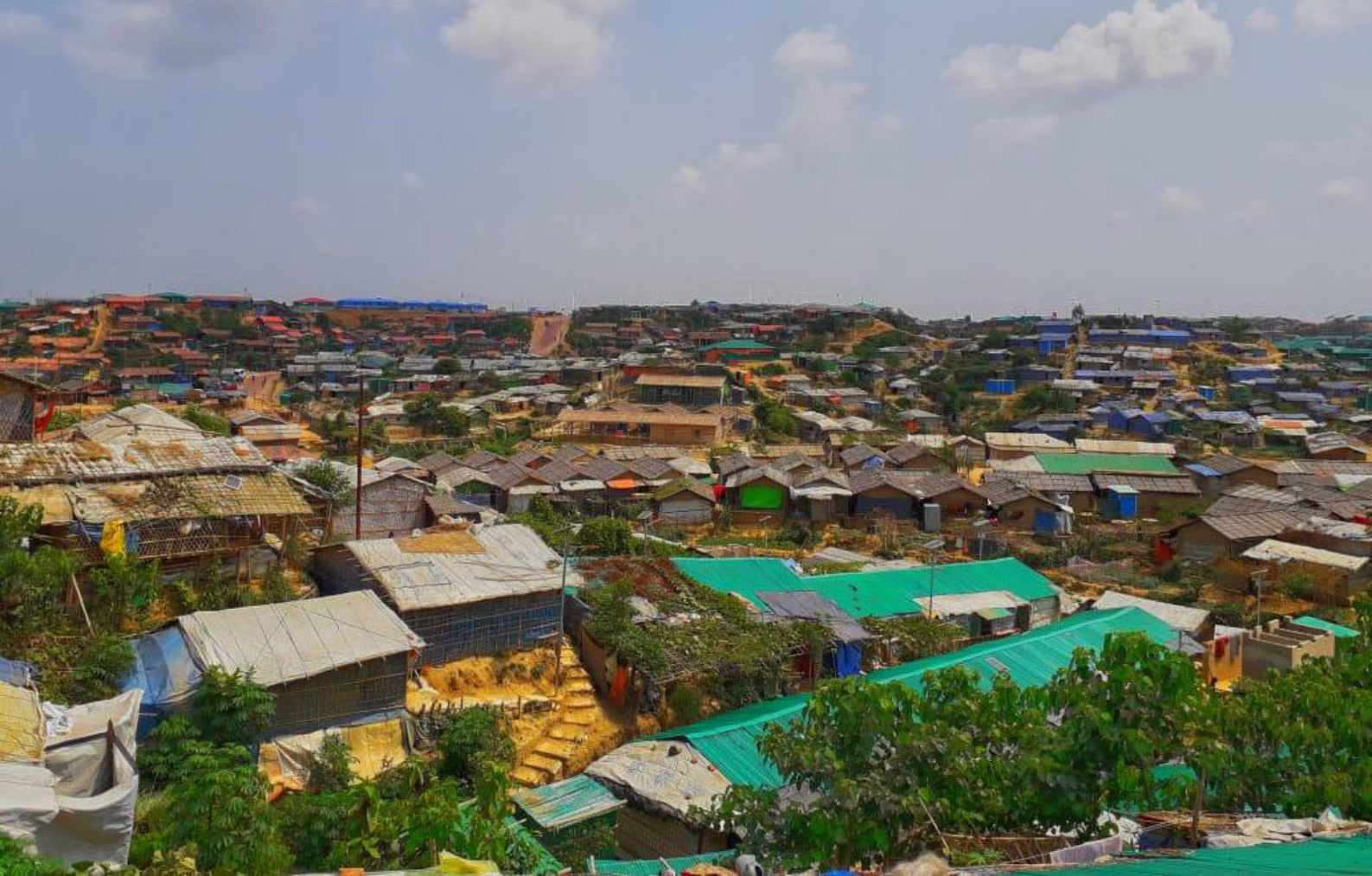
Photo 8 - Kutupalong refugee camp in Bangladesh. (Photo by Azad Mohammed)
Conclusion
The international community has rightly viewed the situation of the Rohingya as one that needs an urgent resolution but backing Burma’s NVC process will not achieve this.
A voluntary repatriation will only be achieved once conditions in Burma are safe for the Rohingya and free of discrimination and human rights abuses.
The NVC process that is being presented as a precondition for Rohingya repatriation is part of a flawed identity system in Burma that has been used by the authorities to pressure Rohingya to self-identify as foreigners. The lived experience of Rohingya in Burma is that the NVC process is another discriminatory layer in the apartheid system against them.
BHRN believes the proposed NVC process for Rohingya returnees to Burma is designed to maintain in place the apartheid conditions that have existed in Myanmar’s Rakhine State for decades.
BHRN is concerned UN personnel will soon pressure Rohingya refugees to accept NVCs as a precondition for return to Burma. While the Burmese authorities have given verbal assurances to the UN Special Envoy that changes will be made to the NVC process, the BHRN is sceptical about the likelihood of this occurring. If changes to the NVC are to be made, then Burma’s government ought to make these changes quickly and apply them to existing Rohingya holders of NVCs in Rakhine state. If NVC holders within Rakhine State continue to endure discrimination, then there can be little question of Rohingya outside of Burma voluntarily accepting NVCs.
The lived experience of Rohingya in Burma is that the NVC process is another discriminatory layer in the apartheid system against them.
BHRN notes that NVCs as a mechanism to verify returnees’ identities are redundant given the extensive records, including photographs, the Burmese authorities already have from previous identity checks including the SweTinSit (Map Record Check) process.
Recommendations
Burma must end its discriminatory laws and practices, and the UN must not participate in a process of repatriation that requires Rohingya to accept discriminatory identity documents.
The rights and safety of the Rohingya must be granted unconditionally before any kind of repatriation can take place. Rohingya must be granted freedom of movement and a prolonged period of safety and protection before anyone can begin to consider relocating refugees back from Bangladesh. To best negotiate the return of the Rohingya to Burma, the Rohingya themselves must be involved in discussions that directly affect their future and their safety.
Those negotiating with the Burmese authorities must demand action and results instead of relying on promises and agreements. While economic growth and development in Burma should be encouraged, human rights violations and failures to implement agreements and recommendations must be met sternly through the use of targeted sanctions of military figures and non-state actors contributing to violence and human rights violations. This must include businesses with direct or close ties to the military. To develop Burma by enriching its tyrants will do little to produce a prosperous or free Burma, but will instead ensure that the suffering of minorities, political activists, and average citizens will continue.
TO BURMA AUTHORITIES
- Provide a clear path to recognising full citizenship for Rohingya.
- 1982 citizenship law needs to be amended or redrafted in order comply with the United Nations Universal Declaration of Human Rights.
- Remove race and religion from all forms of citizenship cards.
- NVC holders living in Rakhine State show no significant improvement in their access to rights after registering – grant NVC holders in Rakhine State the rights claimed will be given to new NVC holders.
- Burma’s government has not made any official changes to the NVC policy that would guarantee the changes mentioned by the UN Special Envoy – these changes need to be made.
- Return more than 120, 000 Rohingya from IDP camps to their former homes and restore their rights equal to all other citizens in Burma.
- The rights and safety of the Rohingya currently living in Rakhine State must be ensured and protected before any repatriation can occur – this is a test for Burma’s sincerity on Rohingya repatriation.
TO BANGLADESH
- Bangladesh must insist upon a safe and equitable repatriation for the Rohingya which will not pressure them to partake in any scheme that denies their religion, nationality, or identity.
- Bangladesh must ensure their own security forces do not violate the rights or threaten the safety of refugees living within their borders. Those involved in acts of violence or intimidation against refugees should be held accountable
- Bangladesh should ensure that refugees who fled Burma before 2016 can also be included in any repatriation or resettlement programs.
TO UNITED NATIONS
- UN must demand improvements for the rights and safety of Rohingya living inside of Burma before negotiating the return of refugees in Bangladesh.
- The Rohingya must play an active role in negotiations for their own future and their return to Burma.
- The UN must cease negotiations with Burmese authorities regarding the implementation of the NVC as long as it can function as a mechanism to degrade citizenship status and misidentify ethnic minorities.
- UN Independent Investigative Mechanism for Myanmar should investigate Burma’s apartheid citizenship system which has been a key component of the genocide against the Rohingya
TO ASEAN COUNTRIES
- ASEAN countries should cooperate with the UN Independent Investigative Mechanism for Myanmar 27
- ASEAN’s role in the repatriation of the Rohingya must include insistence upon a safe, viable, and just return for the Rohingya that puts their welfare ahead of political desire to placate the Burmese authorities.
- Any discussion related to repatriation must include the Rohingya themselves and their voices and concerns must be taken seriously as the key stakeholders in the process.
- Repatriation efforts must require clear and concrete evidence that the Rohingya will be able to return to their original towns and villages and that they will not be kept indefinitely in squalid temporary villages or squalid camps as the Rohingya living in Central Myanmar have been.
- ASEAN should not complicit in NVC process which this report is identified as an instrument of genocide
TO EUROPEAN UNION
- EU should clearly reject the NVC process and identify it as a tool of oppression against a people facing an ongoing genocide.
- EU should increase diplomatic and economic pressure on Burma until the apartheid citizenship system is abolished and redrafted according to human rights norms
- EU should avoid symbolic actions which could unintentionally encourage the perpetrators to commit further crimes and put victims at greater risk of future crimes.
TO UNITED KINGDOM
- The United Kingdom must insist that any repatriation efforts for the Rohingya are voluntary, just, and safe.
- The United Kingdom must use targeted sanctions against Burmese Military leaders and their business cronies for their involvement in previous crimes and as a mechanism to insist that Burma upholds any agreements they make regarding human rights and international norms including the implementation of a fair citizen identification systems which must grant full rights to all holders.
TO UNITED STATE
- United States should continue to pursue legislation which would call out and punish behaviours by the Burmese authorities which oppress minorities and undermine democratic principles. This should include the use of NVC or any citizenship system which grants different rights based on race and religion.
- United States should further deploy targeted sanctions against the military and their cronies for participation in atrocities, oppression of minorities, creation of religious turmoil, and undermining democratic principles.
- United States President should acknowledge a genocide has been carried out against the Rohingya by the Burmese Military and that this Genocide is ongoing with increasing persecution being carried out against other religious and ethnic minorities in the country.
- United States should use their role and influence at the UN to discourage the use of NVC for Rohingya and insist upon an identification system which recognizes Rohingya as Citizens of Burma with full and equal rights as a condition for their return.
- United States should further use sanctions related to resources in Burma’s conflict areas in order to help end the various conflicts and ensure a safe return for refugees.
* * * *
Survey Questions given to Rohingya Refugees in Bangladesh regarding SweTinSit survey:
1) What year did you first partake in the SweTinSit survey and photograph?
2) What was the last year you took part in the SweTinSit survey and photograph?
3) Who were the people that came and took these pictures? Can you tell us more details about them?
1 Myanmar Information Management Unit. (2019). GIS Resources.
https://www.themimu.info/sites/themimu.info/files/documents/SectorMap_Border-Immigration-and-Trade-
Location_MIMU1098v01_05Dec2013_A4.pdf2 Myanmar Information Management Unit. (2018). GIS Resources.
http://www.themimu.info/sites/themimu.info/files/documents/State_Map_District_Rakhine_MIMU764v04_2 3Oct2017_A4.pdf3 Buchanan, F. (1799). A comparative vocabulary of some of the languages spoken in the Burma Empire.
Asiatick Researches or Transactions of the Society instituted in Bengal for inquiring into the History and Antiquities the Arts, Sciences and Literature of Asia, Asiatic Society of Bengal, V, 219-240.4 Green, P., MacManus, T., & de la Cour Venning, A. (2015). Countdown to Annihilation: Genocide in Myanmar. London: International State Crime Initiative.
5 UN General Assembly (1951). Convention Relating to the Status of Refugees. United Nations Treaty Series, 9 UN General Assembly (1951).189, 137.
6 Green, P., MacManus, T., & de la Cour Venning, A. (2018). Genocide Achieved, Genocide Continues: Myanmar’s Annihilation of the Rohingya. London: International State Crime Initiative.
7 Reliefweb (30 January 2019). Special Envoy of the Secretary-General on Myanmar: “Dialogue will make Myanmar stronger” [EN/MY] https://reliefweb.int/report/myanmar/special-envoy-secretary-general- myanmar-dialogue-will-make-myanmar-stronger-enmy
8 Radio Free Asia (2018) Myanmar Political Parties Oppose Easing Travel Restrictions on Rohingya https://www.rfa.org/english/news/myanmar/myanmar-political-parties-oppose-easing-travel-restrictions-on- rohingya-04242018165939.html/
9 Bookbinder, Alex. U Shwe Maung, former USDP MP. 'This is illogical and ridiculous' Frontier Myanmar, 31 August 2015, https://frontiermyanmar.net/en/u-shwe-maung-former-usdp-mp-this-is-illogical-and-ridiculous
10 BBC News. “Myanmar Rohingya Crisis: Deal to Allow Return of Muslim Refugees.” BBC, 23 November 2017, www.bbc.com/news/world-asia-42094060
11 Myint, Moe. “Rohingya Trading Identity for Partial Citizenship.” 7 March 2019, Irrawaddy. https://www.irrawaddy.com/news/burma/rohingya-trading-identity-partial-citizenship-rights-rakhine- state.html
12 McPherson, Poppy. “Secret U. N.-Myanmar Deal on Rohingya Offers No Guarantees on...” Reuters, Thomson Reuters, 29 June 2018, www.reuters.com/article/us-myanmar-rohingya/secret-u-n-myanmar-deal-on- rohingya-offers-no-guarantees-on-citizenship-idUSKBN1JP2PF.
13 Rahman, Shaikh Azizur. “Rohingya Refugees Reject UN-Myanmar Repatriation Agreement.” The Guardian, Guardian News and Media, 5 July 2018, www.theguardian.com/world/2018/jul/06/rohingya-refugees-reject-un-myanmar-repatriation-agreement.
14 Paul, Ruma. “Bangladesh, Myanmar Agree to Begin Rohingya Repatriation by...” Reuters, Thomson Reuters, 30 October 2018,
www.reuters.com/article/us-myanmar-rohingya/bangladesh-myanmar-agree-to-begin-rohingya-repatriation-by-mid-november-idUSKCN1N414Q.15 Ellis-Petersen, Hannah, et al. “Bangladesh Admits No Rohingya Willing to Take Repatriation Offer.” The Guardian, Guardian News and Media, 15 November 2018, www.theguardian.com/world/2018/nov/15/rohingya-refugee-repatriations-bangladesh-myanmar.
16 United Nations Information Centre Yangon. “Statement: Special Envoy of the Secretary-General on Myanmar.” 29 January 2019, https://yangon.sites.unicnetwork.org/2019/01/30/on-behalf-of-the-office-of- the-secretary-generals-special-envoy-on-myanmar/
17 BHRN. “Burma Must Release Unfairly Imprisoned Teacher Ma Hla Phyu.” Burman Human Rights Network - BHRN, 11 June 2018, www.bhrn.org.uk/en/press-release/1050-burma-must-release-unfairly-imprisoned-teacher-ma-hla-phyu.html.
18 BHRN. “Persecution of Muslims in Burma.” Progressive Voice Myanmar, 5 September 2017, progressivevoicemyanmar.org/wp-content/uploads/2017/09/BHRN-Research-Report-.pdf.
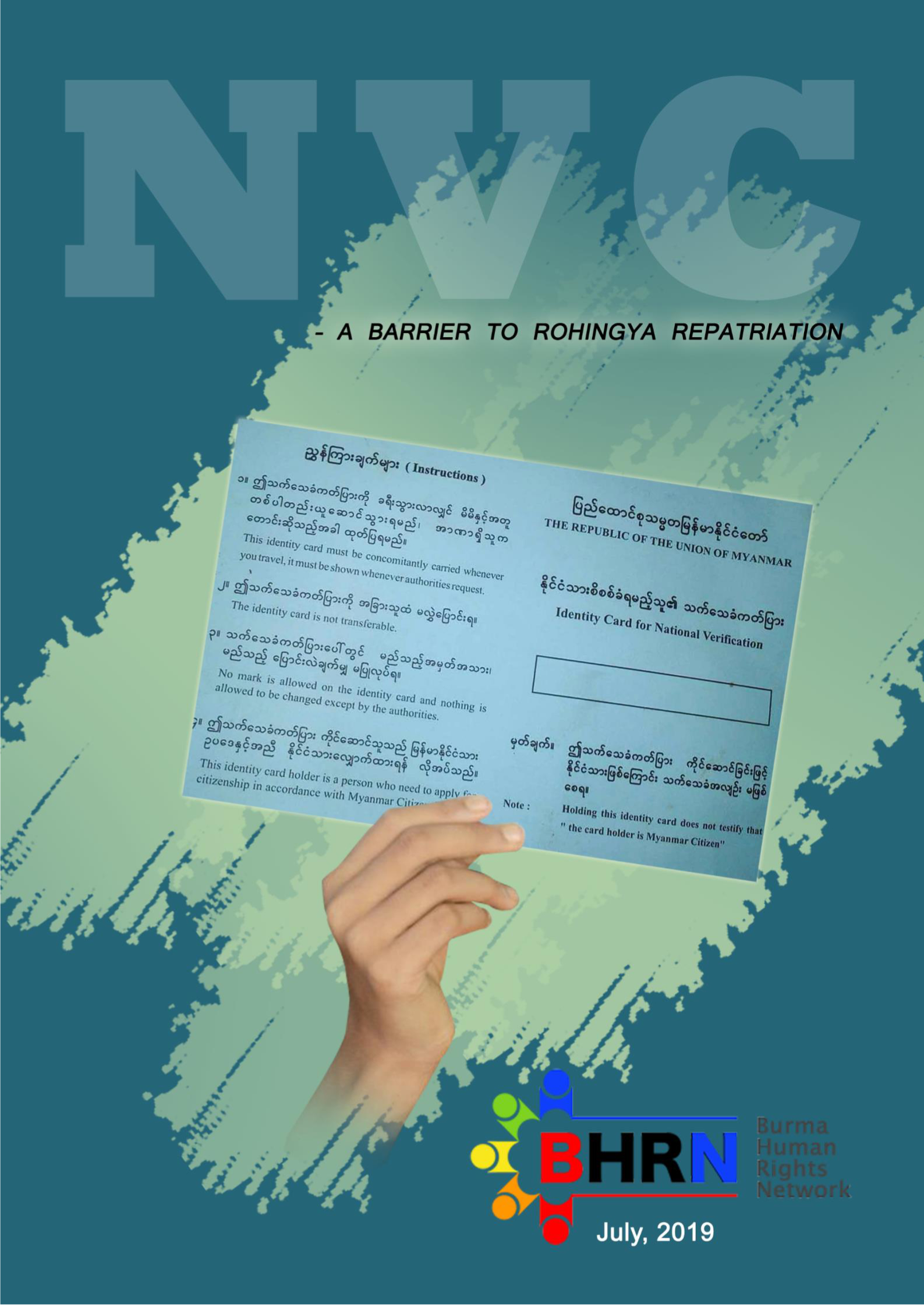
BHRN's Complete NVC Report PDF


