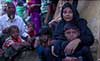
!!!! Urgent: Help needed for over 30,000 Rohingya trapped on hillsides in Tha Win Chaung and Inn Din
- Hits: 1531
2nd September 2017, London, United Kingdom
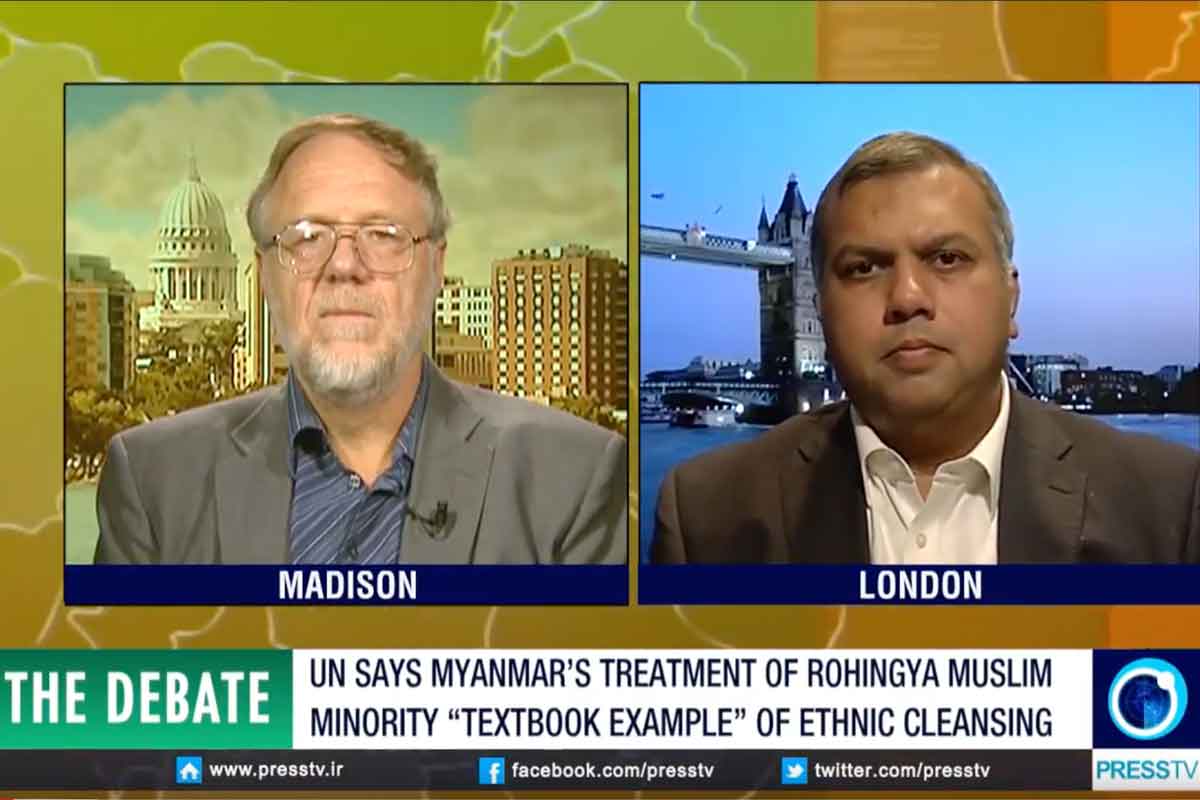
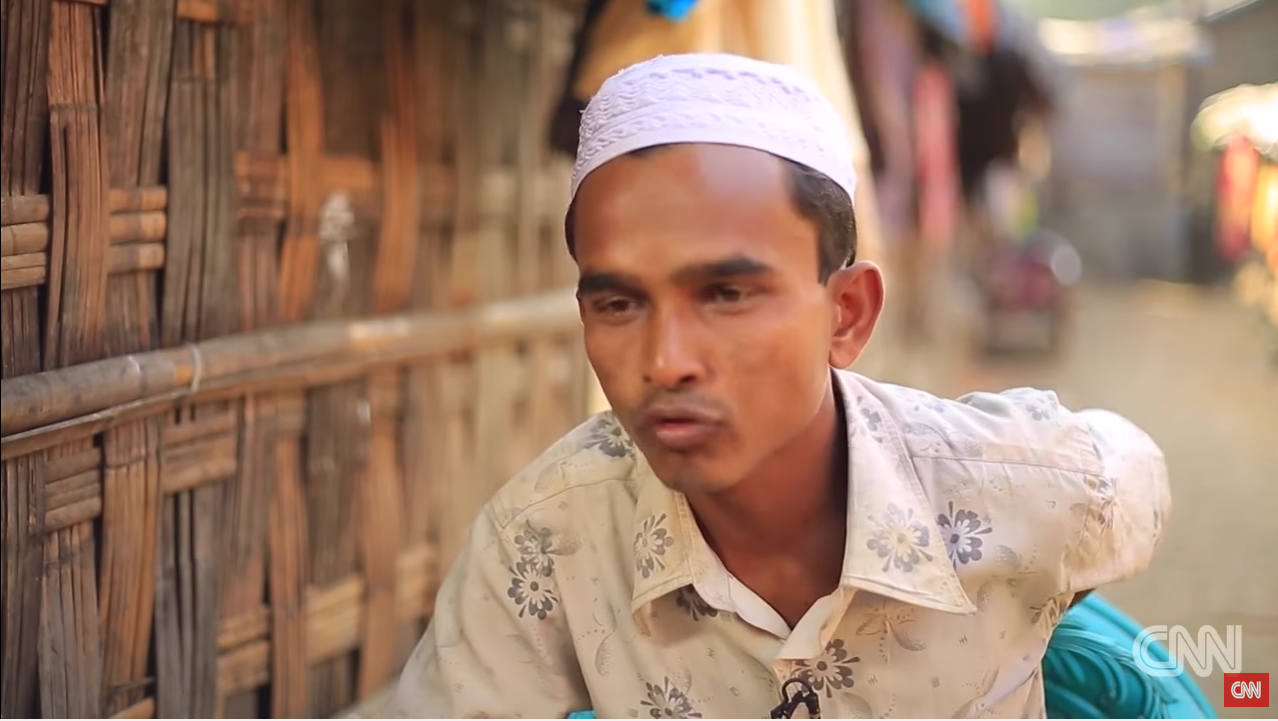
A group of displaced Rohingya believed to be larger than 30,000 people are reportedly stranded on a hill area around Tha Win Chaung and Inn Din townships in the most southern point of Maungdaw Township, bordering Rathedaung Township. The numbers of those isolated in the hills has accumulated since August 25th and continues to increase as military operations in the area continue. Those trapped on the hill are caught between the ocean miles south of the mouth of the Naf river and security forces fighting and stationed nearby. For this reason they are unable to escape and are isolated without access to food, water and medicine Some have already been reported as becoming ill, with a 56 year old woman reportedly dying of what is believed to be a heart attack, and a 55 year old woman believed to have died from a poisonous insect bite. Beginning August 25th, security forces carried out operations in Chain Khali and Koe Tan Kauk villages in Rathedaung Township resulting in the expulsion of 14,000 villagers who evacuated to nearby hills in Maungdaw township’s Tin Win Chaung and Inn Dinn townships over the following days. The assaults by security forces are said to have included arson attacks as many as 800 homes with many believed to have been killed in the attacks. Others from Tha Win Chaung and Inn Din fled at this time as well.
On August 27th a 56 year old woman name Mubena from Kwa Soe was reported to have died of heart failure, believed to have been aggravated from the stress of the assault and fleeing. She was buried the following morning.
On August 28th fighting continued in Kwa Sone Village and nearby areas. Following this more residents from Tha Win Chaung and Inn Din fled into the hills for safety. At the current time vast numbers have accumulated in the hills seeking safety from attacks by security forces but are without access to food and medicine. There are serious concerns that without intervention to help such a large number of people find refuge and access to aid a large number of preventable deaths may occur. Between the combined villages the total number displaced and stranded is believe to exceed 30,000. The total numbers who’ve fled are an estimate by locals based on household numbers of affected areas. Executive Director of Burma Human Rights Network, Kyaw Win said, “The human lives that are most vulnerable must be rescued immediately without delay. As we see the situation unfold it appears almost certain the death toll will far exceed that seen in the violence of 2012 and 2016. The international community must act to prevent any more needless loss of life, as those in hiding 30, 000 people near Tha Win Chaung are at risk of becoming.”
The Burma Human Rights Networks is asking that all aid agencies and governments apply appropriate pressure on the Burmese Government to allow them to access these individuals isolated and to help relocate them to safe areas. We insist that the Burmese Government cooperate with NGOs and relevant bodies of the UN to assist these people to prevent any unnecessary sickness, death or further suffering.
Notes for Editors
Background on the current situation: On August 25th, 2017 the Rohingya insurgent group ARSA attacked as many as 30 posts held by security forces in the Northern part of Myanmar’s Rakhine State.The Military has deployed reinforcements to the area is responding with a worrying crackdown that has already seen massive area where civilians are living razed to the ground in arson attacks. In October of 2016 ARSA (Then called al Yaqeen) attacked 3 police posts in the same area, which saw a devasting response from the military over the following months that included several allegations of Crimes Against Humanity.
Background on the Burma Human Rights Network (BHRN)
Burma Human Rights Network (BHRN) works for human rights, minority rights and religious freedom in Burma. BHRN has played a crucial role advocating for human rights and religious freedom with politicians and world leaders.
Media Enquiries
Members of The Burma Human Rights Network (BHRN) are available for comment and interview.
Please contact:
Kyaw Win
Executive Director
Burma Human Rights Network (BHRN)
E:This email address is being protected from spambots. You need JavaScript enabled to view it.
T: +44(0) 740 345 2378
BHRN PRESS RELEASE PDF

- Hits: 2482
1st September 2017, London, United Kingdom
The Burma Human Rights Network is monitoring events throughout Burma and in Burmese media with significant concern as Government outlets, local media and Burmese social media are taking major roles in destabilizing an already chaotic situation in Northern Rakhine State, following attacks on 30 police posts by the insurgent group Arakan Rohingya Salvation Army (ARSA) on August 25th. Official Government Facebook pages have utilized dehumanizing language and placed restrictions on media outlets insisting they do the same while a major campaign demonizing the Rohingya population and aid workers inside of Rakhine State is underway. These elements combined have the potential to take an already deadly and chaotic situation between insurgents and security forces and turn it into one of communal conflict as well, which could drastically increase the number of injured, killed and displaced, and have already resulted in an attack on four local journalists in Maungdaw. These efforts by the Government, Military and nationalists follow a pattern previously witnessed in Myanmar during times of unrest in Rakhine State and may easily worsen the situation again if not addressed and corrected.
In news relayed by official government offices, they have placed all blames on Muslims living in Rakhine State while positioning themselves as sole source of information on the situation. Even regarding cases as minor as that of two Muslims arrested for illegally transporting cows. After these latest attacks on 30 security force outposts, the government evacuated only evacuated Rakhine people. Muslims who had nothing to do with the attacks have been left stranded and caught in the conflict with no assistance and tremendous difficulty fleeing.
As news is posted in Myanmar it is translated to English as well. Notably, the Burmese text uses the term “Extremist Terrorist Bengali” which in the English versions is simply translated as “terrorist”. The difference is an observable reinforcement of ethnic tension in the original Burmese, which is part of a broader campaign during the conflict to inflame bigotry and fear. Similarly, those killed in the attacks are described as “innocent civilians killed by brutality”. The language presents security forces as civilians while also connection the concept of barbarism to Rohingya as a whole. The underlying intention seems to be to inflame anger which will likely lead to violence.
Within a day of the attacks the Government proscribed ARSA as a terrorist group and warned the media that they were expected to use this term as well. Further, the government implied that those aiding ARSA or ARSA’s message would be held accountable. In its most dangerous interpretation the statement implies that breaking away from the Government narrative of a serious conflict, which will likely result in the deaths of countless civilians, could be considered a criminal offense. At its most benign it still implies that any journalists seeking to accurately cover the conflict, including statements released by ARSA, could be subject to punishment.
These restrictions also create a climate of fear in other parts of Burma which are already experiencing elevated religious tension. It imposes that those who are sympathetic to the Rohingya are somehow also ‘Terrorist supporters’. These legal uncertainties coupled with anti-Muslim sentiment could easily escalate into more violence or persecution of the broader Muslim population. The media, which is reporting on Rakhine State is not reporting the plight of Muslims, but focusing on the situation as one of insurgency and security alone. The Government has made no attempts to warn or prevent media from inflaming violence further in Rakhine State through misinformation or provocative language. To some degree it seems encouraged that language and reporting are inflammatory and broadly accusatory towards Rohingya and INGOs.
This is occurring as the media reporting on Rakhine is presenting information without context or understanding of how the current situation came to be or what its root causes are. The presentation of the situation remains one of a violent invading people who are behaving violently because that is their nature, and this is widely repeated and accepted within the public and on social media where Rohingya are regarded as uneducated, dirty, violent and without respect for law and culture. The entire process is one of dehumanization.
Simultaneously, a large social media campaign has been launched to spread information, and often disinformation about the situation and to undermine perceived “Rohingya lobbyists”. Often times Facebook posts by nationalists have directed abuse towards journalists, NGO workers and Rohingya activists. Much of what these accounts spread seems intentionally designed to stir up as much hatred and outrage as possible, rather than present any grievances of the Rakhine community or security fears of the population. Among images spread many of them were taken from official Government Facebook pages, further stressing how the Government is enabling the deterioration of the communal situation. The social media campaigns have strong similarities to notable propaganda campaigns that have preceded mass atrocities elsewhere in the world and the Government should be taking immediate action to try to deescalate tensions at the communal level.
In an incident that seems connected to rising tensions, four Burmese journalists were attacked in Maungdaw on August 29th at 2pm. The journalists were able to escape. These events occurring at the same time as military operations in Northern Rakhine signal a strong possibility of an even worse situation to come. The Government should take immediate steps to restore calm among the civilian population, especially inside Rakhine to reduce the likeliness of communal conflict. The Government must discourage any violence between communities and take steps to avoid the dehumanization of Muslim civilians. The international community should take steps to monitor how the Government’s statements inflame the situation and attempt to uncover any coordinated campaigns intended to increase violence resulting in deaths and displacement of particular ethnic and religious groups.
Notes for Editors
Background on the current situation: On August 25th, 2017 the Rohingya insurgent group ARSA attacked as many as 30 posts held by security forces in the Northern part of Myanmar’s Rakhine State.The Military has deployed reinforcements to the area is responding with a worrying crackdown that has already seen massive area where civilians are living razed to the ground in arson attacks. In October of 2016 ARSA (Then called al Yaqeen) attacked 3 police posts in the same area which saw a devasting response from the military over the following months that included several allegations of Crimes Against Humanity.
Background on the Burma Human Rights Network (BHRN)
Burma Human Rights Network (BHRN) works for human rights, minority rights and religious freedom in Burma. BHRN has played a crucial role advocating for human rights and religious freedom with politicians and world leaders.
Media Enquiries
Members of The Burma Human Rights Network (BHRN) are available for comment and interview.
Please contact:
Kyaw Win
Executive Director
Burma Human Rights Network (BHRN)
E:This email address is being protected from spambots. You need JavaScript enabled to view it.
T: +44(0) 740 345 2378
BHRN PRESS RELEASE PDF
- Hits: 1513
At around 1:20AM civilians in Maungdaw reported to a loud explosion to BHRN which was followed by gunfire to the north of Maungdaw. Within a few hours civilians reported hearing gunfire again. Reports quickly emerged of fighting between the militant group Arakan Rohingya Salvation Army (ARSA) and the Burmese Military. Reports emerged that ARSA ambushed up to 25 security posts in Maungdaw, Buthidaung and Rathedaung. Estimates from Government sources say that 21 militants, 10 police and one soldier were killed, but totals are suspected to be higher. The Government also claimed that the attacks were carried out by over a thousand men organized and acting in different locations simultaneously. Reports to BHRN indicate many Rohingya refugees from Bangladesh took part in the fighting. It has been relayed to BHRN that many of the refugees who fled last years fighting between ARSA and the Burmese Army were recruited and trained since winter of last year. ARSA has claimed responsibility for initiating the attacks in response to the blockade on Rathedaung, recent killings of Rohingya by security forces and increased troop presence in northern Rakhine State.
These events follow a series of alleged human rights abuses in the past month and a large troop increase in the region. Locals have complained of massive sweeping arrests, deaths in custody and blockade of food and aid to civilians. After a month of tension militants unexpectedly attacked, which will undoubtedly make the situation far worse and appears to be motivated in part by desperation and anger with recent events.
At the same time the state has been visited by extremist monks, including Wirathu, who have provoked greater fears and hostility in the region. Wirathu visited the state on the 20th of August. These events happening at the same time risk communal conflict to emerge at the same time militants are fighting the army. Wirathu is notoriously anti-Muslim and has frequently given sermons in areas that saw anti-Muslim violence shortly afterwards.
The attacks occurred one day after the release of the Kofi Annan led Rakhine Commission’s report detailing their investigation and recommendations of a similar situation last year where militants attacked 3 police posts and the Military engaged in an especially brutal crackdown over the following months. Among the Commission’s recommendations were Rohingya citizenship and freedom of movement, both of which ARSA has listed as among their primary grievances. The timing of the attacks is especially tragic in how they may have derailed progress the commission might have made in helping secure rights for Rohingya.
Throughout August BHRN received multiple reports of escalating tensions between the Rohingya and Rakhine communities as well as security forces in Northern Rakhine State. These incidents included arrests of several Rohingya men in Rathedaung and the disappearance of a Rakhine man in late July near Rauthedaung. The Rakhine man is said to be from Chutpyin village and was last seen on a snail gathering expedition with two other men in the Mayyu Mountains. The arrests seemed related to the disappearance of the local Rakhine man, after search efforts failed to locate him. Many of those arrested and interrogated were said to only be connected to the incident due to the proximity of their village to where the man was believed to have disappeared from. Reports indicated that Rakhine
civilians accompanied police during these raids and witnesses described civilians being beaten randomly in the process. A confrontation later occurred on August 5th as police raided Aut Nan Yar Village. As police were arresting and taking men, including an imam, into custody a mob formed, seemingly to help free the men. Police were said to have opened fire to disperse the mob and arrested some involved while some of those previously arrested escaped. Four were reportedly injured in the incident. The village was later sealed off with barbed wire and food and aid were blocked from entering. Several locals complained the blockade was causing food shortages. Villagers also complained they felt threatened by Rakhine and Buddhists living in the same area who informally enforced the blockade, as they are out numbered and tensions have increased significantly.
Later in the month on August 15th villagers in Rathedaung stated that soldiers were asking for rations from Muslim villagers, and that their presence had increased to 300 soldiers in the area. While this occurred a curfew was imposed on all villages in Rathedaung following an incident on August 11th, where a Rohingya mob gathered in response to sweeping arrests by police. Following these events reports continued to emerge of villagers throughout Rathedaung being detained, beaten or both, with reports in the same region of Rohingya livestock being looted by Rakhine villagers.
BHRN later received reports of large sweeping arrests by border guard police (BGP) and military forces in Southern Buthidaung Township, U Hla Pay Village Tract, at 7am on August 15th. Reports from the area have stated that 50-80 Rohingya were arrested arbitrarily, some were said to be workers on the roadside or farmland who were randomly swept away by police. Those arrested were taken to Nyaung Cheung BGP camp at around 12pm of the same day. There are reports that one man died in custody during this time, and BHRN is working to confirm if this is true.
With these most recent attacks it is almost certain that the military will respond harshly and may not differentiate between civilians and combatants. Without proper and immediate intervention the situation may easily spiral out of control as violence is further normalized in the region causing attacks to increase between the army and militants. The military must use restraint when engaging in combat and avoid civilians at all costs. Likewise we call on ARSA to avoid fighting in civilian areas at any time. The International Community must take any allegations coming from this conflict seriously and not allow the situation to further deteriorate as it has for the past year. With this in mind we reiterate our call on Myanmar to accept the UN mandated Fact Finding Mission into allegations from last years fighting in order to address grievances of the local population and pursue peace and justice in the region. Any human rights violations emerging from this conflict will ultimately prolong it and potentially create an environment of constant violence that erodes the perceived value of human life both in combat and in communal interactions.
We call on security forces to respect the principles of proportionality and distinction with regard to the use of force in counter-insurgency operations in accordance with International Humanitarian Law. In restoring law and order, International Law and human rights must be kept as a priority to ensure that this restoration is meaningful, just and avoids worsening tensions in an already fragmented and volatile
region.
Notes for Editors
Background on the current situation: In 2012 violence broke out in Rakhine state between ethnic Rakhine and Rohingya communities which ultimately saw over 100,000 Rohingya displaced. Much of the Rohingya population is currently forced to live in camps for the displaced, which are generally squalid, cramped and lack adequate access to food and medicine for all living in them. In October 2016 a Rohingya militia called The Arakan Rohinya Salvation Army attacked three police posts and killed 9 border guard police. The attack was followed by an extremely harsh crackdown by security forces, with witnesses describing instances of security forces killing civilians, gang raping women, torture of detainees who have died in custody, arbitrary arrests, destruction of property and forced displacement. The United Nations has mandated a fact-finding mission into these claims but the Burmese Government has so far blocked them from conducting it.
Background on the Burma Human Rights Network (BHRN)
Burma Human Rights Network (BHRN) works for human rights, minority rights and religious freedom in Burma. BHRN has played a crucial role advocating for human rights and religious freedom with politicians and world leaders.
Media Enquiries
Members of The Burma Human Rights Network (BHRN) are available for comment and interview.
Please contact:
Kyaw Win
Executive Director
Burma Human Rights Network (BHRN)
E:This email address is being protected from spambots. You need JavaScript enabled to view it.
T: +44(0) 740 345 2378
BHRN PRESS RELEASE PDF