
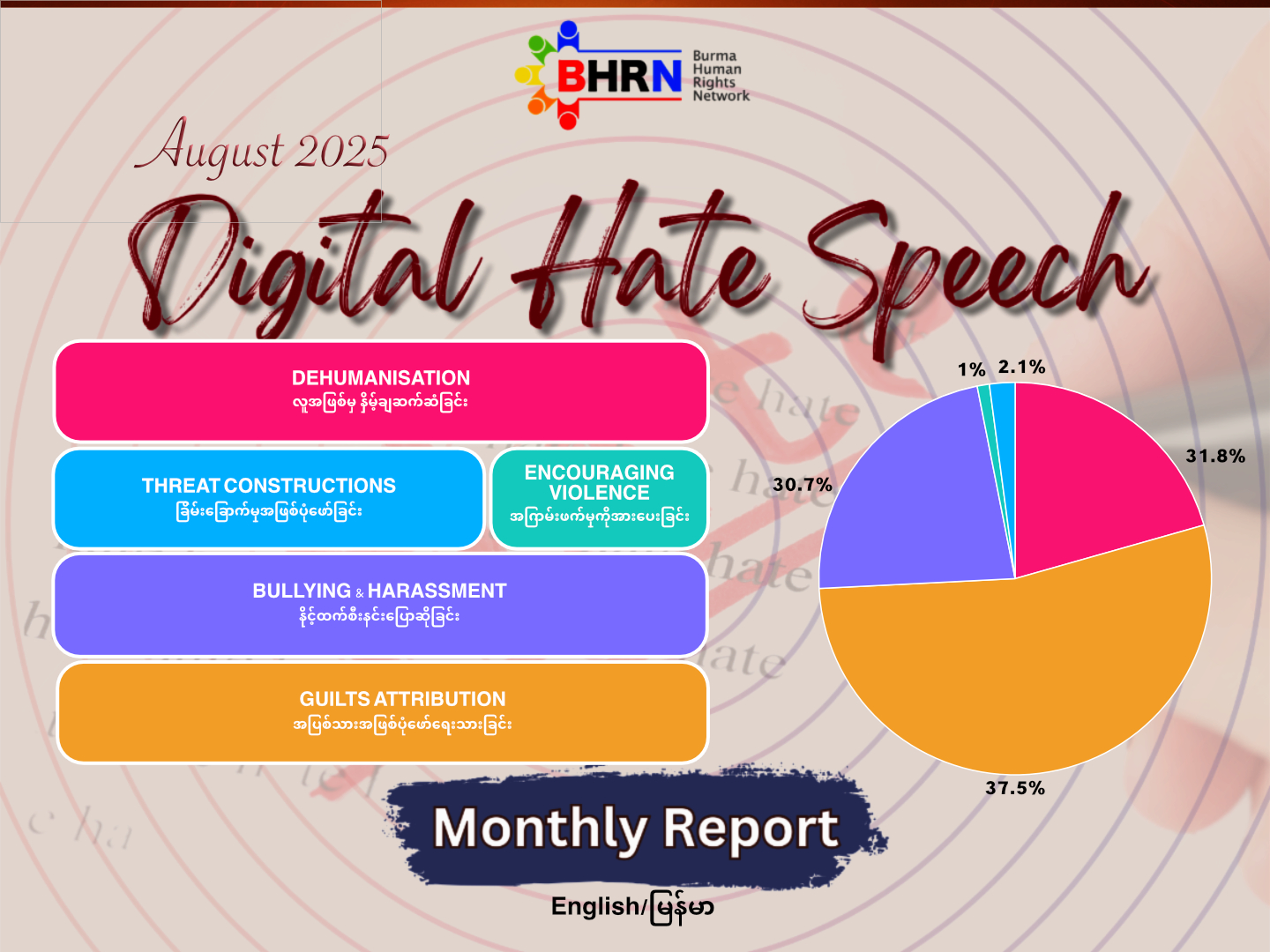
This report was compiled through monitoring online and print media used by the military government and its supporters to disseminate hate speech. In particular, during August 2025, BHRN found 49 instances of hate speech from monitoring 3 Facebook groups, 1 Facebook page, and 13 Facebook accounts; 35 instances of hate speech from 24 Telegram channels; and 14 instances of hate speech from monitoring 24 TikTok accounts. In terms of print media monitoring, 2 newspapers and 1 journal were observed.
In total, 98 cases of misinformation and hate speech dissemination were recorded during the monitoring in August. The results are presented using tables, graphs, and clear explanations. The main sources, impacts, and preventive measures for hate speech will also be provided, together with recommendations.
Due to significant limitations in conducting comprehensive monitoring of social media, there may also be incidents of hate speech that were not recorded.
Key Findings
- Targeted Groups
● Rohingya people have been subjected to ethnic persecution with false accusations such as being “Bangladeshi intruders” and “terrorists.”
● Muslims have been portrayed as “Kalars” (a derogatory slur) and “terrorists,” accompanied by discriminatory and insulting religious slanders.
● Female revolutionaries have been attacked through gender-based harassment, exposure of personal information, and defamatory accusations aimed at undermining their dignity.
● PDFs and ethnic armed organizations have been labeled as “terrorists,” “killers,” “bombers,” and “arsonists,” with rhetoric designed to incite hatred within society. - Methods of Disseminating Hate Speech and Disinformation
● Posts, videos, and cartoons on social media (Facebook, TikTok, Telegram) spreading ethnic, religious, and political hate speech.
● Exploiting incidents such as the Rohingya massacres to spread religious and ethnic hate speech.
● Disseminating false news to fuel conflicts. - Impacts
● Heightened conflicts within society, especially instability among ethnic groups in Rakhine State.
● Harm to women’s security and dignity, with activists facing threats and harassment both online and offline.
● Obstruction of peacebuilding efforts and barriers to democratic transition.