
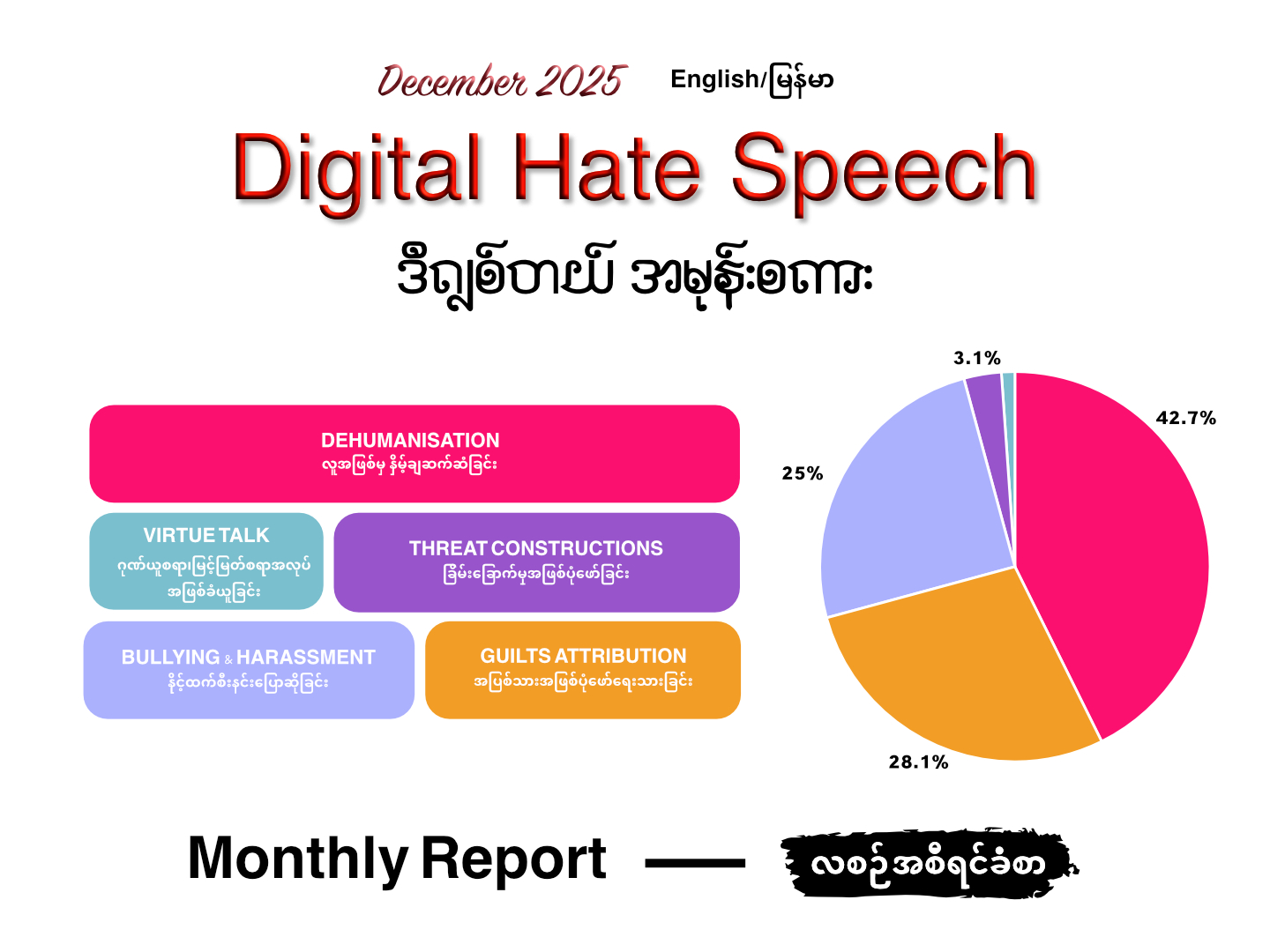
Hate speech is inherently rooted in emotional expression and subjective sentiment; it does not have a universally accepted definition. For this report, the Burma Human Rights Network (BHRN) defines hate speech as follows:
"Hate speech refers to any form of expression, verbal, written, behavioural, or artistic, that targets an individual or group to express severe criticism, condemnation, or to incite hostility and hatred based on protected characteristics. This includes attacks on fundamental rights and identity, such as religion, language, gender, sexual orientation, citizenship, ethnicity, skin color, beliefs, or physical appearance."
Based on the findings of this study, hate speech is further categorized into the following types:
- Criminalisation: Portraying specific groups as inherent criminals or "sinners."
- Dehumanisation: Stripping individuals of their human qualities or dignity.
- Oppressive Speech: Language used to exert dominance over or bully marginalized groups
- Incitement: Direct calls for violence, riots, or civil unrest.
- Existential Threat: Characterising specific groups as a fundamental threat to the existence of others
- Glorification: The celebration or promotion of acts of violence and hatred.
In the context of Myanmar’s ongoing political and military tensions, BHRN continuously monitors and documents hate speech terminology disseminated by the military and its associated propaganda channels.
1. Data Collection
- Monitored platforms: Data were collected from Facebook, TikTok, and Telegram channels. Types of content:
- Hate speech related to ethnicity, religion, politics, and gender.
- Content inciting violence and discrimination.
- Harmful misinformation and incitement-related posts.
2. Data Approach
- Manual monitoring: Members of the hate speech monitoring team systematically reviewed designated keywords, images, and videos to ensure a high level of accuracy in documentation.
3. Data Analysis
- Thematic Categorisation: Content is grouped into specific themes—such as ethnicity, religion, and politics to identify recurring patterns of targeting.
- Level of dissemination: The scale of spread is measured by analysing Engagement (Likes, Shares, Comments) and total Reach.
- Identification of Key Perpetrators: The study identifies specific groups and individuals responsible for disseminating hate speech, while assessing their level of influence and broader social impact.
4. Ethical Considerations
- Data Confidentiality: All monitored and documented information is stored securely. BHRN adheres to a strict policy that prohibits the disclosure of data to the public or unauthorised individuals.
5. Limitations
- Platform Coverage: It is not possible to comprehensively monitor all social media platforms
- Encryption Challenges: Some online activities occur on encrypted communication platforms, which pose significant challenges for effective tracking and monitoring.
- Authenticity and Impact: The prevalence of fake accounts and bots complicates assessing the genuine social impact accurately