
- Hits: 423
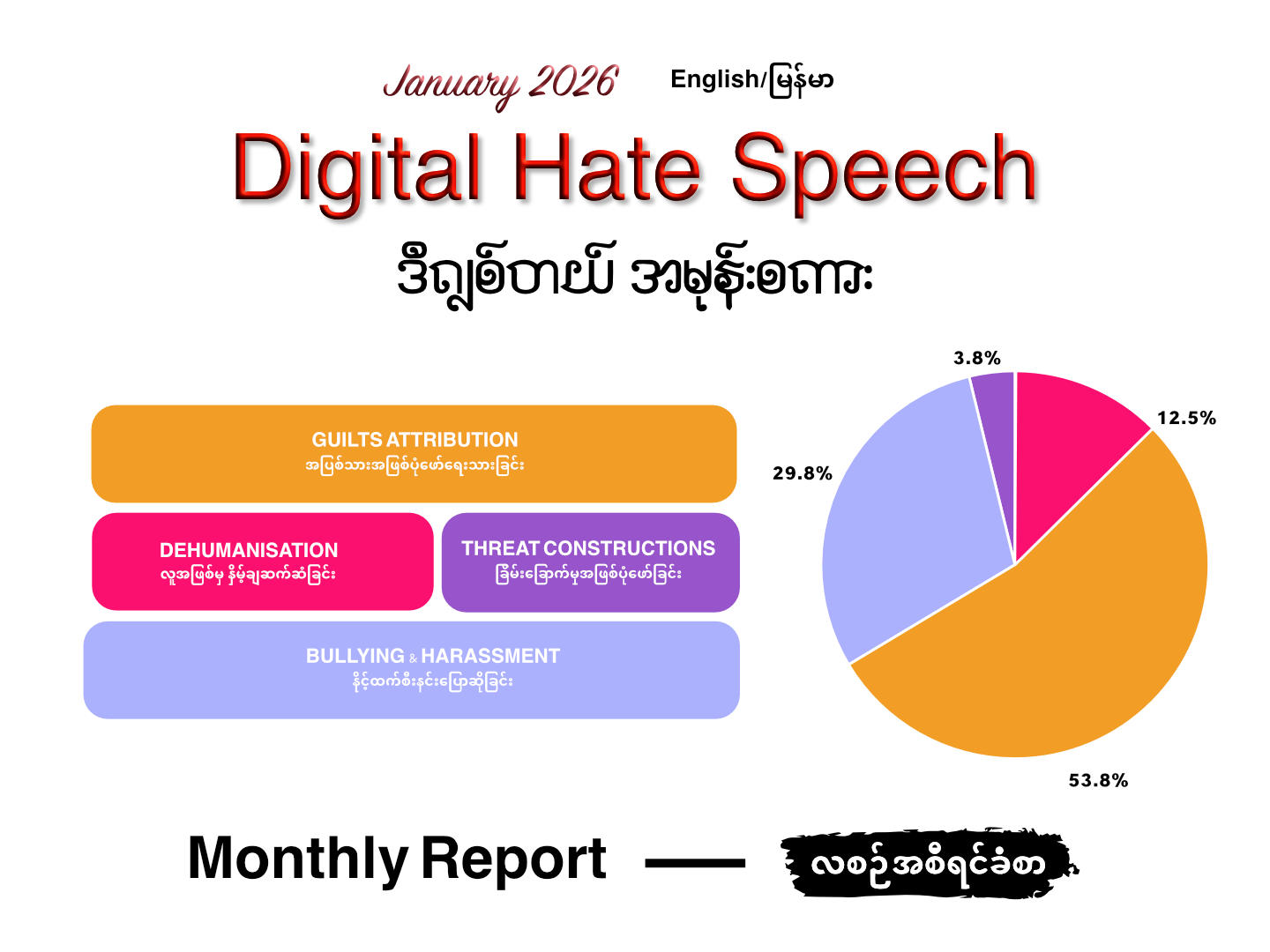
This report was compiled by monitoring online and print media used by the military junta and its supporters to disseminate hate speech. During January 2026, BHRN conducted a monitoring exercise with the following results:
- Facebook: monitored 3 groups, one page, and 13 accounts; identified 47 instances of hate speech
- Telegram: Monitored 24 Channels; identified 38 instances of hate speech
- TikTok: Monitored 24 Accounts; identified 19 instances of hate speech
- Print Media: Monitored 2 newspapers and 1 journal.
Overall, during January, a total of 104 instances of misinformation and hate speech were documented. The findings are presented using tables, graphs, and clear descriptive text. This report further analyses the root causes and impacts of hate speech, offering recommendations for prevention and mitigation. Due to significant limitations in achieving comprehensive coverage of the social media landscape, this report may miss undocumented hate speech incidents.
- Hits: 1840
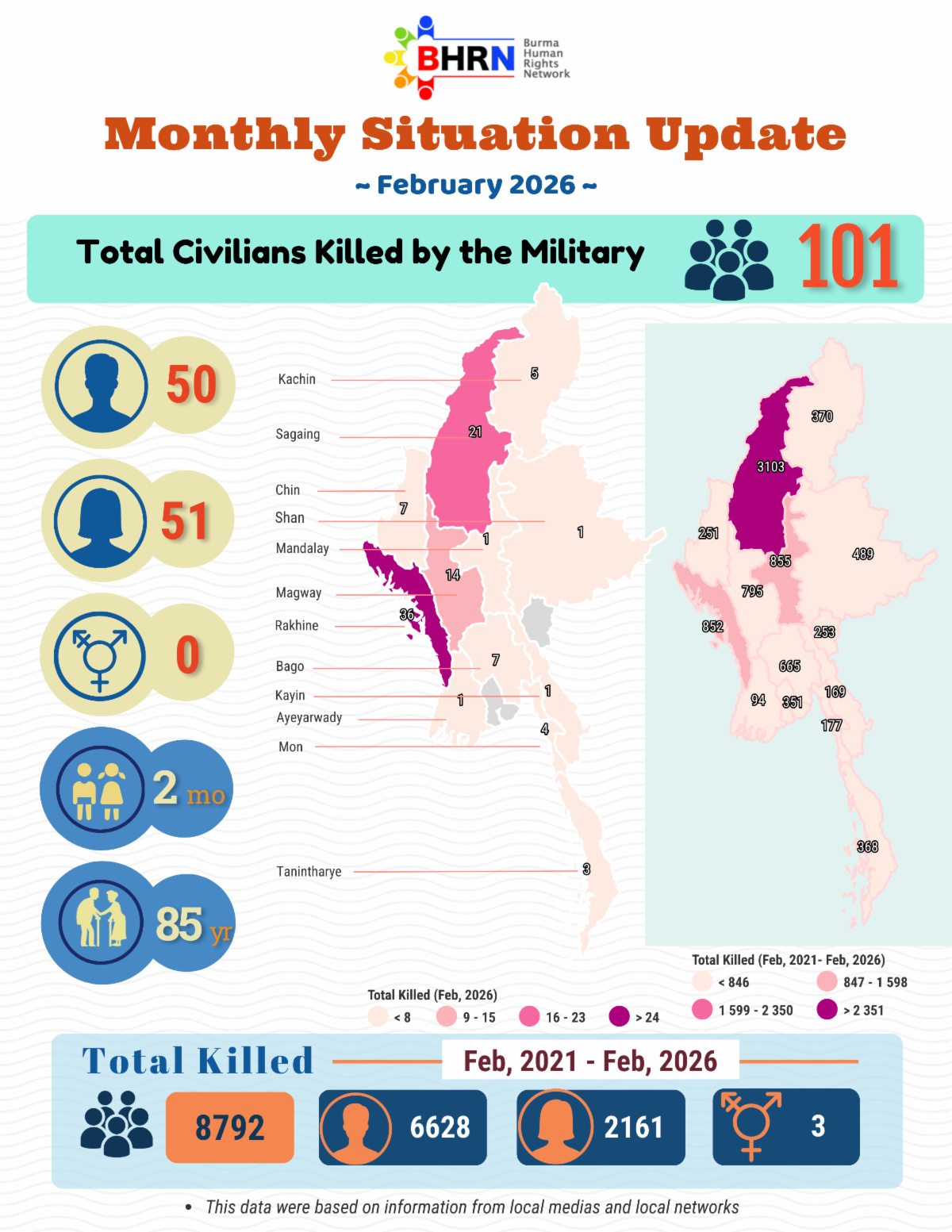
The Myanmar military junta completed its three-phase electoral charade in January 2026, with the military-proxy Union Solidarity and Development Party claiming predetermined victory through systematic coercion, fraud, and violence. At least 404 people were arrested for minor acts of dissent such as refusing to display campaign materials or posting critical comments online. Junta forces killed dozens of civilians during the final voting days, including 22 mourners in an airstrike on a funeral ceremony in Bhamo Township. Despite widespread public rejection, demonstrated through protests, boycotts, and the near-total absence of voters at polling stations, the regime will convene a military-controlled parliament in March. This represents the consolidation of military dictatorship behind a facade of civilian institutions. The 2008 Constitution guarantees the military 25 percent of parliamentary seats, ensuring Min Aung Hlaing maintains absolute control regardless of which titles he and his loyalists adopt.
International responses fractured in ways the junta actively exploited. While the European Union, Japan, and ASEAN officially rejected the sham elections, China's Foreign Ministry publicly congratulated Burma, providing high-profile endorsement from the junta's primary arms supplier and UN Security Council protector. Thailand endorsed the process as "political transition" despite being part of ASEAN, while Cambodia and Vietnam sent observers in direct contradiction of the bloc's collective stance. This fragmentation allows the regime to claim divided international opinion and point to evidence of acceptance.
Read more: January 2026 - Summary of Monthly Situation Update
- Hits: 629
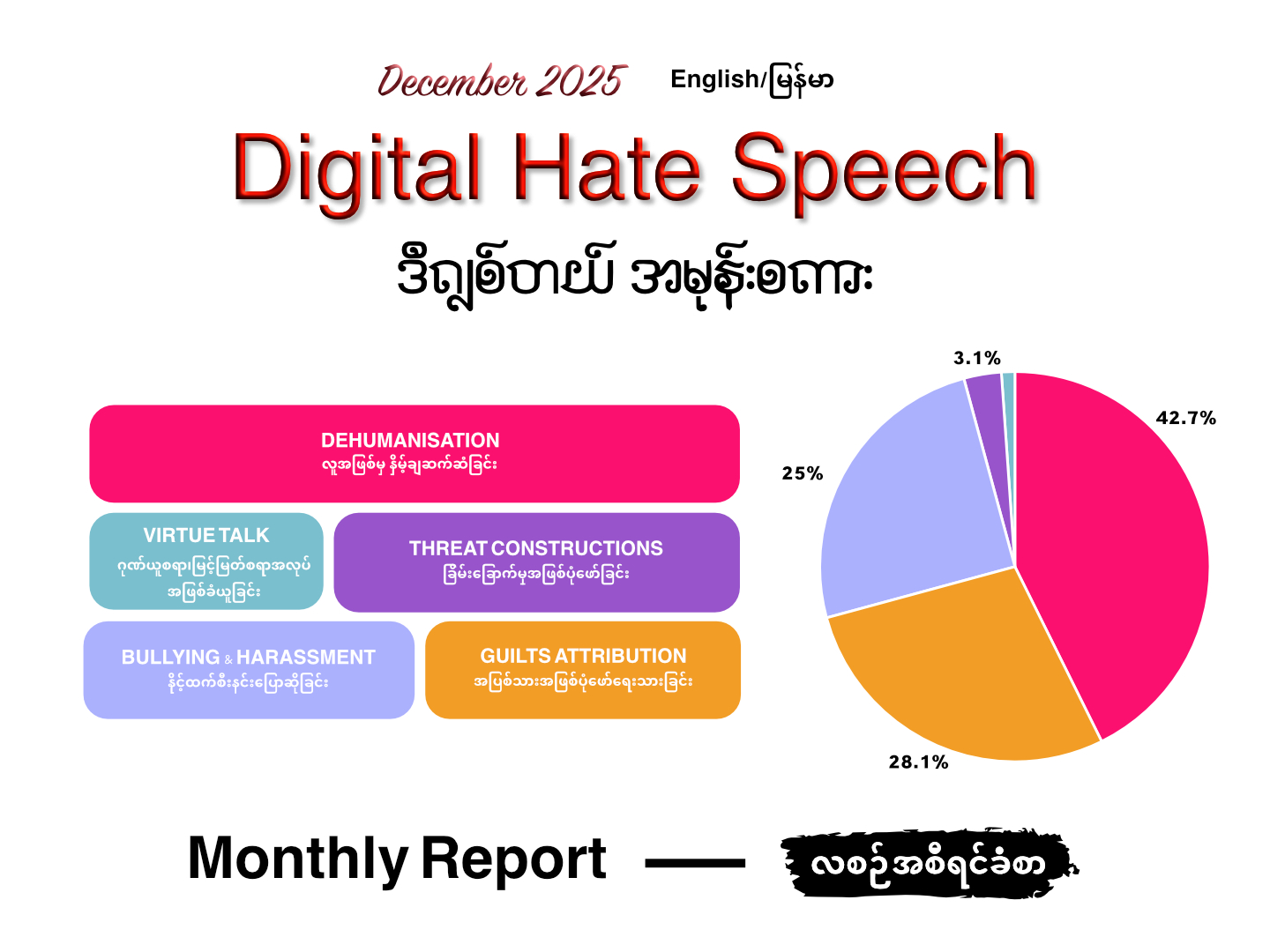
Hate speech is inherently rooted in emotional expression and subjective sentiment; it does not have a universally accepted definition. For this report, the Burma Human Rights Network (BHRN) defines hate speech as follows:
"Hate speech refers to any form of expression, verbal, written, behavioural, or artistic, that targets an individual or group to express severe criticism, condemnation, or to incite hostility and hatred based on protected characteristics. This includes attacks on fundamental rights and identity, such as religion, language, gender, sexual orientation, citizenship, ethnicity, skin color, beliefs, or physical appearance."
Based on the findings of this study, hate speech is further categorized into the following types:
- Criminalisation: Portraying specific groups as inherent criminals or "sinners."
- Dehumanisation: Stripping individuals of their human qualities or dignity.
- Oppressive Speech: Language used to exert dominance over or bully marginalized groups
- Incitement: Direct calls for violence, riots, or civil unrest.
- Existential Threat: Characterising specific groups as a fundamental threat to the existence of others
- Glorification: The celebration or promotion of acts of violence and hatred.
In the context of Myanmar’s ongoing political and military tensions, BHRN continuously monitors and documents hate speech terminology disseminated by the military and its associated propaganda channels.
1. Data Collection
- Monitored platforms: Data were collected from Facebook, TikTok, and Telegram channels. Types of content:
- Hate speech related to ethnicity, religion, politics, and gender.
- Content inciting violence and discrimination.
- Harmful misinformation and incitement-related posts.
2. Data Approach
- Manual monitoring: Members of the hate speech monitoring team systematically reviewed designated keywords, images, and videos to ensure a high level of accuracy in documentation.
3. Data Analysis
- Thematic Categorisation: Content is grouped into specific themes—such as ethnicity, religion, and politics to identify recurring patterns of targeting.
- Level of dissemination: The scale of spread is measured by analysing Engagement (Likes, Shares, Comments) and total Reach.
- Identification of Key Perpetrators: The study identifies specific groups and individuals responsible for disseminating hate speech, while assessing their level of influence and broader social impact.
4. Ethical Considerations
- Data Confidentiality: All monitored and documented information is stored securely. BHRN adheres to a strict policy that prohibits the disclosure of data to the public or unauthorised individuals.
5. Limitations
- Platform Coverage: It is not possible to comprehensively monitor all social media platforms
- Encryption Challenges: Some online activities occur on encrypted communication platforms, which pose significant challenges for effective tracking and monitoring.
- Authenticity and Impact: The prevalence of fake accounts and bots complicates assessing the genuine social impact accurately
- Hits: 1267
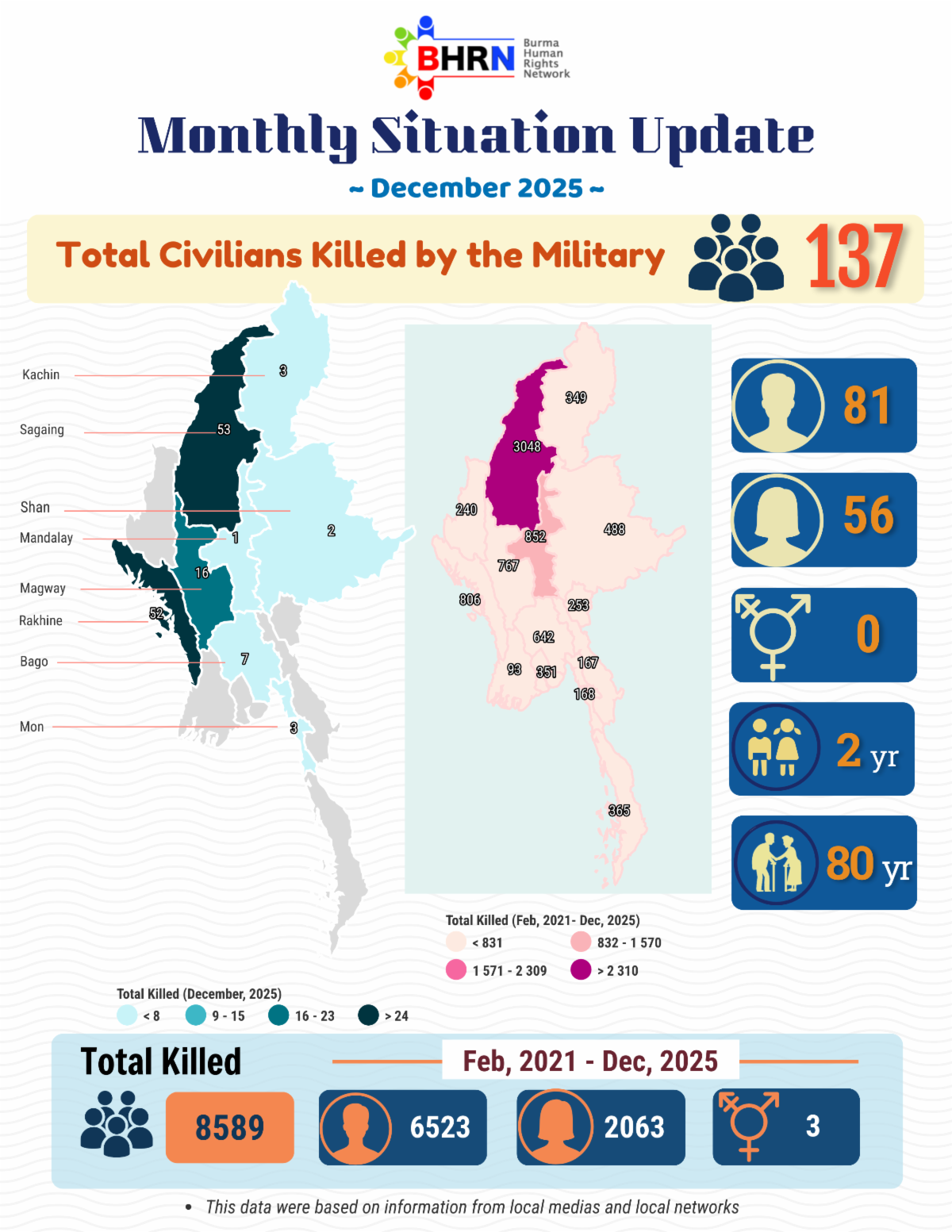
In December 2025, the Myanmar military junta held the first phase of elections on 28 December in 102 of the country's 330 townships, with a second phase scheduled for 11 January 2026. The elections were rejected by the United Kingdom, Canada, Norway, Australia, Switzerland, and the European Union as failing to meet international standards. UN High Commissioner for Human Rights Volker Türk stated there were "no conditions" for free and fair participation. Political parties that won 90 percent of seats in 2020 have been deregistered or barred, the junta cancelled voting in thousands of communities, and the Election Protection Law has been used to charge at least 293 people, including for posting emoji reactions to online posts. Thailand, however, endorsed the process, contradicting ASEAN's October 2025 position that cessation of violence and inclusive dialogue must precede elections. Myanmar nationals overseas have rejected the vote with fewer than 25 people cast ballots at the junta's embassy in Seoul, compared to approximately 10,000 in the 2020 election.
The junta continued military operations throughout the month, targeting civilian infrastructure including hospitals, clinics, schools, and monasteries. On 10 December, International Human Rights Day, the Burma Air Force struck a hospital in Mrauk-U Township, Rakhine State, killing at least 33 civilians and injuring 76. The UN's Independent Investigative Mechanism for Myanmar said this may be one of the deadliest attacks on hospitals since the 2021 coup. Airstrikes continued even as polling stations opened on 28 December, with attacks reported in Budalin Township, Sagaing Region. The Landmine Monitor 2025 report found that Myanmar recorded the highest number of landmine casualties worldwide, with over 2,000 incidents in 2024.
Despite the violence, resistance forces sustained operations across multiple fronts, seizing outposts in Mogok, Budalin, and Letpadan, and inflicting significant casualties on regime troops. Nineteen armed groups formed the Spring Revolution Alliance on 16 December, establishing a central command structure and announcing cooperation with the NUG and ethnic armed organizations. Public defiance continued through the nationwide Silent Strike on 10 December, open protests in regime-controlled Mandalay, and mass rejection of overseas voting. A Fortify Rights investigation documented Thailand forcibly returning approximately 3,500 Myanmar nationals into junta conscription and torture between February 2024 and November 2025. The ICC Registry reported that prolonged silence on the arrest warrant requested against Min Aung Hlaing over a year ago is eroding Rohingya survivors' confidence in international justice.
- Hits: 682
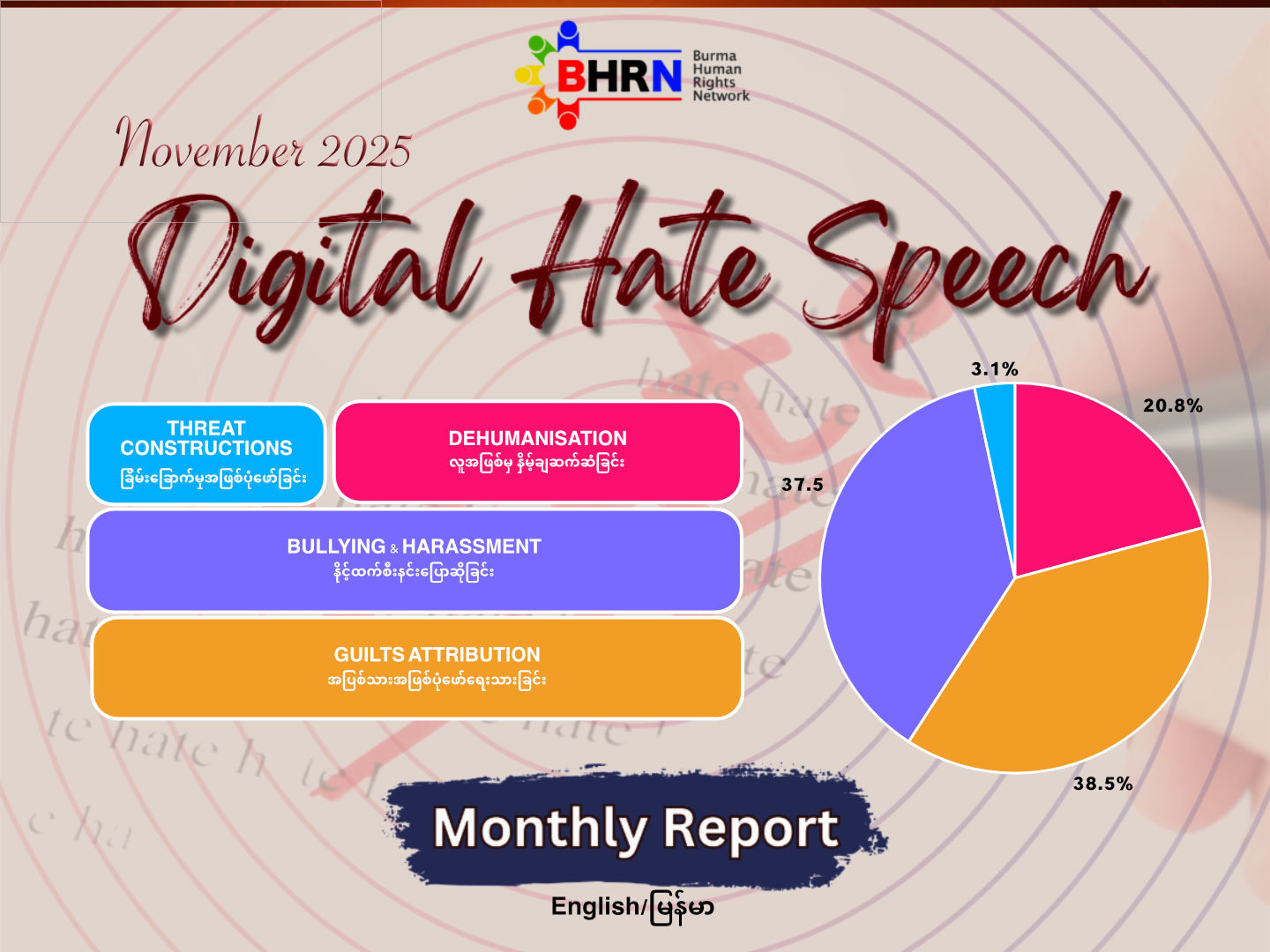
The spread of hate speech and misinformation on social media and other communication channels in Myanmar exacerbates ethnic, religious, and political tensions, increasing conflicts within communities. This report systematically monitors hate speech that occurred in Myanmar during November 2025, analyzing their main sources, patterns of dissemination, vulnerable social groups, and potential impacts.
မြန်မာနိုင်ငံအတွင်း ဆိုရှယ်မီဒီယာနှင့် အခြားဆက်သွယ်ရေးလမ်းကြောင်းများပေါ်တွင် အမုန်းစကား (Hate Speech) များ၊ သတင်းတုသတင်းမှားများ ပျံ့နှံ့မှုသည် လူမျိုးရေး၊ ဘာသာရေးနှင့် နိုင်ငံရေးတင်းမာမှုများကို ပိုမိုအားကောင်းစေပြီး လူမှုအသိုင်းအဝိုင်းအတွင်း ပဋိပက္ခများ မြင့်တက်လာစေနိုင်သည်။ ဤအစီရင်ခံစာသည် ၂၀၂၅ ခုနှစ်၊ နိုဝင်ဘာလအတွင်း မြန်မာနိုင်ငံတွင် ဖြစ်ပေါ်ခဲ့သော အမုန်းစကားများကို စနစ်တကျ စောင့်ကြည့်လေ့လာကာ ၎င်းတို့၏ အဓိက အရင်းအမြစ်များ၊ ပျံ့နှံ့မှုပုံစံများ၊ ထိခိုက်နိုင်ခြေရှိသော လူမှုအုပ်စုများနှင့် ဖြစ်ပေါ်လာနိုင်သည့် သက်ရောက်မှုများကို ဆန်းစစ်ထားပါသည်။
Read more: November 2025 - Digital Hate Monthly Report (Eng -Myan)