
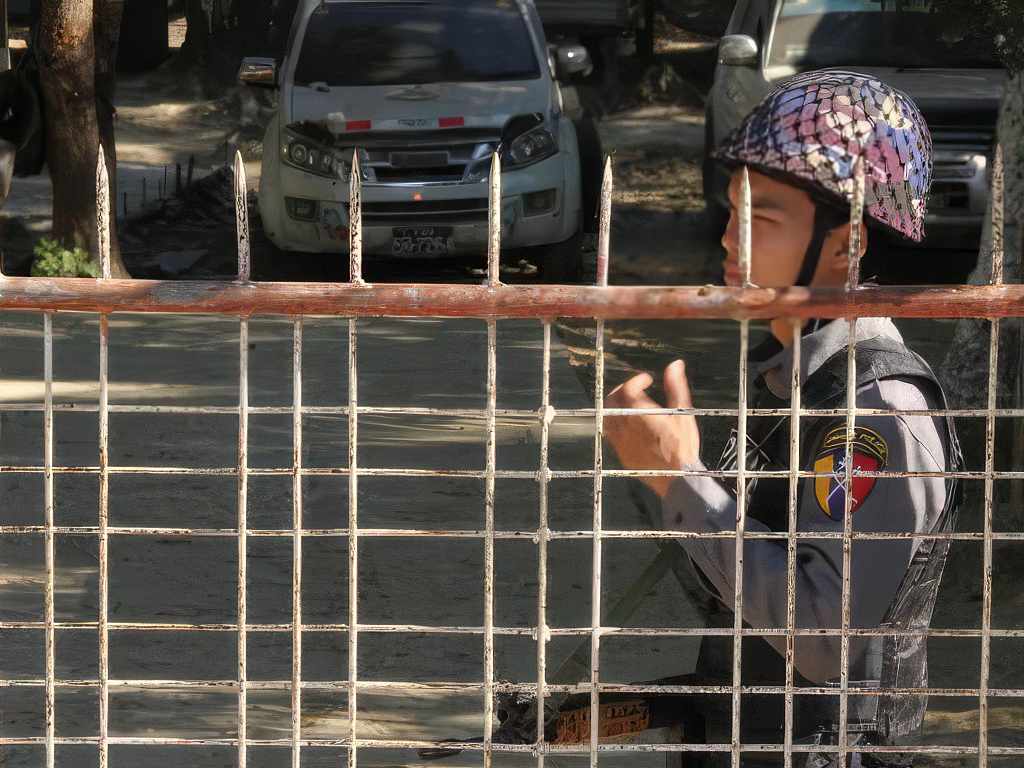
Rohingya refugees cite coercion by the Myanmar junta and Bangladesh authorities to return to Myanmar
London, UK - The Myanmar junta and Bangladesh authorities are using coercive practices during the ongoing repatriation process, said the Burma Human Rights Network (BHRN) today.
On Tuesday, 31 October 2023, Myanmar junta officials arrived in Bangladesh to meet with Rohingya refugees as part of a long-stalled repatriation scheme. Reportedly, Bangladesh officials said Myanmar plans to return around 3,000 Rohingya by December 2023. This follows two previous failed repatriation attempts in November 2018 and August 2019.
Following the attempted military coup in February 2021, the Bangladesh government and Myanmar junta renewed discussions around repatriation in January 2022.
“These coercive attempts to force Rohingya refugees back to Myanmar would be refoulement and against international law,” said BHRN’s Executive Director Kyaw Win. “We cannot send the Rohingya back into the hands of the Myanmar generals who orchestrated the genocide against them. The military junta is carrying out atrocity crimes across the country and Rohingya are still being held in open-air prisons. Voluntary, safe, and dignified returns are not possible in a context like Myanmar and won’t be until the junta is defeated.”
Bangladesh is sheltering nearly one million Rohingya, most of whom fled the 2017 genocidal attacks against them by the Myanmar military. In Myanmar, some 600,000 Rohingya remain trapped in internment camps in Rakhine State under a system of discriminatory laws and policies that amount to crimes against humanity and ongoing genocide.
To gather the perspectives of the Rohingya regarding the repatriation process, BHRN interviewed 15 Rohingya refugees in August and September 2023. Seven of the fifteen Rohingya interviewed shared experiences of being pressured or coerced by the Myanmar junta and Bangladesh authorities to be part of the planned repatriation process.
In Bangladesh, refugees cited coercive practices by camp-level authorities known as Camp-in-Charge officials.
A Rohingya woman, 23, originally from Buthidaung Township in Myanmar and now living in Cox’s Bazar District, told BHRN about being pressured by her Majhi, an unelected Rohingya leader, to go back to Myanmar. She said: “Last month [in July 2023], our Majhi was being called into a meeting with the Camp-in-Charge [CiC, a Bangladesh official]. In that meeting, the Majhi was told by the CiC to take a list from their block as people need to go back to their own country.” She continued:
My Majhi came to my block and asked us for all of our identity documents to give to the CiC as we will have to go back to Myanmar. My mom told them that they want to go back to Myanmar but only if we can have our safety secured, our rights, and our own land. We did not hand over our documents [to the Majhi], but some other people did. Later CiC threatened some people that if they did not give their name for the [repatriation] list that they will be denied food and other humanitarian aid.
Another Rohingya refugee woman who fled Myanmar in 2017 told BHRN about her relatives being called by junta authorities in Rakhine State to pressure her family in Bangladesh to repatriate, saying:
The Myanmar military wants to show the world that they are kind and are letting us come back. My relatives in Myanmar were called [by the military] and told to call me and their other relatives in Bangladesh and tell them to come back. My relatives said the military told them to tell me to come back.
Similarly, another refugee, 50, told BHRN, “We were called by our villagers in Myanmar. They said that the Myanmar military is pressuring them to call us [in Bangladesh] to convince us to come back to Myanmar.”
In addition to the use of coercive practices to force refugees back to Myanmar, refugees also expressed concern over the limited consultation and information sharing regarding the repatriation process by the Bangladeshi authorities and restricted avenues to share their opinions on the process. This was particularly true for women.
During a Myanmar delegation visit to Bangladesh to meet with refugees on the repatriation process in March 2023, the Bangladesh authorities told some women who were invited not to speak. A Rohingya refugee woman, 35, who joined the meeting told BHRN:
There was a Myanmar delegation team that came to Bangladesh in relation to the repatriation process [in March 2023]. There was a consultation meeting with the Rohingya. Some women were asked to join. The Bangladeshi authorities told the women that they were not allowed to speak during the meeting. They told the women to sit in silence and listen. It was the CiC and different departments from the police, including Detective Branch, that told us not to raise any issues we were facing in the camps.
Rohingya also told BHRN that they were lied to and deceived by Bangladesh administrators into joining meetings about repatriation. Rohingya were told that the meeting concerned possible resettlement to a third country, but upon arriving at the meeting site, they were told that they needed to go back to Myanmar. In the words of one Rohingya woman, 32:
Recently, there was a meeting held at Camp [exact location withheld for security reasons]. The [Rohingya] people invited were told by the CiC that the discussion was going to be on [third country] resettlement. When people arrived, the CiC told them that they had to go back to Myanmar. People were very confused. They thought they were coming for a discussion about going to America and other places, but it wasn’t.
All 15 Rohingya refugees who spoke to BHRN said they would not return under the current conditions in Rakhine State, which are still unsafe. As shared by a 32-year-old Rohingya, “I have been in touch with friends and relatives in Myanmar, and they told me that they are facing the same issues they have been facing since 2012. There is still violence happening in Myanmar…. We don’t want to go back to a place where we see there are still protection issues”.
Currently, in Rakhine State, nearly 600,000 Rohingya remain trapped under a system of discriminatory laws and policies that amount to crimes against humanity and ongoing genocide. Since the attempted military coup on 1 February 2021, Rohingya have been subjected to tightened restrictions on their fundamental freedoms and are increasingly at risk of being subjected to further atrocity crimes.
All of the Rohingya refugees interviewed cited the need for restored basic rights, safety guarantees, and accountability for past crimes in order to return to Myanmar.
A Rohingya woman originally from Buthidaung Township, told BHRN about her experience witnessing the atrocities by the military and her fears of ongoing persecution if she returns to Rakhine State:
As I witnessed the genocide in Myanmar and saw the military throw thousands of children into the fire and women raped and killed in front of me, I don’t have any hope in the repatriation process. They [the Myanmar junta authorities] are not guaranteeing our safety and rights. Only if they ensure our safety and rights, it will be a proper repatriation process. We faced genocide in our country, and we don’t want to go back to be tortured and face violence again.
Another Rohingya refugee said she needed guaranteed rights before returning, saying: “If we go back to our country, we need dignity, justice, citizenship, and human rights. We see that there is still torture and violence still happening.”
Several refugees voiced to BHRN their desire to return to their original homeland in Rakhine State and do not want to be sent to another camp. A Rohingya refugee, 21, said:
They are not doing the repatriation in the right way. We are not hopeful about the process. They are requesting us to move from camp to camp. We want repatriation from camp to our [original] home. They [the Myanmar junta] are telling us that they will put us in a camp first and then later they will move us to homes, but we don’t believe them [the military junta]. We want repatriation on our own terms and not how the military wants it.
Under international human rights law, the principle of non-refoulement guarantees that no one should be returned to a country where they would face torture, cruel, inhuman, or degrading treatment or punishment. Since 2017, Bangladesh has respected this international principle and not forced Rohingya back to Myanmar.
However, food ration cuts in the refugee camps in Cox’s Bazar made in March and June of this year have resulted in increased food insecurity for the Rohingya. Bangladesh authorities have also been intensifying restrictions on livelihoods, movement, and education for the Rohingya. Together, the increased humanitarian needs and coercive government restrictions from the Bangladesh authorities have pushed many Rohingya to consider making premature returns to Myanmar.
BHRN calls on the international community to condemn any efforts to forcibly return Rohingya refugees back to Myanmar, where their lives and liberty would be at risk. Donor governments must provide funding to meet the shortfalls in the humanitarian response in Bangladesh. Bangladesh should work to allow Rohingya to have sustainable solutions until they return to Myanmar to their original homelands with full rights, citizenship, and justice for the crimes committed against them. Any future negotiations about the Rohingya’s return should be made with the Rohingya themselves.
Organisation’s Background
BHRN is based in London and operates across Burma/Myanmar working for human rights, minority rights and religious freedom in the country. BHRN has played a crucial role in advocating for human rights and religious freedom with politicians and world leaders.
Media Enquiries
Please contact:
Kyaw Win
Executive Director
Burma Human Rights Network (BHRN)
E: This email address is being protected from spambots. You need JavaScript enabled to view it.
T: +44(0) 740 345 2378
BHRN's Press Release PDF File


