1Introduction
The spread of hate speech and misinformation across social media and other communication channels in Myanmar has the potential to intensify ethnic, religious, and political tensions and to heighten conflicts within communities. In January, hearings related to genocide allegations were held at the International Court of Justice (ICJ). In connection with these proceedings, hate speech rejecting the possibility of Rohingya legal success was observed among both supporters and opponents of the military.
This report systematically monitors and analyzes hate speech incidents that occurred in Myanmar, examining their primary sources, dissemination patterns, affected vulnerable social groups, and potential impacts.
The study focuses primarily on violent or inciting content, ethnic and religious insults, and strongly polarized political rhetoric appearing on widely used social media platforms, including Facebook, TikTok, and Telegram. In addition, it proposes legal, technological, and community-based measures necessary to prevent and counter hate speech.
The report also documents how hate speech trends evolved during January in relation to Myanmar’s current political, economic, and social conditions. These findings are intended to serve as a useful reference for peacebuilders, media practitioners, policymakers, and civil society organizations.
2Research Methodology
Hate speech is inherently rooted in emotional expression and subjective sentiment, it does not have a universally accepted definition. For this report, the Burma Human Rights Network (BHRN) defines hate speech as follows:
"Hate speech refers to any form of expression, verbal, written, behavioral, or artistic, that targets an individual or group to express severe criticism, condemnation, or to incite hostility and hatred toward characteristics that should be protected. This includes attacks on fundamental rights and identity, such as religion, language, gender, sexual orientation, citizenship, ethnicity, skin color, beliefs, or physical appearance."
Based on the findings of this study, hate speech is further categorized into the following types:
- Criminalisation: Portraying specific groups as inherent criminals or "sinners."
- Dehumanisation: Stripping individuals of their human qualities or dignity.
- Oppressive Speech: Language used to exert dominance over or bully marginalized groups.
- Incitement: Direct calls for violence, riots, or civil unrest.
- Existential Threat: Characterising specific groups as a fundamental threat to the existence of others.
- Glorification: The celebration or promotion of acts of violence and hatred.
In the context of Myanmar’s ongoing political and military tensions, BHRN continuously monitors and documents hate speech terminology disseminated by the military and its associated propaganda channels.
1Data Collection
Monitored Platforms: Data is gathered from Facebook, TikTok, and Telegram channels.
Content Categories:
- Hate speech related to ethnicity, religion, politics, and gender.
- Content inciting violence and discrimination.
- Harmful misinformation and inciting posts
2Data Approach
- Manual Monitoring: Members of the Hate Speech Monitoring Team systematically review and verify specific keywords, phrases, images, and videos to ensure a high level of accuracy in documentation.
3Data Analysis
- Thematic Classification: Content is grouped into specific themes—such as ethnicity, religion, and politics to identify recurring patterns of targeting.
- Spread Measurement: Engagement (likes, shares, comments) and reach on social media platforms are measured.
- Identification of Key Perpetrators: The study identifies specific groups and individuals responsible for disseminating hate speech, while assessing their level of influence and broader social impact.
4Ethical Considerations
- Data Confidentiality: All monitored and documented information is stored securely. BHRN adheres to a strict policy that prohibits the disclosure of data to the public or unauthorised individuals.
5Limitations
- Platform Coverage: It is not possible to comprehensively monitor all social media platforms
- Encryption Challenges: Some online activities occur on encrypted communication platforms, which pose significant challenges for effective tracking and monitoring.
- Authenticity and Impact: The prevalence of fake accounts and bots complicates assessing the genuine social impact accurately
3Monitoring Activities
This report was compiled by monitoring online and print media used by the military junta and its supporters to disseminate hate speech. During January 2026, BHRN conducted a monitoring exercise with the following results:
- Facebook: monitored 3 groups, one page, and 13 accounts; identified 47 instances of hate speech.
- Telegram: Monitored 24 Channels; identified 38 instances of hate speech.
- TikTok: Monitored 24 Accounts; identified 19 instances of hate speech.
- Print Media: Monitored 2 newspapers and 1 journal.
Overall, during January, a total of 104 instances of misinformation and hate speech were documented. The findings are presented using tables, graphs, and clear descriptive text. This report further analyses the root causes and impacts of hate speech, offering recommendations for prevention and mitigation. Due to significant limitations in achieving comprehensive coverage of the social media landscape, this report may miss undocumented hate speech incidents.
Key Findings
1Targeted Groups
- Rohingya people are repeatedly targeted through coordinated attacks that portray them as criminals, labeling them as “illegal Bengalis” who allegedly entered from Bangladesh.
- Muslims are subjected to discriminatory and religiously offensive content, including hate speech that labels them as Islamic extremists and uses derogatory slurs and demeaning stereotypes.
- Women are targeted with gender-based hate speech that includes dehumanizing language, sexual harassment, the disclosure of personal information (doxxing), and defamatory allegations intended to damage their dignity and safety.
- Armed organizations and resistance groups, including the Arakan Army (AA), the Kachin Independence Army (KIA), and the People’s Defence Force (PDF) units, are portrayed as criminals through accusations of drug trafficking, theft, terrorism, murder, robbery, and rape, with the intent of inciting hatred within society.
2Methods of Disseminating Hate Speech and Disinformation
- Hate speech targeting Muslims and Rohingya people is disseminated across social media platforms such as Facebook, TikTok, and Telegram in various formats, including posts, videos, and cartoons, promoting ethnic, religious, and political hatred.
- The Arakan Army, Kachin Independence Army, and People’s Defence Force are depicted as criminal gangs, terrorists, thieves, and rapists to spread hate and delegitimize their activities.
- The circulation of false news and misinformation is used to deliberately foster suspicion and distrust among the general public.
3Impacts
- In connection with proceedings at the International Court of Justice (ICJ), the spread of ethnic- and religion-based hate speech and threats against Rohingya people and Muslims has intensified communal hatred, undermining peacebuilding efforts and obstructing democratic transition.
- Public hostility toward the Arakan Army (AA), Kachin Independence Army (KIA), and People’s Defence Force (PDF) members has increased as a result of sustained hate campaigns.
- Women’s safety and dignity have been compromised, and activists face threats and harassment both online and offline.
4Findings
Spread of Hate Speech Following The Gambia’s Case Against Myanmar
The genocide case filed by The Gambia against Myanmar at the International Court of Justice (ICJ) has led to an increase in hate speech within domestic online and media environments. In particular, intense ethnic and religious hate speech targeting Rohingya people and Muslims has emerged, including hostile rhetoric describing the ICJ as engaging in “political interference.”
Some hate narratives have invoked the justification of “protecting national interests” to spread dehumanizing portrayals of a particular ethnic group, combining misinformation and incitement. Supporters of the ICJ process, human rights organizations, and journalists have also been targeted with accusations, labeling them as “destroyers of the nation.”
Although the ICJ case is fundamentally a legal matter, it has intensified ethnic polarization within the country. The spread of hate speech has further deepened distrust and extremist attitudes among different communities.
The current coup leader, Senior General Min Aung Hlaing, has also openly used anti-Muslim rhetoric. During a speech delivered on a trip to Shan State, he reportedly used a derogatory term referring to Muslims, according to coverage by state-run media. While Myanmar is defending itself against genocide allegations at the ICJ, his discriminatory remarks drew increased criticism from human rights observers. Source: Burma Independent Voice
(See the translation of the attached link below the conclusion (1))

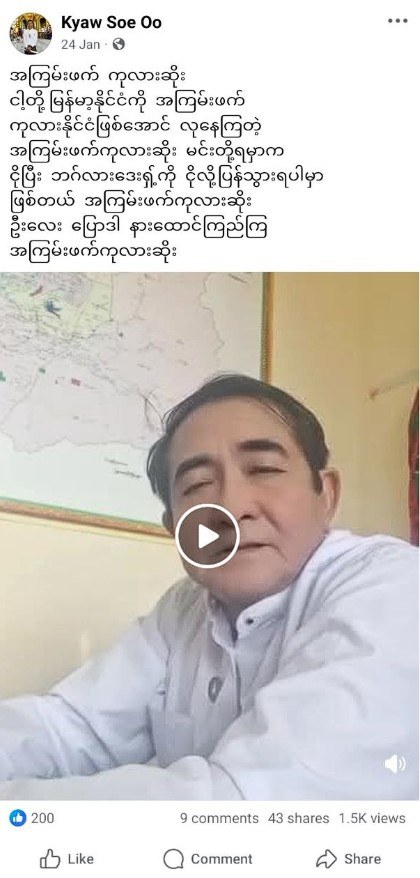
Following his remarks, supporters of the military council began widely repeating the same slur. Pro-military news presenter Kyaw Soe Oo used the same terminology on his personal Facebook page, spreading hate speech portraying Muslims and Rohingya as terrorists. Source: Kyaw Soe Oo
(See the translation of the attached link below the conclusion (2))
An announcement calling for a protest opposing the ICJ case on January 27 in Yangon and Mandalay was circulated by nationalist activist Ma Poe Ei (also known as Ma Pu Tu) via her Telegram channel “MaharThway.” The invitation included a recitation of a poem that mocked Muslims using derogatory language. Source: Mahar Thway post
(See the translation of the attached link below the conclusion (3))
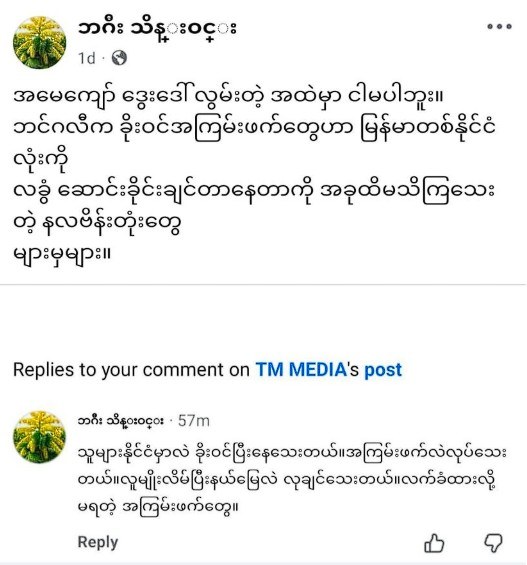
There were also claims that the ICJ proceedings were part of a political plot by a religious group against the country. A Facebook account belonging to Bagi Thein Win posted that if Myanmar were to lose the case, Rohingya people could gain citizenship and the country might become an Islamic state, portraying Muslims as terrorists. Source: Bagi Thein Win
(See the translation of the attached link below the conclusion (4))

While the ICJ case concerning alleged genocide against the Rohingya in northern Rakhine State is a judicial process, it has contributed to increased nationalist, ethnic, and religious hate speech within Myanmar. This trend is particularly evident on platforms such as Facebook and Telegram, where political hate speech has visibly expanded into broader ethnic and religious hostility.
Dissemination of Hate Speech Against Ethnic Armed Organizations
In January, the spread of hate speech targeting ethnic armed organizations continued. A post on a Telegram channel based in Naypyidaw shared an image of an injured member of the People’s Defence Force (PDF) and used derogatory language to mock him and portray him as unfit to be a soldier. Source: Naypyidawl (See the translation of the attached link below the conclusion (5) )
The same channel also claimed that environmental damage in the Mali River, the headwaters of the Irrawaddy River in Kachin State, caused by gold miners, was the result of actions by the Kachin Independence Army (KIA). The post used demeaning language and portrayed KIA members as terrorists. Source: Naypyidaw
(See the translation of the attached link below the conclusion (6))
A Telegram channel reported that the Arakan Army (AA) was recruiting pregnant Chin women and local women in Paletwa, Chin State, claiming that local women were frightened as a result. The post framed the AA as terrorists and suggested that Chin armed groups should take action against them. Source: Sit Thwe
(See the translation of the attached link below the conclusion (7))

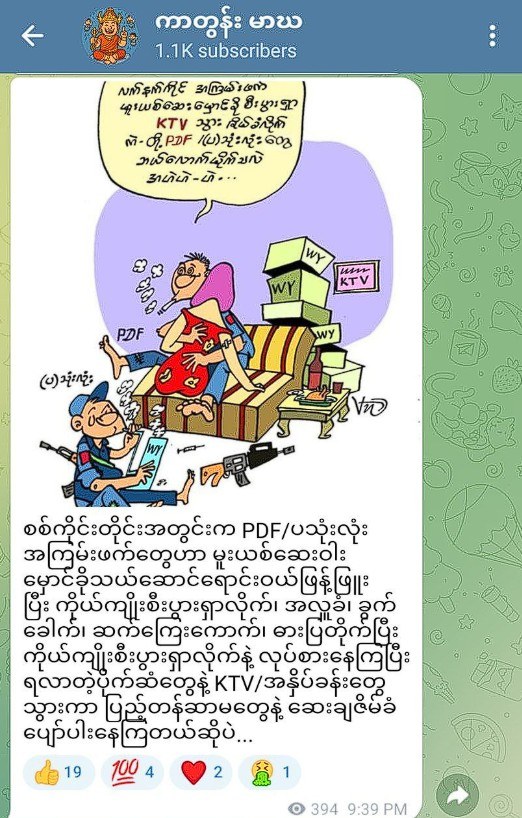
A cartoon illustration circulated on Telegram alleged that People’s Defence Forces in Sagaing Region were engaging in immoral and criminal activities for personal gain. The accompanying captions used degrading language and portrayed PDF members as terrorists. Source: Cartoon Maga
(See the translation of the attached link below the conclusion (8))
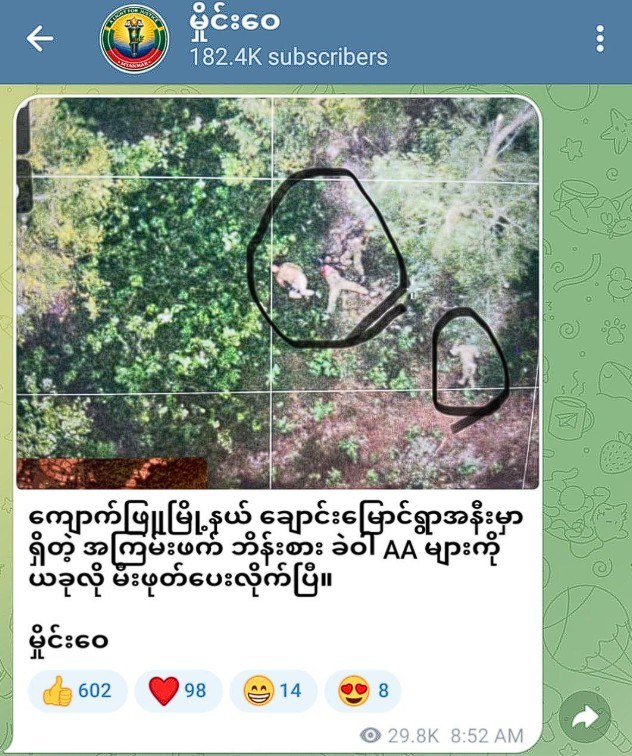
Coverage of clashes between junta forces and AA troops in Kyaukphyu, Rakhine State included hate speech in reports of AA casualties. A Telegram channel described AA members using dehumanizing terms. Source: Hmwe Wai
(See the translation of the attached link below the conclusion (9))
Reporting on the junta’s seizure of a KIA base in Lamyang village, Waimaw Township, Kachin State, also contained hate speech. A Telegram channel mocked KIA members using insulting and derisive language. Source: Naypyidaw (See the translation of the attached link below the conclusion (10))
Dissemination of Hate Speech Against Rohingya
Since the resumption of proceedings in The Gambia concerning the investigation into alleged genocide against the Rohingya, the spread of hate speech targeting the Rohingya people has increased again. A Facebook account belonging to Bagi Thein Win posted hate content claiming that the Rohingya were granted space in Myanmar by a previous democratic government, and mockingly suggested that the military coup occurred because of this. The post included derisive language portraying the Rohingya as terrorists. Source: Bagi Thein Win (See the translation of the attached link below the conclusion (11))
A Facebook account operated by Ye Ko Naing spread hate speech, claiming that Rohingya do not exist in Myanmar and alleging that they were brought in by British colonial authorities. The posts used mocking and derogatory expressions toward the Rohingya. Source: Ye Ko Naing
(See the translation of the attached link below the conclusion (12))

Another post from Bagi Thein Win’s Facebook account described Rohingya as terrorists who had illegally entered Myanmar, again using ridicule and demeaning language to frame them as violent actors. Source: Bagi Thein Win
(See the translation of the attached link below the conclusion (13))
The same account also circulated additional hate speech portraying the Rohingya as perpetrators of killings against the Rakhine people and Hindus, using inflammatory language that mocked and dehumanized them. Source: Bagi Thein Win (See the translation of the attached link below the conclusion (14))
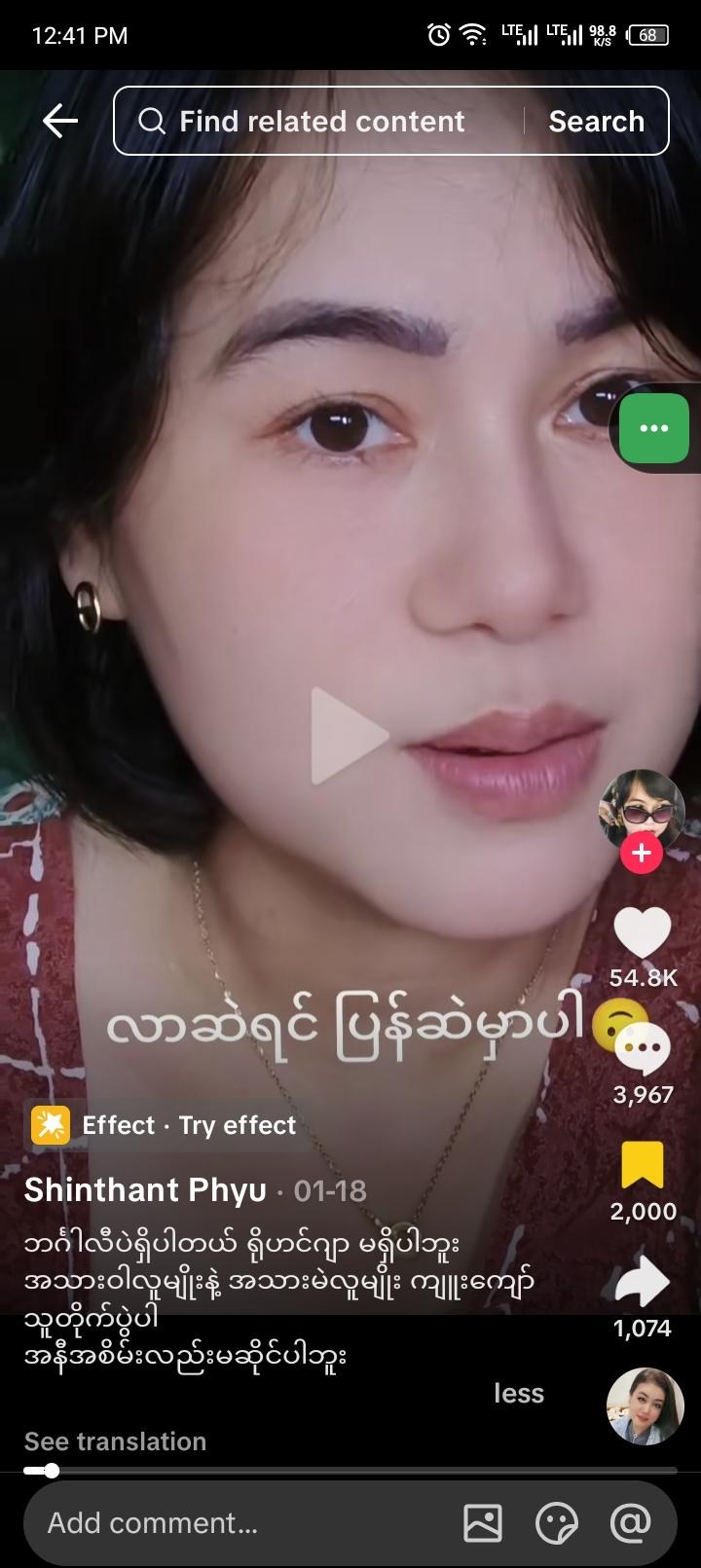
A TikTok account belonging to Shinthant Phyu shared hate speech portraying the Rohingya issue as an ethnic conflict. The post claimed that Rohingya do not exist in Myanmar and mocked differences in physical appearance to incite hostility between ethnic groups. Source: Shinthant Phyu
(See the translation of the attached link below the conclusion (15))
Dissemination of Hate Speech Against Muslims
The Myanmar Immigration Department is widely reported to impose various forms of restrictions on Muslims living in the country. However, nationalist monk Pauk Sayadaw posted on his Telegram channel about a routine application submitted by the wife of a junta soldier for the replacement of a lost citizenship card, claiming that such requirements would not apply if the applicant were Muslim. The post contained mocking and derogatory expressions directed at Muslims. Source: Pauk Sayadaw (See the translation of the attached link below the conclusion (16))
A Facebook account named Nyein Chan Par Say spread hate speech while denying the existence of Rohingya in Myanmar, referencing Muslims’ religious prohibition against eating pork and using this point to ridicule Muslims through disparaging language.
Source: Nyein Chan Par Say
(See the translation of the attached link below the conclusion (17))

A Facebook account operated by Ni Min Shin reshared news about a fire at Rohingya refugee camps in Bangladesh and used the incident to disseminate hate speech portraying Muslims as terrorists and global threats. Source: Ni Min Shin
(See the translation of the attached link below the conclusion (18))

Dissemination of Hate Speech Against Women Across Sectors
A Telegram channel run by Ka Ka Han spread hate speech targeting female members of the People’s Defence Force (PDF), claiming they acted as servants to their superiors. The posts used degrading language, portraying them as sexual slaves and domestic servants in an apparent attempt to discredit the resistance movement. Source: Ka Ka Han (See the translation of the attached link below the conclusion (19))
The same channel also targeted women who joined armed resistance groups to oppose military rule, portraying them as morally corrupt and claiming they were infected with sexually transmitted diseases. The posts used mocking and demeaning expressions aimed at humiliating women in armed groups. Source: Ka Ka Han
(See the translation of the attached link below the conclusion (20))

A Telegram channel operated by Aung Min shared content describing the alleged punishment of female PDF members at a resistance camp and accompanied it with sexually abusive and mocking language directed at the women. Source: Aung Min
(See the translation of the attached link below the conclusion (21))
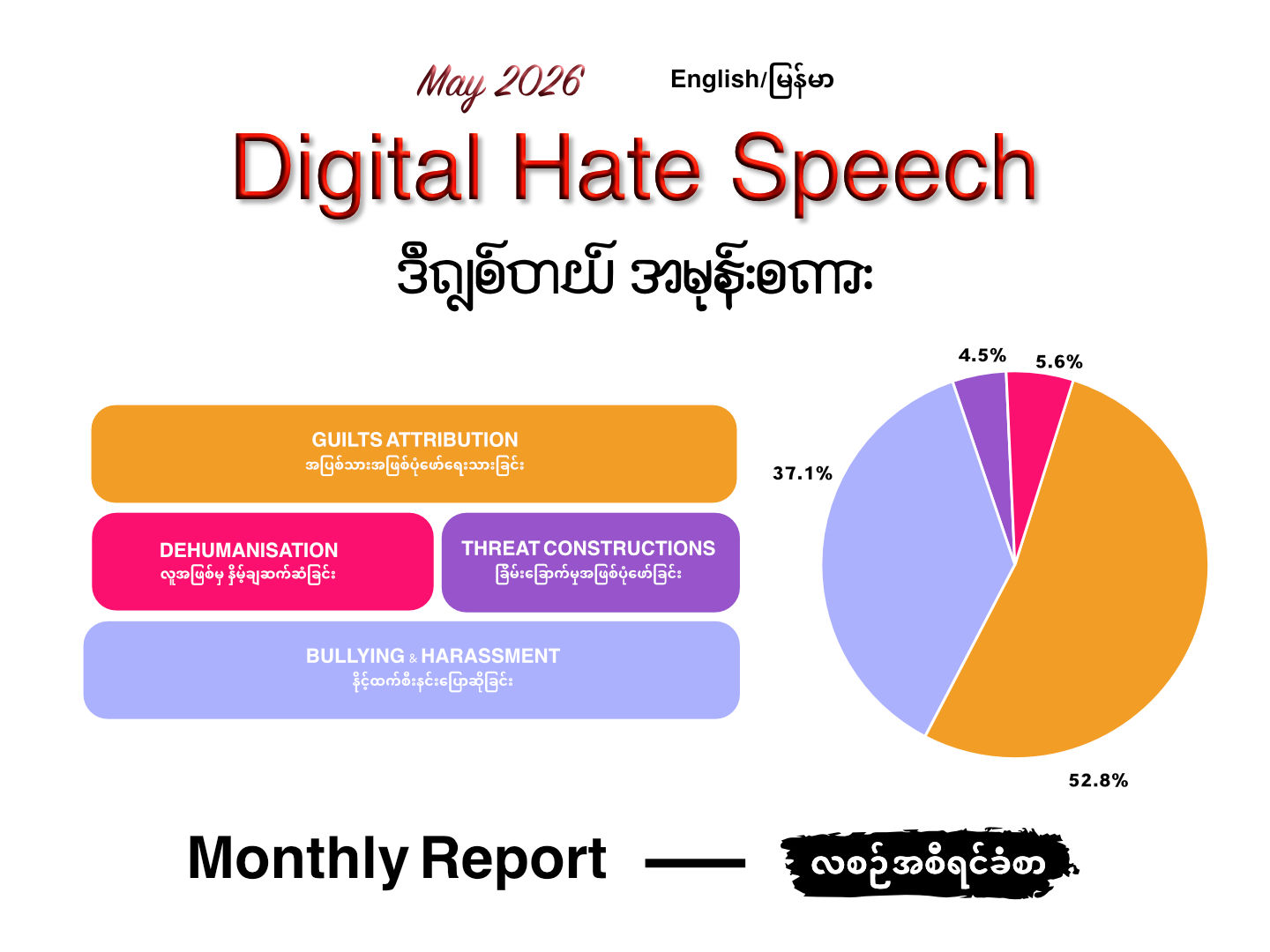
5The figure illustrating types of hate speech

6The figure illustrating the number of hate speech targets

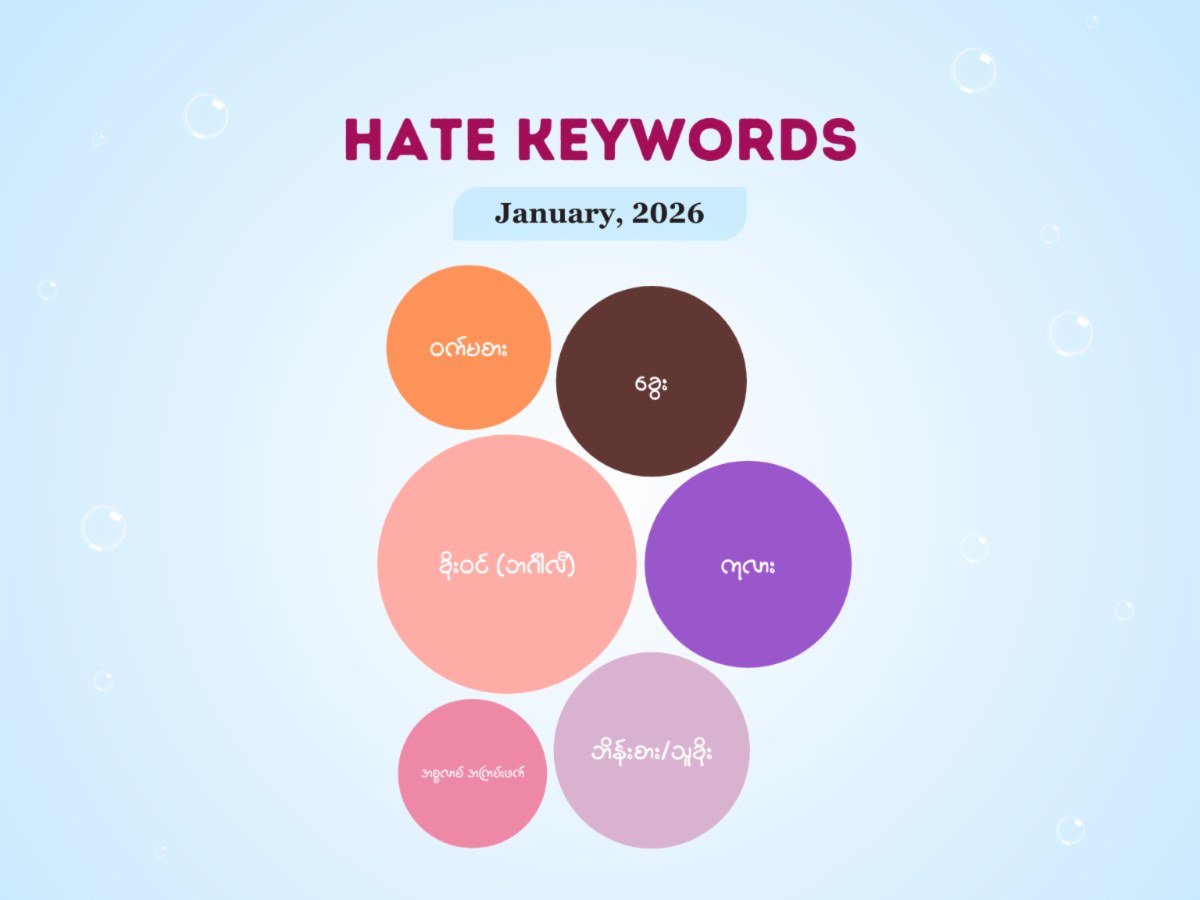
7Keywords used by hate speech writers
8Distribution by Platform

9Conclusion
During January, the spread of hate speech across online and media environments in Myanmar remained high due to the country’s political situation, armed conflicts, and social developments. In particular, the resumption of hearings at the International Court of Justice (ICJ) led to a noticeable increase in hate speech targeting individuals with differing political views, as well as a rise in ethnic slurs and threatening language.
In addition, religious organizations supportive of the military issued separate statements expressing support for the military delegation defending the country at the ICJ against allegations of genocide. Following elections organized by the military, the military-backed Union Solidarity and Development Party (USDP) won, and nationalist extremists previously known for promoting hate speech became members of parliament. Under these circumstances, reducing hate speech has become an urgent necessity for social cohesion in Myanmar.
Translations of the documented posts
The posts below are hate speech documented by BHRN. They are translated here only as evidence for this report.
Translation (1)
Military leader Min Aung Hlaing uses the hate speech term “kalar terrorist.”
21 January — Burma Independent Voice
Military leader Min Aung Hlaing, who is currently facing trial at the International Court of Justice (ICJ) over genocide allegations against the Rohingya, used the racist slur “kalar terrorist” in a junta propaganda newspaper.
He remarked on January 20 while meeting families of military officers at the Eastern Central Command headquarters in southern Shan State. He said the military had suppressed not only Kuomintang incursions but also “kalar terrorists” while defending against foreign threats.
Even while under pressure at the ICJ over genocide accusations, the military group continues to use such racist language in its propaganda media. In addition, ultranationalist organizations backed by the military, such as Ma Ba Tha, are reportedly preparing to support the junta delegation attending the ICJ proceedings.
During the NLD government in 2020, directives were issued condemning hate speech to prevent violence. However, the coup leader is now reverting to old tactics of exploiting racial hatred to divide the public and conceal the regime’s failing military and political situation.
Photo caption:
“Military leader Min Aung Hlaing uses the hate speech term ‘kalar terrorist.’”
Translation (2)
Kyaw Soe Oo wrote on 24 Jan:
“Terrorist kalars — you terrorist kalars trying to turn our Myanmar country into a terrorist kalar nation will end up crying and crawling back to Bangladesh. Listen to what I say, you terrorist kalars.”
Translation (3)
Nationalist Ma Putu incites hatred while reciting a poem in a video:
Rise up, Myanmar! O people of Myanmar!
They plot with lies and deception. Those Kalar Sot (Rubbish Muslim) have slipped into our land, our soil, insulting us and making false accusations, taking the case to the ICJ, seeking to bring charges against us.
O rightful heirs born of Myanmar, do not bow your heads—have pride in your heritage. Let the world witness the brave, fervent blood of Myanmar.
Rise up, Myanmar! O people of Myanmar!
Translation (4)
Bagi Thein Win wrote:
“If Myanmar loses at the ICJ, they will give citizenship and territory to the Bengali illegal-immigrant kalars, raise them like livestock, and prepare for the Myanmar people to wear skullcaps. Hating a group isn’t the issue. If we can’t take Malaysia and Indonesia as examples, we’ll suffer. By then, we’ll already be dead.”
Translation (5)
NayPyiDaw wrote:
“The discipline and dignity of the Gangaw PDF Spring Revolution fighters can’t even be compared to the mangy flea-bitten dogs in the village. Disgusting.”
Translation (6)
NayPyiDaw wrote:
“This is a photo of the Mali River being dug up by the KIA. The photo was sent today from near the upper Tianzup area. The muddy water flowing into the river shows they’re mining gold in the stream. They’re dredging both the main river and the tributary.
The large metal rafts seen are scraping the riverbed and dumping the sand back into mid-river. So the entire riverbed is being destroyed, and major changes to the river’s course will occur. There are hundreds of these rafts in the Mali River. Soon, the river will be ruined.
Why don’t those who talk about ecosystem destruction, environmental damage, and fish extinction speak up about this?
These are the destructive acts of the drug-dealing KIA that river lovers pretend not to see or hear.”
Translation (7)
Sit Thway reports news from KIMO MEDIA titled:
“Residents alarmed as ULA/AA forcibly conscripts women, including mothers and pregnant women, in Sami Township.”
Caption:
“The AA terrorist group is forcibly threatening and abducting local Chin women, including pregnant women and mothers, for recruitment in Sami Township, Chin State, causing fear among residents… Shockingly, Chin armed groups can just watch while the AA terror group abuses and abducts Chin women like this.”
Translation (8)
Cartoonist Maga wrote with the caption:
“Terrorist PDF groups in Sagaing Region are profiting by trafficking drugs, begging for donations, extorting money, robbing people, and using the proceeds to go to KTVs and massage parlors to indulge themselves with prostitutes.”
Translation (9)
“Near Chaung Mraung village in Kyaukphyu Township, the terrorist drug-dealing or Khe War (dog) AA were burned like this.”
— Hmwe Wai
Translation (10)
“Drug-dealing KIA terrorists from Lamyan village, Waingmaw Township, were wiped out and retreated in a daze. They left behind 2 grenade launchers, 4 bazooka rounds, 14 grenades, 300 bullets, 11 magazines, and 3 helmets as ‘donations.’”
Translation (11)
Bagi Thein Win wrote:
“(I don’t even want to say this.) Which government gave space in Myanmar to the illegal Bengalis calling themselves Rohingya? It was the NLD. Look back at history. That’s why they got overthrown. I speak briefly.”
Translation (12)
Ye Ko Naing wrote:
“There are 135 ethnic groups in Myanmar; the Rohingya are not included. Those called Bengalis were only slaves brought by British colonialists when they occupied Myanmar. Therefore, there is no Rohingya ethnicity in Myanmar, and Bengalis are not citizens but slaves brought by colonialists.”
— Ye Ko Naing, 88 Generation Nationwide Network (Myanmar)
Translation (13)
“I’m not among those mourning Mother Kyaw Dwe. The Bengali illegal terrorists want to make all Myanmar wear skullcaps, and there are still so many fools who don’t realize it.”
Reply comment:
“They sneak into other countries, too. They commit terrorism, fake their ethnicity, and try to seize territory. Terrorists that can’t be accepted.”
Translation (14)
Bagi Thein Win shared:
“Video showing Bengali illegal kalars who entered Rakhine State brutally killing Rakhine and Hindu people and burning homes. The genocide committed by Bengalis against Hindus is being covered up. More than 100 Hindus were brutally killed, and women were raped and murdered.”
Translation (15)
Title: “If they insult, we’ll insult back.”
Shinthant Phyu wrote:
“There are only Bengalis, no Rohingya. It’s a conflict between yellow-skinned and dark-skinned invaders. Red or green politics has nothing to do with it.”
Translation (16)
A monk named Pauk Sayardaw reposted:
“Immigration officials in Kalaw have no empathy. A young girl came to report her lost ID card. Because she didn’t pay money, they told her to bring a copy and sent her away. The girl’s husband has been fighting on the front lines for the country for almost two years. If it were a Muslim kalar, they’d even call him father.”
Caption:
“When I went to replace my lost ID, they said I had to bring a copy of the lost card, so I should follow a thief, and should I beg for my ID back?”
Translation (17)
“Nyein Chan Par Say” wrote:
“There is no such thing as Rohingya in Myanmar—only non-pork-eaters who sneaked in like dogs.”
Image caption:
“Where did the fake ethnic name come from? Protecting the dignity of the Union — Myanmar and ICJ discussion panel.”
Translation (18)
Ni Min Shin wrote:
“Don’t you believe yet that wherever kalars are, there’s no peace? They’re pests that destroy the world. That’s why they want more rights.”
Image caption:
“Fire at Rohingya refugee camp near Bangladesh border.”
Translation (19)
Ka Ka Han reposted:
“PDF members are dying for traitors to prosper and are even used as servants for terrorist leaders. Female PDF members not only have to sexually entertain leaders but also cook, wash clothes, iron, and do housework. From a life of comfort at home, they’ve become servants of traitors—is it worth it?”
Image caption:
“Young people arriving at the border are treated like saviors at first, but once taken into homes, they’re exploited; if rice is plentiful, they’re treated one way, if it runs low, they’re treated like beggars. Such people exist not only at the border but also in the jungle. I’ve experienced it myself…”
Translation (20)
Ka Ka Han wrote:
“Those who lost morality in the revolution. Why are there so many scandals, sexual misconduct, lies, and violence in the camps? Because when people escape pressure into liberated areas, they become overly happy and indulge in freedom like children left home alone.
Some units hide terrible news. For example, a father and daughter supposedly fled together but were caught naked at night; the girl, ashamed, shouted rape. Later, it turned out she was brought from Myawaddy. When a teacher suspected her frequent illness and tested her, she had HIV. When questioned, several soldiers admitted to relations, and some were infected. The doctor tested them because she caught a medic stealing supplies with the girl…
Male and female PDFs in the jungle behave wildly, and some male PDFs even hire prostitutes from KTVs and massage parlors to take turns with them, so many PDFs are reportedly now infected with STDs.”
Translation (21)
Aung Min wrote:
“The lives of PDF girls are beaten day and night with a stick, whether good or bad, only soft or hard. Pretty terrible, isn’t it?”
About BHRN
Burma Human Rights Network (BHRN) is based in London, operates across Burma/Myanmar and works for human rights, minority rights and religious freedom in Burma. BHRN has played a crucial role in advocating for human rights and religious freedom with politicians and world leaders.
Media enquiries
၁နိဒါန်း
မြန်မာနိုင်ငံအတွင်း ဆိုရှယ်မီဒီယာနှင့် အခြားဆက်သွယ်ရေးလမ်းကြောင်းများပေါ်တွင် အမုန်းစကား (Hate Speech) များ၊ သတင်းတုသတင်းမှားများ ပျံ့နှံ့မှုသည် လူမျိုးရေး၊ ဘာသာရေး နှင့် နိုင်ငံရေးတင်းမာမှုများကို ပိုမိုအားကောင်းစေပြီး လူမှုအသိုင်းအဝိုင်းအတွင်း ပဋိပက္ခများ မြင့်တက်လာစေနိုင်သည်။ ဇန်နဝါရီလတွင် လူမျိုးတုံးသတ်ဖြတ်မှုနှင့်ပတ်သက်ပြီး ICJ တွင် ကြားနာမှုကို ပြုလုပ်ခဲ့သည်။ ထိုအကြောင်းအရာနှင့် ပတ်သက်ပြီး စစ်တပ်ကို ထောက်ခံသူများနှင့် မထောက်ခံသူများကပါ ရိုဟင်ဂျာများ အမှုနိုင်ရေးကို လက်မခံနိုင်သည့် အမုန်းစကားများကို တွေ့ရှိရသည်။ ဤအစီရင်ခံစာသည် ၂၀၂၆ ခုနှစ်၊ ဇန်နဝါရီလအတွင်း မြန်မာနိုင်ငံတွင် ဖြစ်ပေါ်ခဲ့သော အမုန်းစကားများကို စနစ်တကျ စောင့်ကြည့်လေ့လာကာ ၎င်းတို့၏ အဓိက အရင်းအမြစ်များ၊ ပျံ့နှံ့မှုပုံစံများ၊ ထိခိုက်နိုင်ခြေရှိသော လူမှုအုပ်စုများနှင့် ဖြစ်ပေါ်လာနိုင်သည့် သက်ရောက်မှုများကို ဆန်းစစ်ထားပါသည်။
ဤလေ့လာမှုတွင် ဖေ့စ်ဘုတ် (Facebook), TikTok, တယ်လီဂရမ် (Telegram) အပါအဝင် လူသုံးများသော ဆိုရှယ်မီဒီယာပလက်ဖောင်းများပေါ်ရှိ အကြမ်းဖက်မှုနှင့် လှုံ့ဆော်မှုဆိုင်ရာ အကြောင်းအရာများ၊ လူမျိုးရေးနှင့် ဘာသာရေးအခြေပြု စော်ကားမှုများ၊ နိုင်ငံရေးအရ ပြင်းထန်သော ဝေဖန်မှုများကို အဓိကထား လေ့လာထားပါသည်။ ထို့အပြင် ဤမုန်းတီးရေးစကားဝိုင်းများကို တားဆီးကာကွယ်ရန် လိုအပ်သော ဥပဒေရေးရာ၊ နည်းပညာဆိုင်ရာနှင့် လူမှုအသိုင်းအဝိုင်းဆိုင်ရာ ဖြေရှင်းနည်းများကိုလည်း အကြံပြုထားပါသည်။
ဇန်နဝါရီလအတွင်း မြန်မာနိုင်ငံ၏ လက်ရှိနိုင်ငံရေး၊ စီးပွားရေး နှင့် လူမှုရေး အခြေအနေများနှင့် ဆက်စပ်ကာ အမုန်းစကားများ ပြောင်းလဲလာပုံကို ဤအစီရင်ခံစာတွင် ဖော်ပြထားပါသည်။ ဤအချက်အလက်များသည် ငြိမ်းချမ်းရေး တည်ဆောက်သူများ၊ မီဒီယာလုပ်သားများ၊ မူဝါဒချမှတ်သူများနှင့် အရပ်ဘက် လူမှုအဖွဲ့ အစည်းများအတွက် အသုံးဝင်သော ကိုးကားချက်တစ်ခု ဖြစ်စေရန် ရည်ရွယ်ပါသည်။
၂သုတေသနနည်းနာ
အမုန်းစကားသည် စိတ်ခံစားမှု အမုန်းတရားပေါ်မူတည်ပြီး ပေါ်ပေါက်လာသော စကားရပ်ဖြစ်သည့်အလျောက် အဓိပ္ပါယ်ဖွင့်ဆိုရန် ကျယ်ပြန့်ပြီး တိကျသော ဖွင့်ဆိုချက်ဟူ၍ မရှိပေ။ သို့ဖြစ်ရာ ယခုအစီရင်ခံစာ၏ ရည်ရွယ်ချက်အတွက် အမုန်းစကားဖွင့်ဆိုချက်ကို BHRN မှ အောက်ပါအတိုင်း သတ်မှတ်ထားသည်။
တစ်စုံတစ်ဦး သို့မဟုတ် အုပ်စုတစ်စုကို ရည်ရွယ်၍ လူတစ်ဦးကို အကာအကွယ်ပြုရမည့် ဝိသေသ လက္ခဏာများကို ပြင်းထန်စွာ ဝေဖန်ခြင်း၊ ပြစ်တင်ခြင်း၊ မုန်းတီးခြင်း၊ ရန်လိုခြင်း၊ ခွဲခြားနှိမ့်ချဆက်ဆံမှုများကို ထုတ်ဖော်ပြောဆိုခြင်း၊ စာဖြင့်ရေးသားခြင်း၊ အမူအယာဖြင့် ဖော်ပြခြင်း၊ အနုပညာဖြင့် ဖော်ပြခြင်းတို့ကို ဆိုလိုသည်။
လူသားတစ်ဦး၏ ကိုးကွယ်မှု၊ ဘာသာစကား၊ လိင်၊ လိင်စိတ်ခံယူမှု၊ နိုင်ငံသားဇစ်မြစ်၊ တိုင်းရင်းသားဖြစ်မှု၊ အသားအရောင်၊ လူမျိုး၊ ယုံကြည်မှု၊ နိုင်ငံသားဖြစ်မှု၊ ရုပ်ပိုင်းဆိုင်ရာ အသွင်အပြင်များ စသည့် မွေးရာပါအခွင့်အရေးများကို ထိခိုက်ပြောဆိုခြင်းတို့ကို ဆိုလိုပါသည်။ လေ့လာမှုတွင် တွေ့ရှိသည့် အမုန်းစကားများကို အောက်ပါအတိုင်းပြန်လည်ခွဲခြားပါသည်။ အပြစ်သားများအဖြစ်ပုံဖော်ရေးသားသည့် အမုန်းစကားများ၊ နိုင့်ထက်စီးနင်းပြောဆိုသည့် အမုန်းစကားများ၊ လူအဖြစ်မှ နှိမ့်ချဆက်ဆံသည့် အမုန်းစကားများ၊ ဆူပူအကြမ်းဖက်မှုကို အားပေးသည့် အမုန်းစကားများ၊ ခြိမ်းခြောက်မှုအဖြစ်ပုံဖော်ရေးသားသည့် အမုန်းစကားများ၊ အကြမ်းဖက်မှုနှင့် အမုန်းစကားကြောင့် ကျူးလွန်သည့် လုပ်ရပ်များကို ဂုဏ်ယူစရာအဖြစ် ရေးသားသည့် အမုန်းစကားများ စသည်တို့ဖြင့် အမျိူးအစားခွဲခြားထားပါသည်။
BHRN သည် လက်ရှိမြန်မာနိုင်ငံတွင် ဖြစ်ပေါ်နေသည့် နိုင်ငံရေးစစ်ရေးတင်းမာမှုများဖြစ်ပေါ်နေချိန်တွင် စစ်တပ်နှင့် ၎င်း၏ ဝါဒဖြန့်ချန်နယ်များမှ ဖြန့်ဝေနေသည့် သတင်းအကြောင်းအရာများတွင် ပါဝင်သည့် အမုန်းစကားအသုံးအနှုန်းများကို နေ့စဥ်လေ့လာစောင့်ကြည့်မှတ်တမ်းတင်ထားပါသည်။
၁ဒေတာစုဆောင်းခြင်း (Data Collection)
- စောင့်ကြည့်သည့်ပလက်ဖောင်းများ: ဖေ့စ်ဘုတ် (Facebook), Tiktok, တယ်လီဂရမ် (Telegram) channel များမှ ဒေတာများစုဆောင်းခြင်း
- အကြောင်းအရာအမျိုးအစားများ:
- လူမျိုးရေး၊ ဘာသာရေး၊ နိုင်ငံရေးနှင့် လိင်နှင့်ဆိုင်သော မုန်းတီးရေးစကားများ
- အကြမ်းဖက်မှုနှင့် ခွဲခြားဆက်ဆံမှုကို လှုံ့ဆော်သည့် အကြောင်းအရာများ
- အန္တရာယ်ရှိသော မှားယွင်းသတင်းများ (Misinformation) နှင့် လှုံ့ဆော်မှုဆိုင်ရာ ပို့စ်များ
၂ဒေတာချဉ်းကပ်နည်း (Data Approach)
- စနစ်တကျစစ်ဆေးခြင်း (Manual Monitoring): အမုန်းစကားလေ့လာစောင့်ကြည့်ရေးအဖွဲ့ဝင်များက သတ်မှတ်ထားသော စကားစုများ၊ ပုံများနှင့် ဗီဒီယိုများကို စိစစ်ခြင်း။
၃ဒေတာခွဲခြမ်းစိတ်ဖြာခြင်း (Data Analysis)
- အကြောင်းအရာအလိုက်အမျိုးအစားခွဲခြားခြင်း:လူမျိုးရေး၊ ဘာသာရေး၊ နိုင်ငံရေး စသည့် အကြောင်းအရာများအလိုက် အုပ်စုဖွဲ့ခြင်း။
- ပျံ့နှံ့မှုအတိုင်းအတာ: ဆိုရှယ်မီဒီယာပေါ်ရှိ Engagement (Like, Share, Comment) နှင့် Reach ကို တိုင်းတာခြင်း။
- အဓိကဖြန့်ချိသူများကို ဖော်ထုတ်ခြင်း: Hate speech ပြုလုပ်သည့် အဖွဲ့များ၊ လူပုဂ္ဂိုလ်များနှင့် ၎င်းတို့၏ လွှမ်းမိုးမှုအား ဆန်းစစ်ခြင်း။
၄ကျင့်ဝတ်ဆိုင်ရာစည်းမျဉ်းများ (Ethical Considerations)
- ဒေတာလျှို့ဝှက်မှု: စောင့်ကြည့်မှတ်တမ်းတင်ထားသော အချက်အလက်များကို အများပြည်သူနှင့် မသက်ဆိုင်သူများထံ မဖော်ပြဘဲ လုံခြုံစွာသိမ်းဆည်းခြင်း။
၅ကန့်သတ်ချက်များ (Limitations)
- အချို့သော အွန်လိုင်းလှုပ်ရှားမှုများသည် လျှို့ဝှက်ဆက်သွယ်မှုပလက်ဖောင်းများ (Encrypted Platforms) တွင် ဖြစ်ပေါ်နေပြီး စောင့်ကြည့်ရန် ခက်ခဲခြင်း။
- ဒေတာအတုအယောင်များ (Fake Accounts/Bots) ကြောင့် အမှန်တကယ် လူမှုသက်ရောက်မှုကို တိကျစွာ ခန့်မှန်းရခက်ခြင်း။
- လူမှုကွန်ယက်မီဒီယာတခုလုံးအား ခြုံငုံနိုင်အောင် စောင့်ကြည့်လေ့လာနိုင်မှုမရှိခြင်း။
၃စောင့်ကြည့်လေ့လာမှုများ
အမုန်းစကားများ ဖြန့်ဝေရန်အတွက် စစ်အစိုးရနှင့် ထောက်ခံသူများ အသုံးပြုနေသည့် အွန်လိုင်းနှင့် ပုံနှိပ်မီဒီယာတို့ကို စောင့်ကြည့်ခြင်းဖြင့် ဤအစီရင်ခံစာကို စုစည်းထားပါသည်။ အထူးသဖြင့် BHRN သည် ၂၀၂၆ခုနှစ် ဇန်နဝါရီလ တွင် Facebook gp ၃ ခု Page ၁ ခု နှင့် Facebook အကောင့် ၁၃ ခု စောင့်ကြည့်မှုတွင် အမုန်းစကားတွေ့ရှိမှု ( ၄၇ ) ခု ၊ Telegram Channels ၂၄ ခု မှ အမုန်းစကားတွေ့ရှိ မှု ( ၃၈ ) ခု ၊ Tik Tok account ၂၄ ခုစောင့်ကြည့်ရာတွင် အမုန်းစကားတွေ့ရှိမှု ( ၁၉ ) ခုကို တွေ့ရှိခဲ့ရသည်။ ပုံနှိပ်မီဒီယာ စောင့်ကြည့်မှု အနေဖြင့် သတင်းစာ ၂ စောင်နှင့် ဂျာနယ် ၁ စောင် တိုကို စောင့်ကြည့်ခဲ့ပါသည်။ ဇန်နဝါရီ လအတွင်း အမုန်းစကားလေ့လာစောင့်ကြည့်မှုတွင် သတင်းတုသတင်းမှားများ၊ အမုန်းစကားဖြန့်ဝေမှု ( ၁၀၄ ) ခုကို မှတ်တမ်းတင်ခဲ့သည်။ ရလဒ်များကို တင်ပြရာတွင် သုတေသနရလဒ်များကို ဇယားများ၊ ဂရပ်များနှင့် ရှင်းလင်းသော စာသားများဖြင့် တင်ပြမည်ဖြစ်သည်။ အမုန်းစကားများ၏ အဓိကအကြောင်းရင်းများ၊ သက်ရောက်မှုများနှင့် ကာကွယ်တားဆီးရန် နည်းလမ်းများကို အကြံပြုချက်များနှင့်အတူ တင်ပြမည်ဖြစ်သည်။ ဆိုရှယ်မီဒီယာတခုလုံးကို လွှမ်းခြုံနိုင်သည့် လေ့လာစောင့်ကြည့်မှုမျိုးကို လုပ်ဆောင်ရန်အတွက် အကန့်သတ်များစွာရှိသဖြင့် မှတ်တမ်းမတင်နိုင်သည့် အမုန်းစကားဖြစ်စဉ်များလည်း ရှိနိုင်ပါသည်။
အဓိက တွေ့ရှိချက်များ
1ပစ်မှတ်ထားခံရသော အုပ်စုများ
- ရိုဟင်ဂျာလူမျိုးများအား ဘင်္ဂလားဒေ့ရှ်မှ ခိုးဝင်သူများအဖြစ် “ ခိုးဝင်ဘင်္ဂလီ ” ဟူ၍ အပြစ်သားများ အဖြစ်ပုံဖော်ရေးသား စွပ်စွဲမှုများ ဆက်တိုက်ပြုလုပ်ရေးသားတိုက်ခိုက်မှုများ ။
- အစ္စလာမ်ဘာသာဝင်များ အား အစ္စလာမ်မစ်အကြမ်းဖက် ၊ ကုလား ၊ ဝက်မစား ကဲ့သို့သော အရေးအသားများရေးသား၍ ခွဲခြားနှိမ့်ချ ဘာသာရေးအရ စော်ကားရေးသားမှုများ ပြုလုပ်ခြင်း။
- အမျိုးသမီးများအပေါ် ဦးတည်ပစ်မှတ်ထား ရေးသားကြသည့်အမုန်းစကားများတွင် လူအဖြစ်မှ နှိမ့်ချသုံးနှုန်းရေးသားထားမှုများ အပါအဝင် လိင်ပိုင်းဆိုင်ရာ နှိမ်နင်းခြင်း၊ ကိုယ်ရေး ကိုယ်တာ အချက်အလက်များ ထုတ်ဖော်ခြင်းနှင့် ဂုဏ်သိက္ခာကျဆင်းစေသော စွပ်စွဲချက်များ ပြုလုပ်ခြင်း။
- ရခိုင့်တပ်တော် AA အဖွဲ့ ၊ ကချင်လွတ်လပ်ရေးတပ်မတော် KIA အဖွဲ့ နှင့် PDF များအား မူးယစ်ဆေးဝါးဖြန့်ဖြူးသူများ ၊ သူခိုးများ ၊ အကြမ်းဖက်သမား ၊ လူသတ်၊ ဓါးပြတိုက်၊ မုဒိန်းကျင့် ၊ စသည့် စွပ်စွဲချက်များဖြင့် လူမှုအသိုင်းအဝိုင်းအတွင်း မုန်းတီးမှုများ ဖြစ်ပေါ်စေရန် ရည်ရွယ်သော အရေးအသားများ။
2အမုန်းစကား၊ သတင်းတုသတင်းမှားများ ဖြန့်ဝေသည့် နည်းလမ်းများ
- ဆိုရှယ်မီဒီယာ (Facebook, TikTok, Telegram) များပေါ်တွင် အစ္စလာမ်ဘာသာဝင်များနှင့် ရိုဟင်ဂျာလူမျိုးများအား လူမျိုးရေး၊ ဘာသာရေးနှင့် နိုင်ငံရေးဆိုင်ရာ အမုန်းစကားများအား ပို့စ်များ၊ ဗီဒီယိုများ၊ ကာတွန်းများ အဖြစ် အသွင်မျိုးစုံ ဖြန့်ဝေခြင်း။
- ရခိုင်တပ်တော် AA ၊ ကချင်လွတ်လပ်ရေးတပ်မတော် KIA နှင့် တော်လှန်ရေးဆင်နွှဲနေကြသည့် PDF တပ်ဖွဲ့ဝင်များအား မူးယစ်ဆေးဝါးဂိုဏ်သားများ ၊ အကြမ်းဖက်သမားများ ၊ သူခိုးများ မုဒိန်းကောင် များ ဟူ၍ အပြစ်သားများအဖြစ်ပုံဖော်၍ အမုန်းစကားများ ဖြန့်ဝေခြင်း။
- သတင်းတုများ ဖြန့်ဝေကာ ပြည်သူလူထုအား သံသယကြီးထွားအောင်ဖန်တီးခြင်းများ ။
3သက်ရောက်မှုများ
- နိုင်ငံတကာတရားရုံး ICJ တွင် တရားရင်ဆိုင်ရမှုကို အကြောင်းပြု၍ ရိုဟင်ဂျာလူမျိုးများ နှင့် အစ္စလာမ်ဘာသာဝင်များအပေါ် လူမျိုးရေး၊ဘာသာရေး အခြေပြုအမုန်းစကားများ ခြိမ်းခြောက်ရေးသားမှု များကြောင့် လူမျိုးရေး ၊ ဘာသာရေး အမုန်းတရားများ ကြီးထွားလာကာ ငြိမ်းချမ်းရေး တည်ဆောက်မှုကို ဟန့်တားခြင်း၊ ဒီမိုကရေစီ အသွင်ကူးပြောင်းရေးအတွက် အတားအဆီးဖြစ်စေခြင်း။
- ရခိုင်တပ်တော် AA ၊ ကချင်လွတ်လပ်ရေးတပ်မတော် KIA နှင့် တော်လှန်ရေးဆင်နွှဲနေကြသည့် PDFတပ်ဖွဲ့ဝင်များ အပေါ်သို့ အရပ်သား ပြည်သူများမှ အမုန်းတရားများတိုးပွားခြင်း ။
- အမျိုးသမီးများ၏ လုံခြုံရေးနှင့် ဂုဏ်သိက္ခာ ထိခိုက်မှု၊ တက်ကြွလှုပ်ရှားသူများအား အွန်လိုင်းနှင့် လက်တွေ့တွင် ခြိမ်းခြောက်နှိပ်စက်မှုများ။
၄တွေ့ရှိချက်များ
ဂမ်ဘီယာနိုင်ငံတွင် မြန်မာနိုင်ငံအား တရားစွဲဆိုမှုအပေါ် အမုန်းစကားဖြန့်ဝေမှု
ICJ တွင် လူမျိုးတုန်းသတ်ဖြတ်မှု စွပ်စွဲချက်ဖြင့် မြန်မာနိုင်ငံအား တရားစွဲဆိုခြင်းကြောင့် ပြည်တွင်းအွန်လိုင်းနှင့် မီဒီယာပတ်ဝန်းကျင်များ၌ အမုန်းစကားများ တိုးပွားလာခဲ့သည်။ အထူးသဖြင့် ရိုဟင်ဂျာလူမျိုးနှင့် အစ္စလာမ်ဘာသာကို ဦးတည်သည့် လူမျိုးရေး၊ ဘာသာရေးအမုန်းစကားများ ပြင်းထန်စွာ ပေါ်ပေါက်ခဲ့ပြီး ICJ ကို “နိုင်ငံရေးအရ စွက်ဖက်မှု” ဟု ခေါ်ဆိုသည့် အကြမ်းဖက်သဘောထားရှိသော စကားလုံးများလည်း တွေ့ရှိရသည်။
အချို့သော အမုန်းစကားများသည် “အမျိုးသားအကျိုးစီးပွားကာကွယ်ရေး” ကို အကြောင်းပြ၍ လူမျိုးတစ်မျိုးကို လူသားအဖြစ် မမြင်တော့စေသည့် သဘောထားများ၊ သတင်းမှားနှင့် လှုံ့ဆော်မှုများကို ပေါင်းစပ်ဖြန့်ဝေခဲ့သည်။ ထို့အပြင် ICJ လုပ်ငန်းစဉ်ကို ထောက်ခံသူများ၊ လူ့အခွင့်အရေးအဖွဲ့များနှင့် သတင်းသမားများကိုပါ “နိုင်ငံဖျက်ဆီးသူ” ဟု စွပ်စွဲကာ ပစ်မှတ်ထားသော အမုန်းစကားများ ဖြစ်ပေါ်ခဲ့သည်။
ICJ တရားစွဲဆိုမှုသည် တရားဥပဒေရေးရာ ကိစ္စရပ်များဖြစ်သော်လည်း ပြည်တွင်း၌ လူမျိုးရေးအမြင်ကွဲပြားမှုများကို ပိုမိုထက်သန်စေခဲ့ပြီး အမုန်းစကားဖြန့်ဝေမှုများက လူမှုအဖွဲ့အစည်းအတွင်း ယုံကြည်ကွဲပြားမှုနှင့် အကြမ်းဖက်သဘောထားများကို ပိုမိုမြှင့်တင်စေခဲ့သည်။
လက်ရှိအာဏာသိမ်းစစ်ခေါင်းဆောင် မင်းအောင်လှိုင်သည်ပင် အစ္စလာမမ်ဘာသာဝင်များအပေါ်် အမုန်းစကားဖြန့်ဝေမှုကို ပေါ်ပေါ်ထင်ထင် ပြုလုပ်ခဲ့သေးသည်။ ၎င်း၏ ရှမ်းပြည်နယ်ခရီးစဉ်တခုအတွင်းရှိ မိန့်ခွန်း၌ ကုလားဆိုးသောင်းကျန်းသူ ဆိုသည့် အသုံးအနှုန်းကို အသုံးပြုခဲ့ကြောင်း နိုင်ငံပိုင်သတင်းစားများ၏ ဖော်ပြချက်အရ တွေ့ရှိခဲ့ရသည်. လူမျိုးတုန်းသတ်ဖြတ်မှုအတွက် ICJ တွင် တရားရင်ဆိုင်နေရချိန် စစ်ခေါင်းဆောင်၏ လူမျိုးရေးခွဲခြားသည့် အမုန်းစကားကြောင့် လူ့အခွင့်ရေးလေ့လာစောင့်ကြည့်သူများအကြား ဝေဖန်မှု မြင့်တက်ခဲ့သည်။ မူရင်းပို့စ် Burma Independent Voice
စစ်ခေါင်းဆောင်၏ အမုန်းစကားပြောဆိုမှုအပြီးတွင် စစ်ကောင်စီကိုထောက်ခံသူများမှ စစ်ခေါင်းဆောင်ခေါ်ဆိုသည့် “ ကုလားဆိုး ” ဆိုသည့် အသုံးကိုတွင်တွင်ကျယ်ကျယ် အသုံးပြုလာသည်။ စစ်သတင်းများနှင့် စစ်ကောင်စီ၏ လှုပ်ရှားမှုများကို ထောက်ခံတင်ဆက်ပေးနေသည့် သတင်းသမား ကျော်စိုးဦး မှ ၎င်း၏ ကိုယ်ပိုင် Facebook စာမျက်နှာတွင် စစ်ခေါင်းဆောင်ပြောဆိုသုံးနှုန်းသည့်အတိုင်း တွင်တွင်သုံးစွဲကာ အစ္စလာမ်ဘာသာဝင်များနှင့် ရိုဟင်ဂျာများအား အကြမ်းဖက်များအဖြစ် အမုန်းစကားဖြန့်ဝေထားသည်။ မူရင်းပို့စ် Kyaw Soe Oo
ICJ ၌ တရားစွဲဆိုမှုကို ကန့်ကွတ်ရှုတ်ချပွဲကို ဇန်နဝါရီ ၂၇ ရက်၌ ရန်ကုန် မန္တလေးတွင် ပြုလုပ်မည်ဖြစ်ကြောင်းကို အမျိုုးသားရေးအစွန်းရောက်လှုပ်ရှားမှုများကို တစိုက်မတ်မတ်ပြုလုပ်ခဲ့သော မပိုးအိ ခေါ် မပုတုက ၎င်း၏ MaharThway အမည်ရှိTelegram ချန်နယ်တွင် သတင်းပေးဖိတ်ခေါ်ထားသည်။ အဆိုပါ ဖိတ်ခေါ်မှုတွင် ထလော့မြန်မာဆိုသည့် ကဗျာတပုဒ်ကို ရွတ်ဆိုခဲ့သည်။ ယင်းကဗျာအတွင်း အစ္စလာမ်ဘာသာဝင်များအား လိမ်ညာအကြံထုတ် ကုလားစုတ် ဟု ရေးသားကာ လှောင်ပြောင်ဖွဲ့ဆိုထားသည်ကို တွေ့မြင်ရသည်။ မူရင်းပို့စ် Mahar Thway
ICJ အမှုကိစ္စကို အကြောင်းပြု၍ ရိုဟင်ဂျာများနှင့် အစ္စလာမ်ဘာသာဝင်များအပေါ် ဘာသာရေးအုပ်စုတစ်စု၏ နိုင်ငံရေးအကြံအစည် အဖြစ် စွပ်စွဲထားသည်များကိုလည်းတွေ့ရသည်။ ICJ တွင် မြန်မာနိုင်ငံက တရားရင်ဆိုင်မှု ရှုံးနိမ့်ခဲ့ပါက ရိုဟင်ဂျာများ နိုင်ငံသားဖြစ်ကာ မြန်မာနိုင်ငံသည အစ္စလာမ္မစ်နိုင်ငံ ဖြစ်သွားနိုင်သည်ဆိုသော အမုန်းစကားဖြန့်ဝေမှုကို ဘဂီးသိန်းဝင်း Facebook Acc မှဖော်ပြထားသည်။ ၎င်း၏ဖြန့်ဝေမှုတွင် အစ္စလာမ်ဘာသာဝင်များအား အကြမ်းဖက်များအဖြစ် ပုံဖာ်ရေးသားထားသည်။ မူရင်းပို့စ် ဘဂီးသိန်းဝင်း
ရခိုင်ပြည်နယ်မြောက်ပိုင်းရှိ ရိုဟင်ဂျာများအား လူမျိုးတုန်းသတ်ဖြတ်ခြင်းအတွက် ICJ တွင် တရားစွဲဆိုခြင်းသည် တရားဥပဒေရေး လုပ်ငန်းစဉ်တစ်ရပ်ဖြစ်သော်လည်း မြန်မာနိုင်ငံအတွင်း၌ အမျိုးသားရေး၊ လူမျိုးရေးနှင့် ဘာသာရေး အမုန်းစကားများကို ပိုမိုလှုံ့ဆော်ပေးခဲ့သည်။ အထူးသဖြင့် Facebook နှင့် Telegram ကဲ့သို့ ပလက်ဖောင်းများတွင် နိုင်ငံရေးအမုန်းစကားကို အခြေခံကာ လူမျိုးရေးနှင့် ဘာသာရေးသို့ ဆက်လက်ပြန့်ပွားလာသော လမ်းကြောင်းကို ထင်ရှား စွာ တွေ့မြင်နိုင်သည်။
တိုင်းရင်းသားလက်နက်ကိုင်များအပေါ် အမုန်းစကားဖြန့်ဝေမှု
ဇန်နဝါရီလတွင် တိုင်းရင်းသားလက်နက်ကိုင်များအပေါ် အမုန်းစကားဖြန့်ဝေမှုသည် ဆက်လက်ရှိ နေဆဲဖြစ်သည်။ နေပြည်တော် တယ်လီဂရမ်ချန်နယ်တွင် ဒဏ်ရာရ ပြည်သူ့ကာကွယ်ရေးစစ်သားတစ်ဦး၏ ပုံအား ဖော်ပြကာ စစ်ပုံမကျကြောင်းကို အမုန်းစကားဖြန့်ဝေခဲ့သည်။ ၎င်း၏ ဖော်ပြမှုတွင် PDF များအား နိမ့်ချစော်ကားသည့်အသုံးအနှုန်းများဖြင့် အမုန်းစကားဖြန့်ဝေထားသည်ကိုတွေ့မြင်ရသည်။ မူရင်းပို့စ် နေပြည်တော်
ကချင်ပြည်နယ်တွင် ရှိသော ဧရာဝတီမြစ် မြစ်ဖျားခံရာ မလိခမြစ်အတွင်း ရွှေကျင်းနေသူများကြောင့် မြစ်၏ ဂေဟစနစ်ပျက်စီးမှုသည် ကချင်လွတ်မြောက်ရေးတပ်မတော် KIA ၏ လုပ်ဆောင်နေခြင်းဖြစ်သည်ဟု နေပြည်တော် တယ်လီဂရမ်ချန်နယ်က အမုန်းစကားဖြန့်ဝေထားသည်။ ၎င်း၏ရေးသားမှုများတွင် KIA တပ်ဖွဲ့ဝင်များအား နိမ့်ချသောအသုံးအနုန်းများ၊ အကြမ်းဖက်များအဖြစ် ပုံဖော်ထားသည့်အသုံးအနှုန်းများဖြင့် ဖော်ပြထားသည်ကို တွေ့မြင်ရသည်။ မူရင်းပို့စ် နေပြည်တော်
ရခိုင့်တပ်တော် AA သည် ချင်းပြည်နယ် ပလက်ဝအတွင်းရှိ ချင်းအမျိုးအမီး ကိုယ်ဝန် ဆောင်များနှင့် ဒေသခံအမျိုးသမီးများကို လူသစ်စုဆောင်းနေကြောင်း စစ်သွေးတယ်လီဂရမ်ချန်နယ်တွင် အမုန်းစကားဖြန့်ဝေထားသည်။ အဆိုပါ လုပ်ရပ်ကြောင့် ဒေသခံအမျိုးသမီးများ စိုးရိမ်ထိတ်လန့်နေကြောင်း ၎င်းက ဆိုထားသည်။ ယင်းဖော်ပြချက်များတွင် AA အား အကြမ်းဖက်အဖြစ်ပုံဖော်ကာ ချင်းလက်နက်ကိုင်များက အရေးယူမှု လုပ်ဆောင်သင့်ကြောင်းကိုလည်း ရေးသားထားသည်။ မူရင်းပို့စ် စစ်သွေး
စစ်ကိုင်းတိုင်းအတွင်းက ပြည်သူ့ကာကွယ်ရေးတပ်များသည် မကောင်းမှုဒုစရိုက်လုပ်ငန်းများဖြင့် ကိုယ်ကျိုးရှားနေသူဖြစ်ကြောင်း ကာတွန်းမာဃက သရုပ်ဖော်ရေးဆွဲထားသည့် ကာတွန်းပုံဖြင့် တယ်လီဂရမ်ချန်နယ်တွင် အမုန်းစကားဖြန့်ဝေထားသည်။ ၎င်းက ပြည်သူ့ကာကွယ်ရေးတပ်များအား အကြမ်းဖက်များအဖြစ် နိမ့်ကျသော အသုံးအနှုန်းများဖြင့် အမုန်းစကားဖြန့်ဝေထားသည်။
ရခိုင်ပြည်နယ် ကျောက်ဖြူမြို့နယ်အတွင်း စစ်ကောင်စီတပ်နှင့် ရခိုင့်တပ်တော် AA တို့ ထိတွေ့တိုက်ပွဲအတွင်း AA တပ်ဖွဲံဝင်များ သေဆုံးမှုသတင်းကို ဖော်ပြရာတွင် အမုန်းစကားများပါဝင်နေသည်ကို တွေ့မြင်ရသည်။ မှိုင်းဝေ တယ်လီဂရမ်ချန်နယ်တွင် AA တပ်ဖွဲံဝင်များအား လူအဖြစ်မှ နိမ့်ချသည့် အသုံးအနှုန်းများဖြင့် ရေးသားထားခြင်းဖြစ်သည်။ မူရင်းပို့စ် မှိုင်းဝေ
ကချင်ပြည်နယ် ဝိုင်းမော်မြို့နယ်အတွင်းက လမြန်ကျေးရွာရှိ KIA တပ်စခန်းကို စစ်ကောင်စီသိမ်းပိုက်ရရှိမမှုဖြစ်စဉ်ကို နေပြည်တော် တယ်လီဂရမ်ချန်နယ်တွင် ဖော်ပြရင်း အမုန်းစကားဖြန့်ဝေထားသည်။ ယင်းချန်နယ်တွင် KIA တပ်ဖွဲ့ဝင်များကို လှောင်ပြောင်သရော်သော အသုံးအနှုန်းများဖြင့် အမုန်းစကားဖြန့်ထားသည်။ မူရင်းပို့စ် နေပြည်တော်
ရိုဟင်ဂျာများအပေါ် အမုန်းစကားဖြန့်ဝေမှု
ဂမ်ဘီယာနိုင်ငံတွင် ရိုဟင်ဂျာလူမျိုးတုန်းသတ်ဖြတ်မှုအတွက် စစ်ဆေးမှုပြန်လည်စတင်ချိန်ျမှ စကာ ရိုဟင်ဂျာများအပေါ် အမုန်းစကားဖြန့်ဝေမှုသည်လည်း ပြန်လည်တိုးမြင့်လာခဲ့သည်။ မြန်မာနိုင်ငံတွင် ရိုဟင်ဂျာများအား အမျိုးသာားဒီမိုကရေစီအစိုးရက နေရာပေးခဲ့ခြင်းဖြစ်သည်ဟု ဘဂီးသိန်းဝင်း Facebook Acc မှ အမုန်းစကားဖြန့်ထားသည်။ ၎င်းက အာဏာသိမ်းခြင်းသည် အဆိုပါ ဖြစ်စဉ်များကြောင့်ဖြစ်သည်ဟု လှောင်ပြောင်သရော်သည့်အသုံးအနှုန်းများ အကြမ်း ဖက်များအဖြစ် ပုံဖော်သည့် အရေးသားများဖြင့် အမုန်းစကားဖြန့်ဝေထားသည်။
မြန်မာနိုင်ငံတွင် ရိုဟင်ဂျာမရှိကြောင်းနှင့် ရိုဟင်ဂျာများအား နယ်ချဲ့အင်္ဂလိပ်များက ခေါ်ယူလာခြင်းဖြစ်ကြောင်း Ye Ko Naing Facebook Acc မှ အမုန်းစကားဖြန့်ဝေထားသည်။ ၎င်း၏ ရေးသားမှုများတွင် ရိုဟင်ဂျာများအား လှောင်ပြောင်သရော်သည့်အသုံးအနှုန်းများဖြင့် ဖော်ပြထား သည်ကို တွေ့ရသည်။
ရိုဟင်ဂျာများသည် မြန်မာနိုင်ငံအတွင်း ခိုးဝင်လာသည့် အကြမ်းဖက်များအဖြစ် အမုန်းစကားဖြန့်ဝေမှုကို ဘဂီးသိန်းဝင်း Facebook Acc ၌ ဖော်ပြထားသည်။ အဆိုပါ Acc မှ ရိုဟင်ဂျာများအား အကြမ်းဖက်များအဖြစ် ပုံဖော်ကာ လှောင်ပြောင်သရော်သည့် အသုံးအနုန်းများဖြင့် အမုန်းစကားဖြန့်ဝေထားခြင်းဖြစ်သည်။ မူရင်းပို့စ် ဘဂီးသိန်းဝင်း
ဘဂီးသိန်းဝင်း Facebook Acc မှပင် ရိုဟင်ဂျာများအား ရခိုင်လူမျိုးများ၊ ဟိန္ဒူဘာသာဝင်များအား သတ်ဖြတ်သူများအဖြစ် ပုံဖော်ကာ အမုန်းစကားထပ်မံ ဖြန့်ဝေထားပြန်သည်။ ၎င်းက အမုန်းစကားဖြန့်ဝေမှုကို ရိုဟင်ဂျာများအား အကြမ်းဖက်များအဖြစ် လှောင်ပြောင်သရော်သော အသုံးအနုန်းများဖြင့် ဖော်ပြထားခြင်းဖြစ်သည်။ မူရင်းပို့စ် ဘဂီးသိန်းဝင်း
ရိုဟင်ဂျာအရေးအခင်းကို လူမျိုးရေးတိုက်ပွဲတခုအဖြဖစ် ပုံဖော်ထားသည့် အမုန်းစကားဖြန့်ဝေမှုကို Shinthant Phyu TikTok Acc တွင် ဖော်ပြထားသည်။ ၎င်းက မြန်မာနိုင်ငံတွင် ရိုဟင်ဂျာမရှိကြောင်းဆိုထားပြီး အသားအရေးကွာခြားမှုကို လှောင်ပြောင်သရော်ကာ လူမျိုးတခုနှင့်တခုအကြား အမုန်းတရားတိုးပွားစေရန် လှုံဆော်ရေးသားမှုကို တွေ့မြင်ရသည်။ မူရင်းပို့စ် Shinthant Phyu
အစ္စလာမ်ဘာသာဝင်များအပေါ် အမုန်းစကားဖြန့်ဝေမှု
မြန်မာ့လူဝင်မှုကြီးကြပ်ရေးဌာနသည် ပြည်တွင်းနေ အစ္စလာမ်ဘာသာဝင်များအပေါ် နည်းမျိုးစုံဖြင့် ဖိနှိပ်မှုရှိသော ဌာနဖြစ်သည်.။ သို့သော် အမျိုးသားရေးအစွန်းရောက်ဆရာတော် ပေါက်ဆရာတော်က သူ၏ တယ်လီဂရမ်ချန်နယ်တွင် စစ်ကောင်စီတပ်ဖွဲ့ဝင်တစ်ဦး၏ အမျိုးသမီး နိုင်ငံသားကတ်ပျောက် လျှောက်ထားမှုအပေါ် လုပ်ငန်းစဉ်အတိုင်း တောင်းဆိုမှုကိုဖော်ပြကာ အစ္စလာမ်ဘာသာဝင်ဆိုပါက အဆိုပါ အချက်တွေ မလိုအပ်ကြောင်း အမုန်းစကားဖြန့်ဝေထားသည်။ ၎င်း၏ ဖော်ပြမှုတွင် အစ္စလာမ်ဘာသာဝင်များအား လှောင်ပြောင်သရော်ထားသည့်အသုံးအနုန်းများကို တွေ့မြင်ရသည်။ မူရင်းပို့စ် ပေါက်ဆရာတော်
မြန်မာနိုင်ငံတွင် ရိုဟင်ဂျာမရှိကြောင်း ငြင်းချက်ထုတ်သည့်အခါ အစ္စလာမ်ဘာသာဝင်များ၏ တားမြစ်ချက်ဖြစ်သည့် ဝက်သားမစားသုံးခြင်းကို ဖော်ပြကာ အမုန်းစကားဖြန့်ဝေမှုကို ငြိမ်းချမ်းပါစေ Facebook Acc ၌ ဖော်ပြထားသည်။ ၎င်းက အစ္စလာမ်ဘာသာဝင်များအား လှောင် ပြောင်သရော်သော အသုံးအနုန်းများဖြင့် ရေးသားထားသည်ကို တွေ့မြင်ရသည်။ မူရင်းပို့စ် ငြိမ်းချမ်းပါစေ
နီမင်းသျှင်ဆိုသည့် Facebook Acc မှ ဘင်္ဂလာဒေ့ရှ်နိုင်ငံရှိ ရိုဟင်ဂျာ ဒုက္ခသည်စခန်း မီးလောင်မှုသတင်းကို ပြန်လည်မျှဝေရင်း အစ္စလာမ်းဘာသာဝင်များအား အမုန်းစကားဖြန့်ဝေထားသည်။ ယင်းမျှဝေမှုတွင် အစ္စလာမ်ဘာသာဝင်များအား အကြမ်း ဖက်များ ကမ္ဘာဖျက်သူများအဖြစ် ပုံဖော်ရေးသားထားသည်။ မူရင်းပို့စ် နီမင်းသျှင်
နယ်ပယ်အသီးသီးမှ အမျိုးသမီးများအပေါ် အမုန်းစကားဖြန့်ဝေမှု
ပြည်သူ့ကာကွယ်ရေးတပ်ဖွဲ့ဝင်မျအမျိုးသမီးများသည် အထက်ခေါင်းဆောင်များထံ အစေခံများသဖွယ်လုပ်ဆောင်ပေးနေကြောင်း Ka Ka Han တယ်လီဂဓရမ်ချန်နယ်တွင် တော်လှန်ရေးအား ပုံဖျက်သည့် အမုန်းစကားကို ဖြန့်ဝေထားသည်။ ၎င်း၏ ရေးသားမှုများတွင် PDF ရဲမေများအား လိင်ကျွန်များအဖြစ်လည်းကောင်း အိမ်မှုကိစ္စများလုပ်ဆောင်ပေးရသည့် အစေခံများအဖြစ်လည်းကောင် လှောင်ပြောင်သရော်သည့် အသုံးအနုန်းများဖြင့် အမုန်းစကားဖြန့်ဝေထားသည်။ မူရင်းပို့စ် Ka Ka Han
စစ်အာဏာရှင်ကို တော်လှန်ရန်အတွက် လက်နက်ကိုင်တပ်ဖွဲ့ဝင်များဆီ ဝင်ရောက် လာသည့် အမျိုးသမီးများအား လွတ်လပ်သောနေရာတွင် ပျက်စီးနေသော မိန်းကလေးများအဖြစ် Ka Ka Han တယ်လီဂရမ်ချန်နယ်မှပင် အမုန်းစကားဖြန့်ဝေထားသည်။ ယင်း၏ ရေးသားမှုများတွင် လက်နက်ကိုင်တပ်စခန်းများမှ မိန်းကလေးးများသည် လိင်မှတဆင့်ကူးစက်တတ်သော ရောဂါသည်များအဖြစ် လှောင်ပြောင်သရော်သော အသုံးအနုန်းများဖြင့် အမုန်းစကားဖြန့်ဝေထားသည်။ မူရင်းပို့စ် Ka Ka Han
တော်လှန်ရေးတပ်စခန်းတခုတွင် PDF ရဲမေများအား ပြစ်ဒဏ်ပေးခြင်းကို ဖော်ပြကာ လိင်ပိုင်းဆိုင်ရာစော်ကားသည့် အမုန်းစကားဖြန့်ဝေမှုကို Aung Min တယ်လီဂရမ်ချန်နယ်မှ ဖော်ပြထားသည်။ ၎င်းက လှောင်ပြောင်သရော်သည့် အသုံးအနုန်းများဖြင့် ရဲမေများအား အမုန်းစကားဆိုထားခြင်းဖြစ်သည်။ မူရင်းပို့စ် Aung Min
၅အမုန်းစကားအမျိုးအစား အရေအတွက်ပြပုံ
၆အမုန်းစကား ဦးတည်ပစ်မှတ် အရေအတွက်များအား ဖော်ညွှန်းပုံ
၇အမုန်းစကားရေးသားသူများ သုံးစွဲသည့် keywords များ
၈ပလက်ဖောင်းအလိုက် ဖြန့်ဝေမှု
၉နိဂုံး
ဇန်နဝါရီလအတွင်း မြန်မာနိုင်ငံ၏ အွန်လိုင်းနှင့် မီဒီယာပတ်ဝန်းကျင်များ၌ အမုန်းစကားဖြန့်ဝေမှုသည် နိုင်ငံရေးအခြေအနေ၊ လက်နက်ပဋိပက္ခများနှင့် လူမှုရေးအဖြစ်အပျက်များကြောင့် ဆက်လက်မြင့်မားနေသည်ကိုတွေ့မြင်ရသည်။ အထူးသဖြင့် ဇန်နဝါရီလတွင် ပြန်လည်စတင်သည့် ICJ ရုံးချိန်းကြောင့် နိုင်ငံရေးအမြင်မတူသူများကို ပစ်မှတ်ထားသည့် အမုန်းစကားများ၊ လူမျိုးရေးစော်ကားမှုများနှင့် ခြိမ်းခြောက်သည့် စကားလုံးများ ပိုမိုများပြားလာသည်ကို တွေ့ရသည်။ ထို့ပြင် စစ်တပ်ထောက်ခံသည့် ဘာသာရေးအဖွဲ့အစည်းများသည် ICJ တွင် လူမျိုးတုံးသတ်ဖြတ်မှုမရှိကြောင်း သွားရောက်ငြင်းဆိုနေသည့် စစ်တပ်ကိုယ်စားလှယ်အဖွဲ့ကို ထောက်ခံကြောင်း အသီးသီး ထောက်ခံစာများထုတ်ပြန်ခဲ့သည်။ စစ်တပ်မှ ကျင်းပသည့် ရွေးကောက်ပွဲတွင် စစ်တပ်ကျောထောက်နောက်ခံပြုသည့် ပြည်ထောင်စုကြံ့ခိုင်ရေးနှင့် ဖွံ့ဖြိုးရေးပါတီ အနိုင်ရခဲ့ပြီး ယခင်က အမုန်းစကားများကို အဓိကပြောခဲ့သည့် အမျိုးသားအစွန်းရောက်သမားများက လွှတ်တော်အမတ်များဖြစ်လာခဲ့သည့်အချိန်တွင် မြန်မာနိုင်ငံ၌ လူမှုသဟဇာတဖြစ်ရေးအတွက် အမုန်းစကားများကို လျှော့ချနိုင်ရန် မဖြစ်မနေလိုအပ်လာသည်။