1Introduction
The spread of hate speech and misinformation across social media and other communication channels in Myanmar has the potential to intensify ethnic, religious, and political tensions and to increase conflicts within communities.
This report systematically monitors and analyzes hate speech incidents that occurred in Myanmar during February 2026, examining their primary sources, patterns of dissemination, vulnerable social groups affected, and potential impacts.
The study focuses primarily on violent or inciting content, ethnic and religious insults, and strongly polarized political rhetoric appearing on widely used social media platforms, including Facebook, TikTok, and Telegram. In addition, it proposes legal, technological, and community-based measures necessary to prevent and counter hate speech.
The report also documents how hate speech trends evolved during February in relation to Myanmar’s current political, economic, and social conditions. These findings are intended to serve as a useful reference for peacebuilders, media practitioners, policymakers, and civil society organizations.
2Research Methodology
Hate speech is inherently rooted in emotional expression and subjective sentiment, it does not have a universally accepted definition. For this report, the Burma Human Rights Network (BHRN) defines hate speech as follows:
"Hate speech refers to any form of expression, verbal, written, behavioral, or artistic, that targets an individual or group to express severe criticism, condemnation, or to incite hostility and hatred toward characteristics that should be protected. This includes attacks on fundamental rights and identity, such as religion, language, gender, sexual orientation, citizenship, ethnicity, skin color, beliefs, or physical appearance."
Based on the findings of this study, hate speech is further categorized into the following types:
- Criminalisation: Portraying specific groups as inherent criminals or "sinners."
- Dehumanisation: Stripping individuals of their human qualities or dignity.
- Oppressive Speech: Language used to exert dominance over or bully marginalized groups.
- Incitement: Direct calls for violence, riots, or civil unrest.
- Existential Threat: Characterising specific groups as a fundamental threat to the existence of others.
- Glorification: The celebration or promotion of acts of violence and hatred.
In the context of Myanmar’s ongoing political and military tensions, BHRN continuously monitors and documents hate speech terminology disseminated by the military and its associated propaganda channels.
1Data Collection
Monitored Platforms: Data is gathered from Facebook, TikTok, and Telegram channels.
Content Categories:
- Hate speech related to ethnicity, religion, politics, and gender.
- Content inciting violence and discrimination.
- Harmful misinformation and inciting posts
2Data Approach
- Manual Monitoring: Members of the Hate Speech Monitoring Team systematically review and verify specific keywords, phrases, images, and videos to ensure a high level of accuracy in documentation.
3Data Analysis
- Thematic Classification: Content is grouped into specific themes—such as ethnicity, religion, and politics to identify recurring patterns of targeting.
- Spread Measurement: Engagement (likes, shares, comments) and reach on social media platforms are measured.
- Identification of Key Perpetrators: The study identifies specific groups and individuals responsible for disseminating hate speech, while assessing their level of influence and broader social impact.
4Ethical Considerations
- Data Confidentiality: All monitored and documented information is stored securely. BHRN adheres to a strict policy that prohibits the disclosure of data to the public or unauthorised individuals.
5Limitations
- Platform Coverage: It is not possible to comprehensively monitor all social media platforms
- Encryption Challenges: Some online activities occur on encrypted communication platforms, which pose significant challenges for effective tracking and monitoring.
- Authenticity and Impact: The prevalence of fake accounts and bots complicates assessing the genuine social impact accurately
3Monitoring Activities
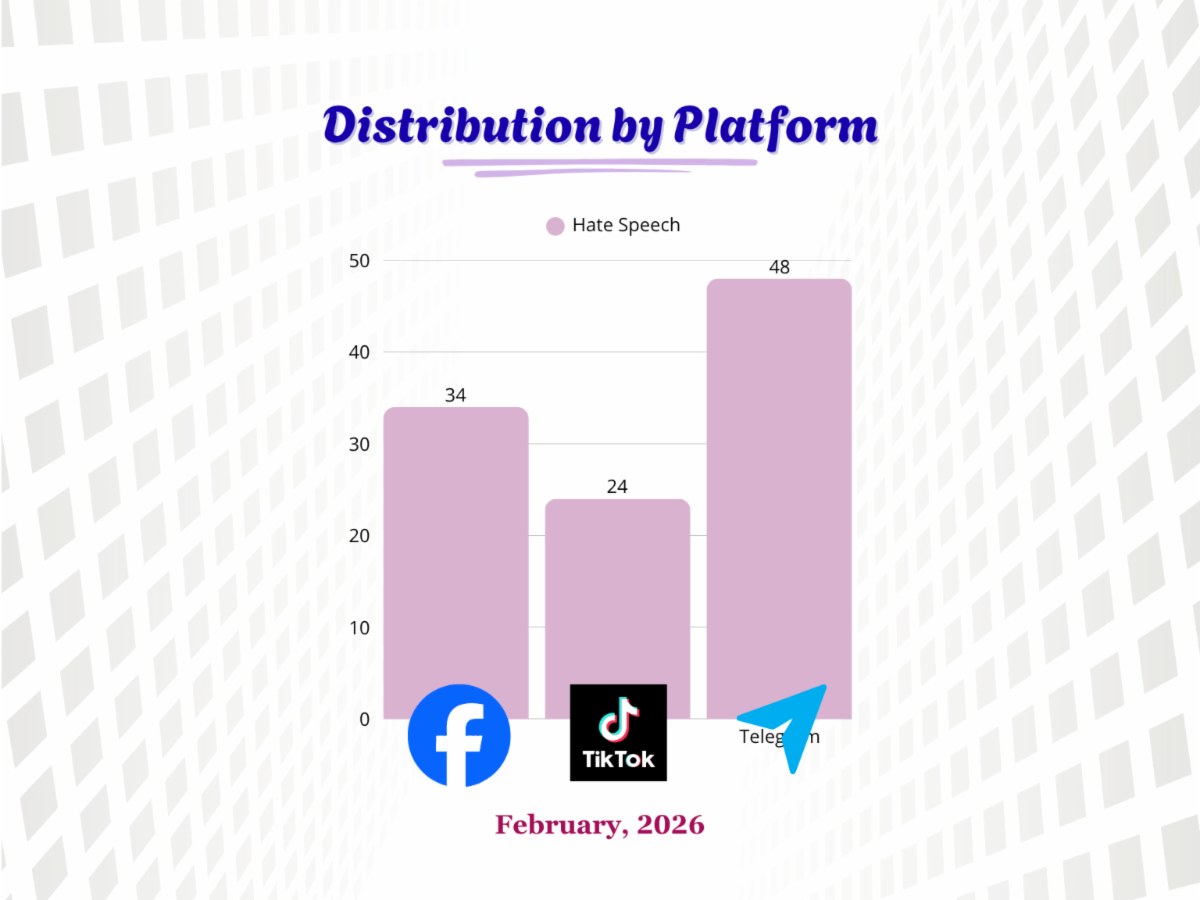
This report was compiled through monitoring online and print media used by the military regime and its supporters to disseminate hate speech. In particular, during February 2026, BHRN monitored 3 Facebook groups, 1 page, and 13 Facebook accounts, identifying 34 instances of hate speech. Monitoring of 24 Telegram channels revealed 48 instances, while observation of 24 TikTok accounts identified 24 instances.
For print media monitoring, two newspapers and one journal were reviewed. In total, 106 cases of hate speech and misinformation were documented during February.
The findings will be presented using tables, graphs, and explanatory text. The report will also outline the main causes and impacts of hate speech, along with recommendations for prevention and mitigation. Due to significant limitations in conducting monitoring that fully covers all social media platforms, there may be additional hate speech incidents that were not recorded.
Key Findings
1Targeted Groups
- Rohingya people are repeatedly targeted through coordinated attacks that portray them as criminals, labeling them as “illegal Bengalis” who allegedly entered from Bangladesh.
- Muslims are subjected to discriminatory and religiously offensive content, including hate speech that labels them as Islamic extremists and uses derogatory slurs and demeaning stereotypes.
- Women are targeted with gender-based hate speech that includes dehumanizing language, sexual harassment, the disclosure of personal information (doxxing), and defamatory allegations intended to damage their dignity and safety.
- Armed organizations and resistance groups, including the Arakan Army (AA), the Kachin Independence Army (KIA), and the People’s Defence Force (PDF) units, are portrayed as criminals through accusations of drug trafficking, theft, terrorism, murder, robbery, and rape, with the intent of inciting hatred within society.
- Content that promotes hatred by accusing persons with disabilities that their physical impairments or mental conditions are the result of past karma or moral wrongdoing.
2Methods of Disseminating Hate Speech and Disinformation
- Hate speech targeting Muslims and Rohingya people is disseminated across social media platforms such as Facebook, TikTok, and Telegram in various formats, including posts, videos, and cartoons, promoting ethnic, religious, and political hatred.
- The Arakan Army, Kachin Independence Army, and People’s Defence Force are depicted as criminal gangs, terrorists, thieves, and rapists to spread hate and delegitimize their activities.
- The circulation of false news and misinformation is used to deliberately foster suspicion and distrust among the general public.
3Impacts
- Increased public hostility toward members of the Arakan Army (AA), Kachin Independence Army (KIA), and People’s Defence Force (PDF), as well as the potential escalation of ethnic tensions between Chin and Bamar communities.
- Negative impacts on women’s safety and dignity, along with threats and harassment targeting activists both online and offline.
- The growth of ethnic and religious hatred, which undermines peacebuilding efforts and creates obstacles to democratic transition.
- Increased mockery and discrimination against persons with disabilities create further barriers to the advancement of disability rights.
4Findings
Dissemination of Hate Speech Against Muslims
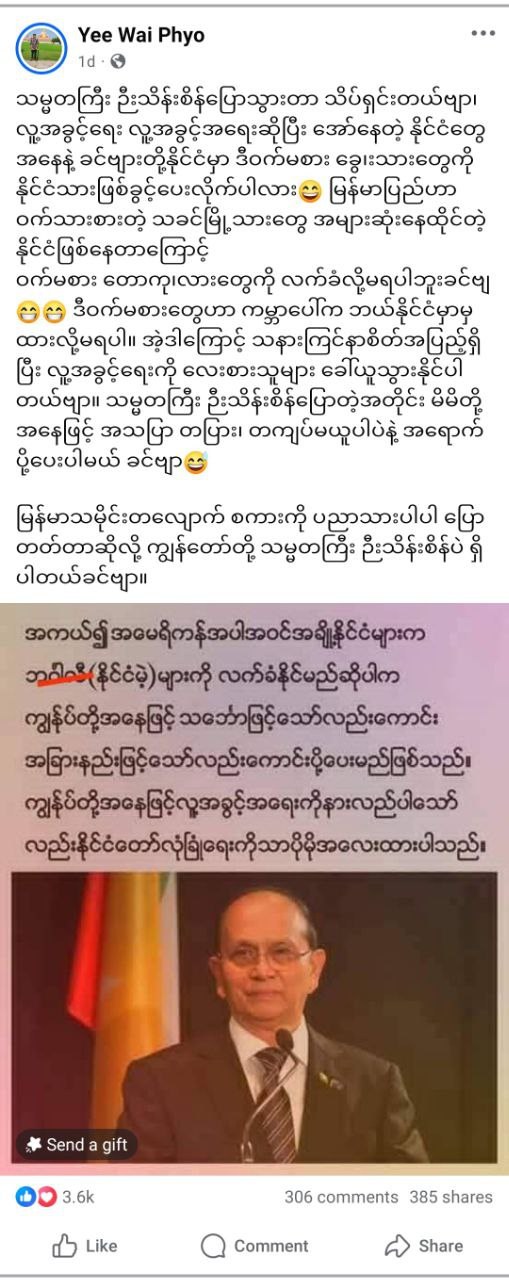
A Facebook account operated by Yee Wai Phyo reshared a statement from the presidency of Thein Sein on the Rohingya issue. In doing so, the post included mocking and derogatory language targeting Muslims, referencing religious dietary prohibitions in a ridiculing manner. Source: Original post by Yee Wai Phyo.
(See the translation of the attached link below the conclusion (1))
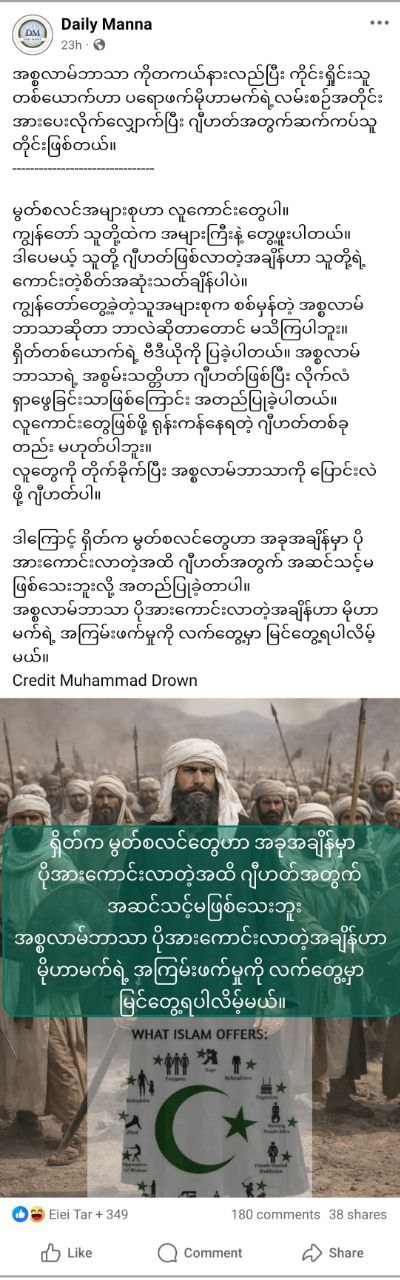
A Facebook page named Daily Manna disseminated hate speech portraying Islam as a violent religion by misrepresenting the concept of “jihad,” which in Islamic teachings can refer to self-defense. The post suggested that an increase in Islam would lead to more violence. Source: Daily Manna Page.
(See the translation of the attached link below the conclusion (2))
Nationalist activist Ma Poe Ei, through her TikTok account, claimed that Islam uses financial means as a method of religious protection. She also alleged that Myanmar’s case at the International Court of Justice (ICJ) is backed by the Organization of Islamic Cooperation (OIC), portraying Muslims as using financial power to influence the country unfairly and framing them as aggressors. Source: Original post by Ma Poe Ei.
(See the translation of the attached link below the conclusion (3))
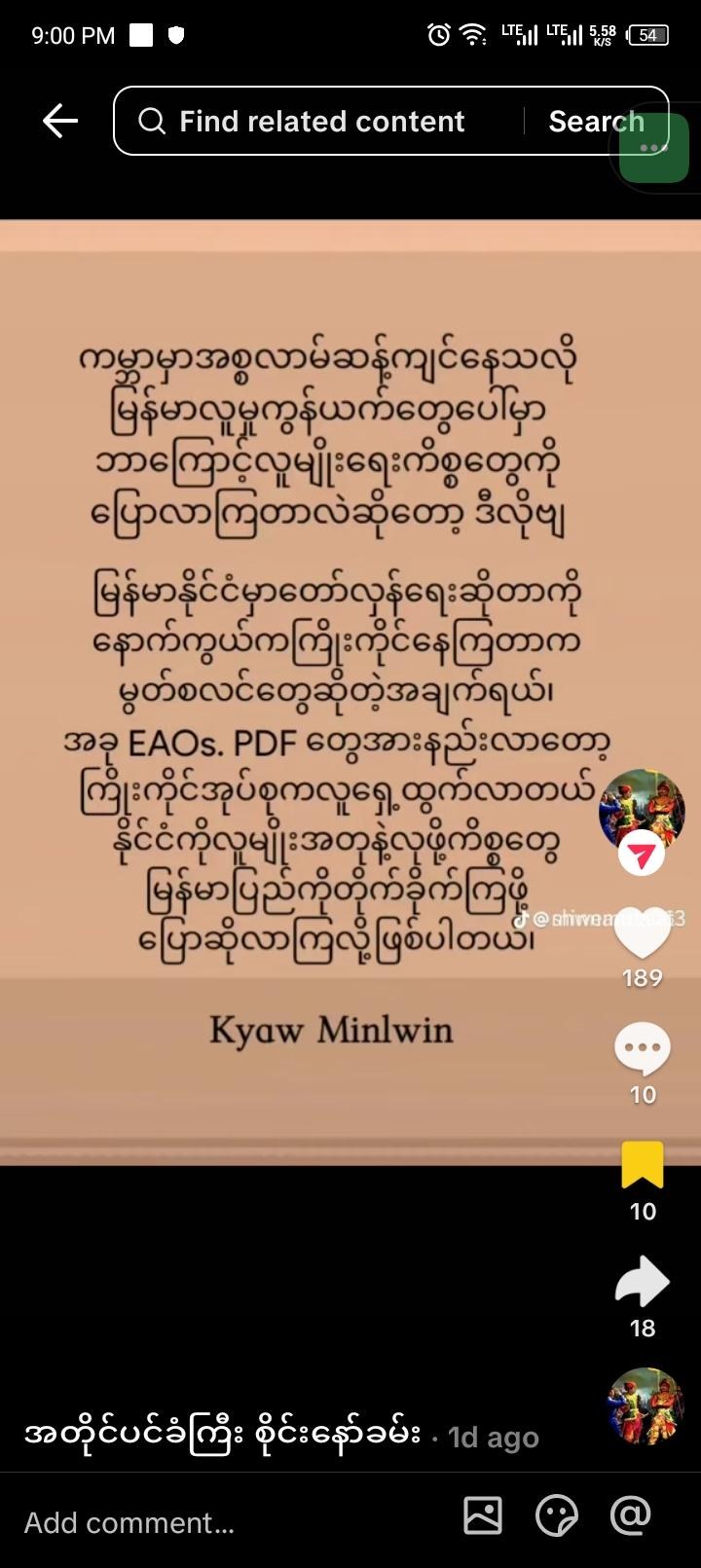
A TikTok account operated by Sai Naw Kham spread hate speech suggesting that ongoing internal conflicts in Myanmar—despite being primarily linked to the military coup—are secretly driven by Muslims. The post portrayed Muslims as hostile actors seeking to take control of the country and its people. Source: Original post by Sai Naw Kham.
(See the translation of the attached link below the conclusion (4))
A TikTok account belonging to KoKo Soegyi disseminated hate speech claiming that some women in Myanmar marry Muslim men due to poverty and give birth to many children for them. The content framed Islam as a “breeding religion” and portrayed women married to Muslims as “destroyers of the nation,” using demeaning and inflammatory language. Source: Original post by KoKo Soegyi.
(See the translation of the attached link below the conclusion (5))
Dissemination of Hate Speech Against the Rohingya
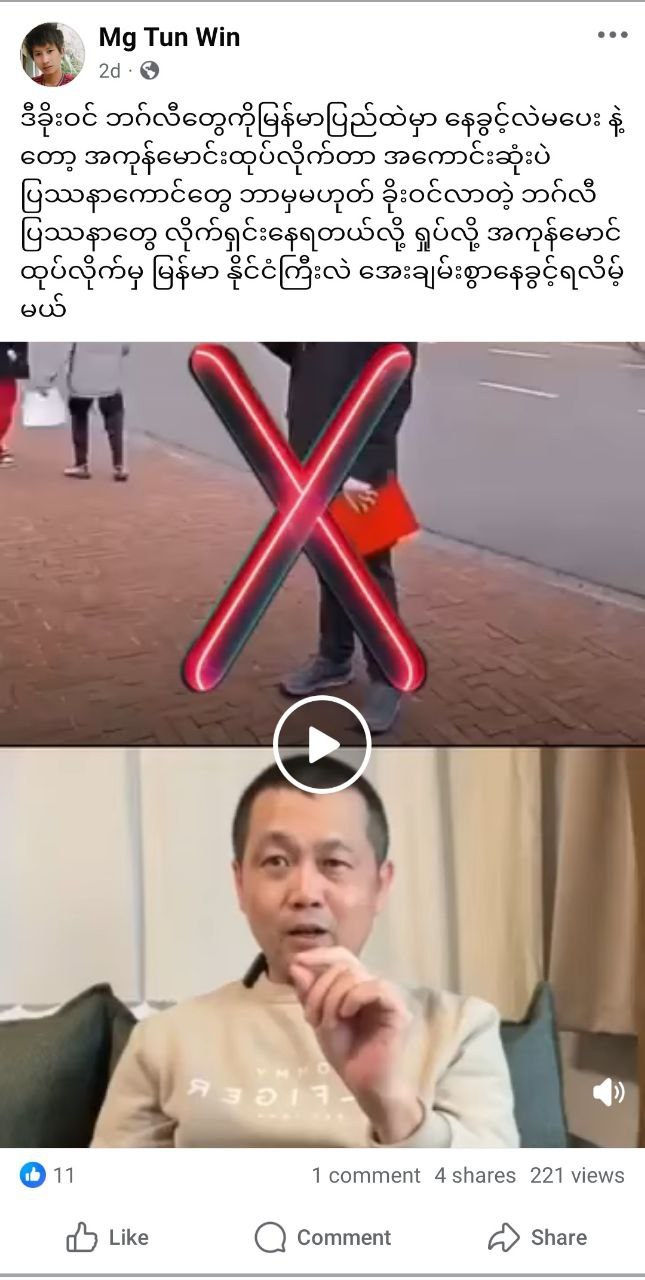
A Facebook account operated by Mg Tun Win disseminated hate speech against Rohingya based on the case filed by The Gambia against Myanmar at the International Court of Justice (ICJ). The post referred to Rohingya as “illegal immigrants,” claimed that Myanmar is burdened internation-ally because of the Rohingya issue, and suggested that the country would be peaceful without them, portraying them as violent actors. Source: Original post by Mg Tun Win.
(See the translation of the attached link below the conclusion (6))
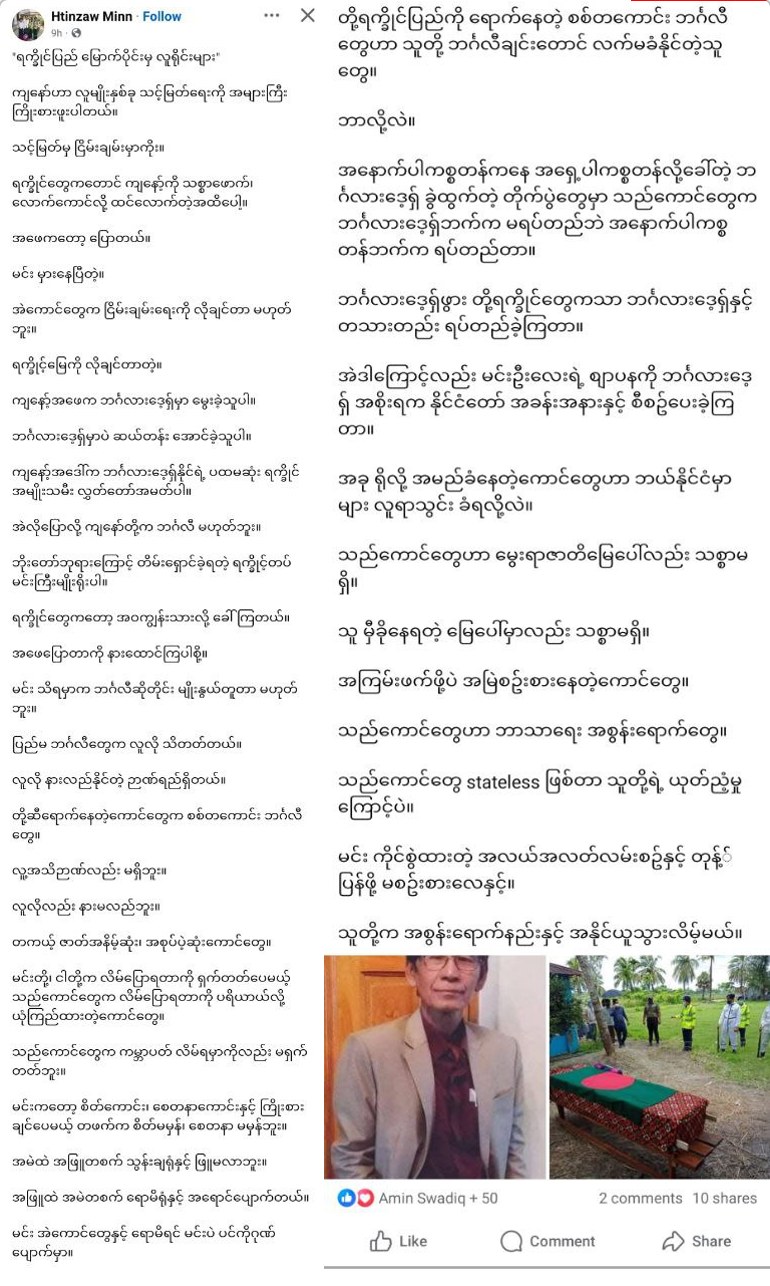
A Facebook account belonging to Htinzaw Minn spread hate speech claiming that Rohingya in Rakhine State are merely “Bengalis” from Chittagong and labeling them as disloyal. The content portrayed Rohingya as inferior, untrustworthy, violent, and illegal entrants using derogatory language. Source: Original post by Htinzaw Minn.
(See the translation of the attached link below the conclusion (7))
A Facebook page named Maung Khin Kyi - Arakan State disseminated hate speech alleging that Rohingya fabricate history under the pretext of human rights. The post claimed that the non-existence of Rohingya in Myanmar is widely accepted and framed those asserting otherwise as shameless, portraying Rohingya as deceitful and violent actors. Source: Maung Khin Kyi - Arakan State Page.
(See the translation of the attached link below the conclusion (8))

Kyaw Soe Oo, a pro-military media figure associated with People Media, used his Facebook page to spread hate speech portraying Rohingya as “terrorist illegal immigrants.” His posts accused the Rohingya of being dishonest, religiously offensive, and shameless. Source: Original post by Kyaw Soe Oo.
(See the translation of the attached link below the conclusion (9))

A Facebook account operated by Than Dar claimed that there are no Rohingya in Myanmar and described them as illegal migrants seeking territory. The post further alleged that Rohingya refugees, while fleeing to third countries, deliberately avoid Islamic countries as part of an effort to damage Myanmar’s international image. Source: Original post by Than Dar.
(See the translation of the attached link below the conclusion (10))
Dissemination of Hate Speech Against Ethnic Armed Organizations
A Facebook account operated by Min Ye Thein Kha Thu reshared unverified information claiming that members of the People’s Defence Force (PDF) abducted, sexually assaulted, and killed a young girl in Min Kin Township. The post used this claim to portray PDF members as terrorists and to discredit the resistance movement. Source: Original post by Min Ye Thein Kha Thu.
(See the translation of the attached link below the conclusion (11))
A Telegram channel titled “Accurate News Without Concealment” shared reports of clashes between junta forces and PDF members, accompanied by hate speech using dehumanizing language against PDF fighters. Source: Original post from the channel.
(See the translation of the attached link below the conclusion (12))
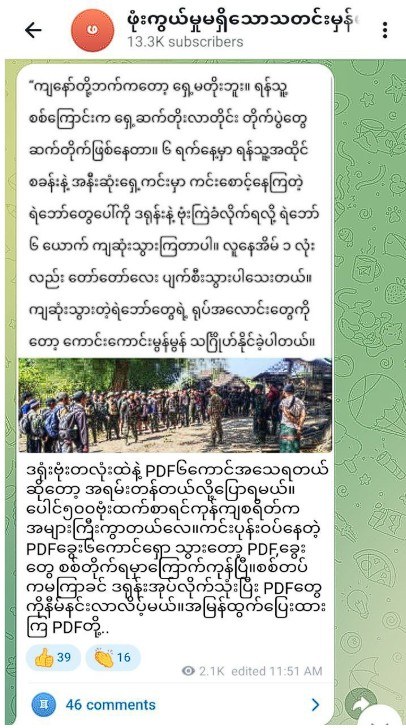
A Telegram channel named “Hmine Wai” disseminated hate speech by sharing claims that resistance fighters were suffering from skin diseases, portraying PDF members as diseased and as violent actors responsible for killing monks and children. Source: Original post by Hmine Wai.
(See the translation of the attached link below the conclusion (13))
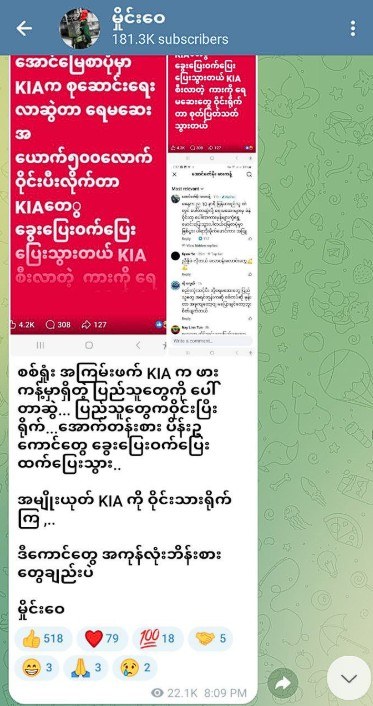
The same channel also spread unverified claims that residents in Hpakant had beaten and expelled members of the Kachin Independence Army (KIA), using mocking and dehumanizing language toward KIA members. Source: Original post by Hmine Wai.
(See the translation of the attached link below the conclusion (14))
A TikTok account operated by Sai Naw Kham disseminated hate speech targeting KIA members killed in clashes in Banmauk Township, Kachin State, using derogatory and dehumanizing language. Source: Original post by Sai Naw Kham.
(See the translation of the attached link below the conclusion (15))
Reports of intensified clashes between junta forces and the Arakan Army (AA) in Rakhine State were shared on the Hmine Wai Telegram channel with accompanying hate speech portraying AA members as drug-addicted terrorists and using demeaning language. Source: Original post by Hmine Wai.
(See the translation of the attached link below the conclusion (16))

A pro-junta Telegram channel, “War News Compilation,” reported casualties among AA members in Gwa Township, Rakhine State, using dehumanizing and derogatory language in its coverage. Source: Original post from the channel.
(See the translation of the attached link below the conclusion (17))
A Telegram channel operated by Thazin Oo shared content mocking Chin People’s Defence Force members killed in clashes in Falam, Chin State, portraying them as terrorists and using humiliating language. Source: Original post by Thazin Oo.
(See the translation of the attached link below the conclusion (18))
Hate Speech Targeting Women Involved in the Revolution
A Telegram channel operated by Mhone Wai reshared unverified information originally published by a pro-military website, NP News, regarding an alleged “virgin market” linked to Karen armed groups. This content was used to spread hate speech aimed at women participating in the revolution. In the post, derogatory language was used to portray female members of the People’s Defense Forces (PDF) as being sexually exploited by ethnic armed group leaders. (Original post: Mhine Wai)
(See the translation of the attached link below the conclusion (19))
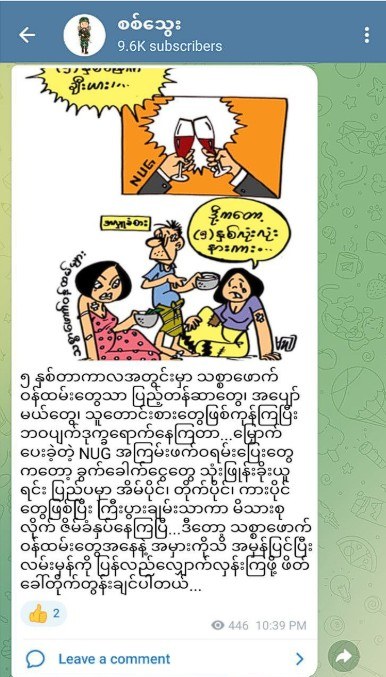
The “Sit Thway” Telegram channel disseminated hate speech degrading women involved in the Civil Disobedience Movement (CDM), claiming that female CDM participants had become prostitutes or sex slaves over the course of the five-year revolution. The post also included a cartoon intended to discredit the revolution, portraying CDM participants as traitors through mocking and demeaning language. (Original post: Sit Thway)
(See the translation of the attached link below the conclusion (20))
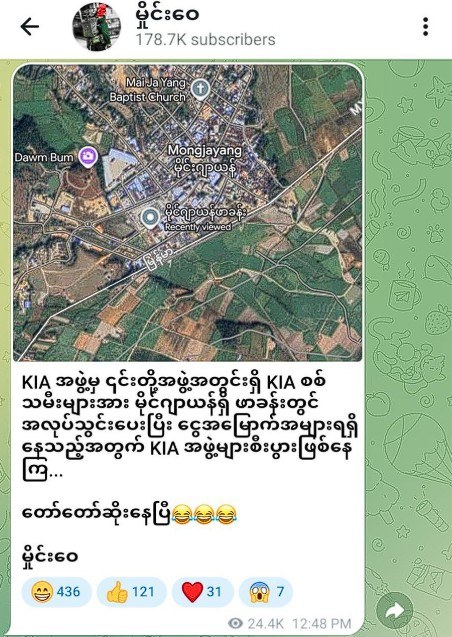
The Mhone Wai Telegram channel also circulated hate speech alleging that the Kachin Independence Army (KIA) had placed female soldiers in brothels. The content used mocking and derogatory language, further claiming that such actions contributed to the organization’s financial gains. (Original post: Mhine Wai)
(See the translation of the attached link below the conclusion (21))
Hate Speech Targeting Persons with Disabilities
A well-known traditional theatre performer, Aung Zabu troupe, faced a performance ban following a complaint filed by a disability rights organization after the troupe mocked persons with disabilities. The Blacker Page reshared statements by U Myat Thu Win regarding the complaint. In the comment sections, supporters of the Aung Zabu troupe launched harsh verbal attacks against U Myat Thu Win, who serves as the chair of a disability rights organization.
U Myat Thu Win, a disability rights advocate who is himself living with a neurological condition, was targeted with hate speech on social media. The Aatt Maran Hone Hkwin Facebook account posted derogatory remarks claiming that his physical condition was the result of moral failings and that he should “improve his mindset for a better next life.” (Original post: Aatt Maran Hone Hkwin)
(See the translation of the attached link below the conclusion (22))
Similarly, the Zin Mar Oo Facebook account insulted U Myat Thu Win’s physical appearance and went further by wishing that his condition would worsen in a future life. (Original post: Zin Mar Oo)
(See the translation of the attached link below the conclusion (23))
A user from the Ag Kyaw Htun account, identified as a supporter of the Aung Zabu performer, mocked persons with disabilities by attributing disability to karmic consequences, suggesting that individuals should “maintain a good mindset” rather than seeking accountability for discriminatory actions. (Original post: Ag Kyaw Htun)
(See the translation of the attached link below the conclusion (24))
The Yu Yu Facebook account posted content ridiculing persons with disabilities, claiming that individuals with physical impairments were attempting to “pull down” the success of Aung Zabu out of jealousy. (Original post: Yu Yu)
(See the translation of the attached link below the conclusion (25))
Likewise, the Yin Yin Win Facebook account dismissed the concerns raised by disability advocates, suggesting that such actions were merely attempts to gain attention, using mocking and dismissive language toward persons with disabilities. (Original post: Yin Yin Win)
(See the translation of the attached link below the conclusion (26))
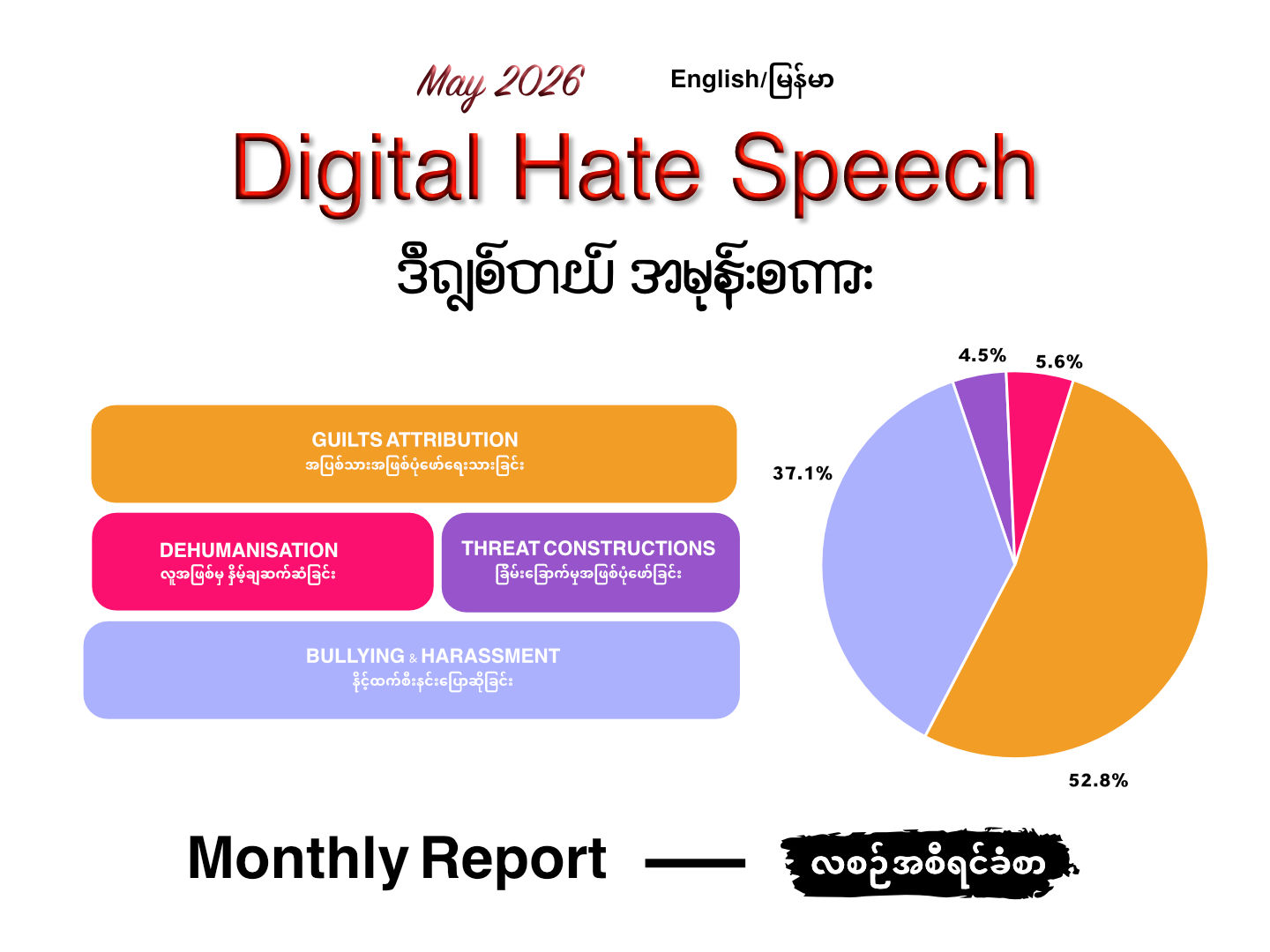
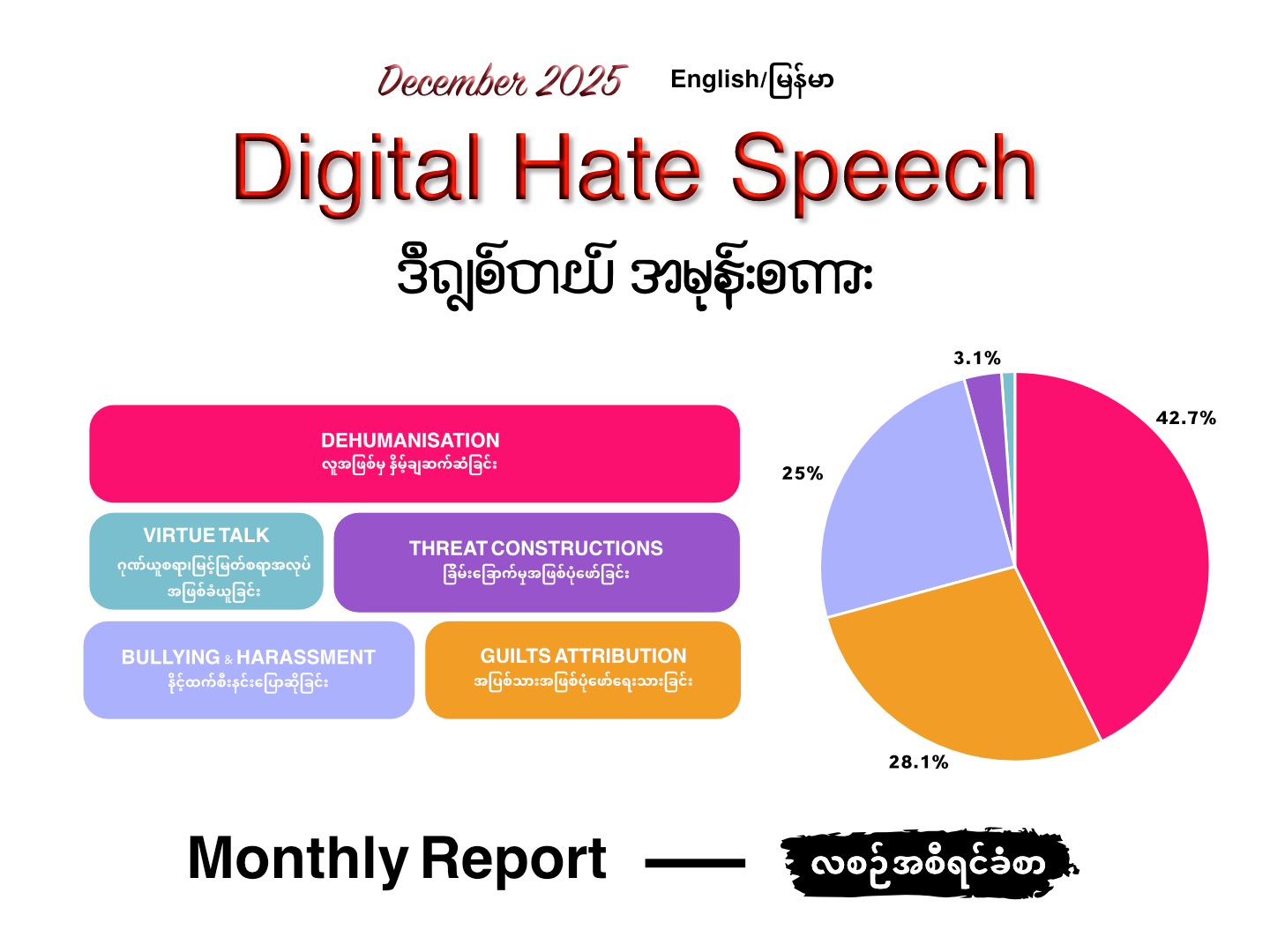
5The figure illustrating types of hate speech
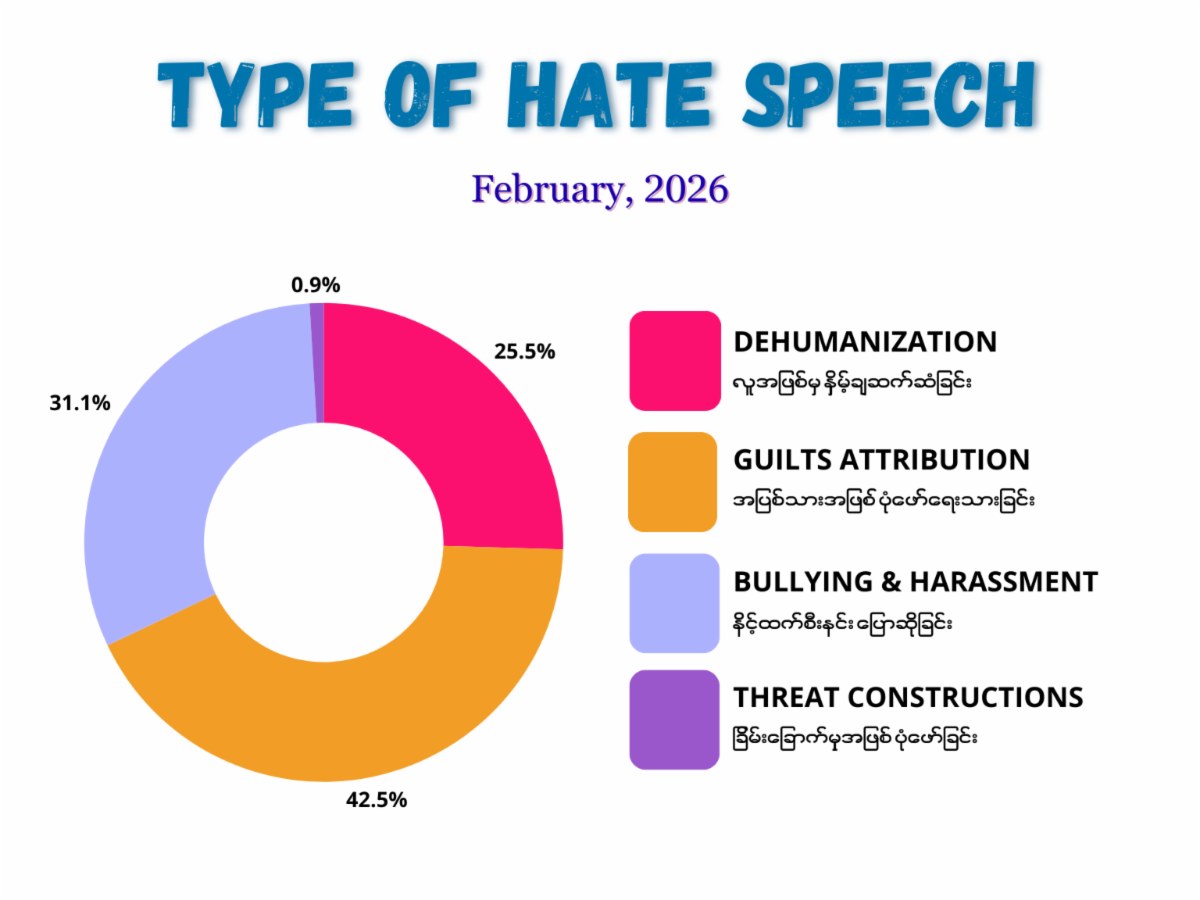
6The figure illustrating the number of hate speech targets

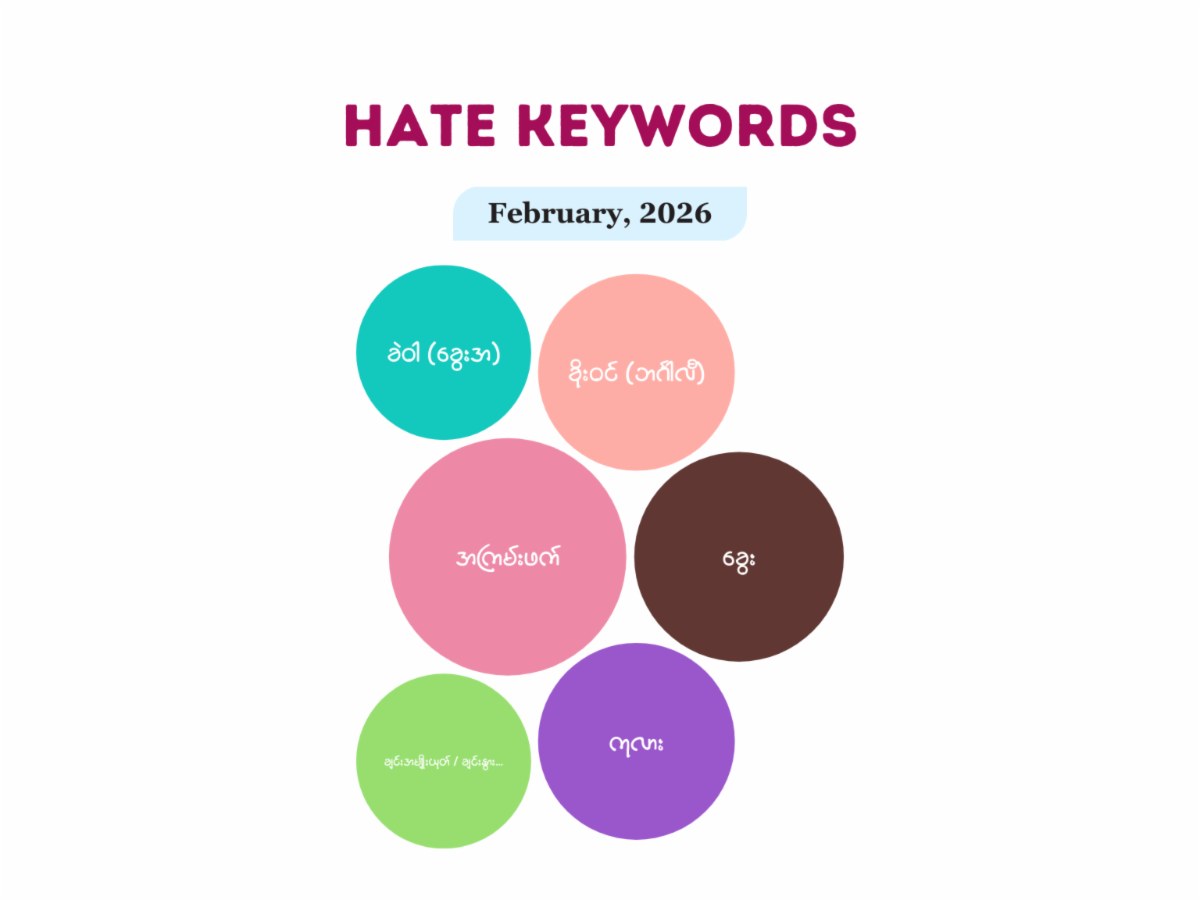
7Keywords used by hate speech writers
8Distribution by Platform
9Conclusion
During February 2026, the spread of hate speech across online platforms in Myanmar remained persistently high and intensified, particularly around political, ethnic, and religious issues. Notably, information related to the hearings at the International Court of Justice (ICJ) was widely exploited to amplify incitement against Muslims and Rohingya communities, with extremist religious and ethnically charged narratives being systematically disseminated across social media platforms.
In conflict-affected areas, propaganda aimed at ethnic armed organizations continued to fuel suspicion, undermine their reputations, and instill fear among the public. Such narratives were often intertwined with misinformation, contributing to increased polarization within society. The proliferation of hate speech, combined with false or misleading information, has played a significant role in deepening divisions, eroding social trust, and potentially inciting real-world violence within communities.
Translations of the documented posts
The posts below are hate speech documented by BHRN. They are translated here only as evidence for this report.
Translation (1)
Yee Wai Phyo wrote:
What President U Thein Sein said is very clear.
To the countries shouting about human rights — since your countries are full of people who eat pork, why don’t you grant citizenship to these “non-pork-eating dog-like people”?
Myanmar cannot accept these “non-pork-eating jungle people.”
These people cannot be kept in any country in the world. So those who are compassionate and respect human rights can take them. As President U Thein Sein said, we will send them to you free of charge.
In Myanmar's history, the only person who speaks so cleverly is President U Thein Sein.
If countries, including the U.S., are willing to accept these stateless “Bengalis,” we will send them by ship or other means. We understand human rights, but we prioritize national security.
Translation (2)
Daily Manna wrote:
A true and devout follower of Islam follows the path of the Prophet Muhammad and is devoted to jihad.
Most Muslims are good people. I have met many of them. But when they become involved in jihad, that is when their goodness ends.
Most people I met don’t even understand true Islam. I showed them a video of a sheikh who confirmed that the power of Islam is jihad, seeking it out.
It is not just a struggle to be a good person. It is also about attacking people to convert them to Islam.
The sheikh confirmed that Muslims are not yet ready for jihad until they become stronger.
When Islam becomes stronger, we will see the violence of Muhammad in reality.
Image text:
Muslims are not yet ready for jihad until they are stronger. When Islam becomes stronger, we will witness Muhammad’s violence in reality.
Translation (3)
On a video about “Five Defense Strategies”:
In a video by Ma Puto, it was said that Islam defends itself using deception.
Translation (4)
Kyaw Min Lwin wrote:
The reason people are talking about ethnic issues on Myanmar social media is this:
Muslims are secretly controlling the revolution in Myanmar. Now that EAOs and PDFs are weakening, the controlling group is coming out openly, trying to take over the country using a fake ethnicity and calling for attacks on Myanmar.
Translation (5)
Ko Ko Soegyi wrote:
Because Myanmar women are poor, they are being used in a breeding project by “Indians,” unwillingly giving birth and helping destroy and swallow the nation and ethnicity.
Value and protect Myanmar women.
Translation (6)
Mg Tun Win wrote:
These illegal “Bengalis” should not be allowed to stay in Myanmar. The best solution is to expel them all.
They are nothing but troublemakers. If we deport them all, Myanmar will finally live in peace.
Translation (7)
Htin Zaw Min wrote:
“Savages from Northern Rakhine”
I have tried a lot to bring harmony between the two ethnic groups.
Even Rakhine people might think I am a traitor.
My father told me I was wrong — they don’t want peace, they want Rakhine land.
(My family background explanation…)
Not all Bengalis are the same. Mainland Bengalis are reasonable, but those here (from Chittagong) lack intelligence and humanity.
They are the lowest and worst people. They believe lying is a strategy and are not ashamed to deceive the world.
Even if you try with goodwill, they do not have good intentions.
Mixing with them will only corrupt you.
These people are not accepted anywhere, not even by their own kind. They are disloyal and always thinking about violence.
They are religious extremists. Their statelessness is due to their own inferiority.
Do not respond with moderation — they will win through extremism.
Translation (8)
Maung Khin Kyi wrote:
These “Bengalis” lie to the international community using human rights and fake history and identity.
There has never been a “Rohingya” ethnicity in Myanmar — all Myanmar people know this.
It is shocking and shameful how they keep claiming otherwise.
Translation (9)
Kyaw Soe Oo wrote:
You terrorist illegal immigrants — how long will you keep lying?
You insult religion and ethnicity and still want to live in Myanmar shamelessly.
Translation (10)
Than Dar wrote:
Write “Bengali” — there is no Rohingya in Myanmar.
They are illegal immigrants who want land. When things go bad, they pretend to be refugees and move to developed countries.
Why don’t they go to Muslim countries? The answer is obvious.
Stop writing for money and damaging the country’s image.
Translation (11)
Min Ye Thein Kha wrote:
PDF members are all rapists.
(Shared post describing an alleged rape and murder of a 16-year-old girl by resistance forces.)
Translation (12)
“Uncovered Truth” channel wrote:
Killing 6 PDF members with one drone bomb is very worth it. Much cheaper than a 500-pound bomb.
With those 6 “PDF dogs” gone, others are now afraid to fight.
The military will soon use drone swarms to suppress them. Run away quickly, PDF.
(Shared post describing 6 resistance fighters killed in a drone strike and buried properly.)
Translation (13)
Hmine Wai (on Kantarawaddy Times post):
Terrorist PDFs who kill monks, children, teachers, burn houses, and plant mines are now suffering from skin diseases in the जंगल.
Because they are evil, they are getting diseases.
Do not let them enter villages — they will infect everyone.
Translation (14)
Hmine Wai wrote (about KIA):
Defeated terrorist KIA forcibly recruits civilians, beats them, and runs away like dogs and pigs.
They are all drug users. People should beat them.
Translation (15)
Advisor Sai Naw Kham wrote:
The “dog-burning group” is coming to Banmaw
(meaning KIA will be burned/killed)
Translation (16)
Hmine Wai (about AA):
A drugged terrorist AA member was shot and collapsed instantly. Very satisfying.
More good news from Rakhine.
Translation (17)
Battle report post:
Two AA rebel bodies, weapons, and ammunition were seized. No casualties on our side.
Good news — the “dog rebels” AA are collapsing.
Translation (18)
Thazin Oo wrote:
Many Chin resistance fighters died horribly and went to hell in recent battles.
Because of heavy losses, they are forcibly recruiting even children and sending them to the front lines to die.
If this continues, the Chin people will face destruction.
Translation (19)
Hmine Wai (about KNPP/PDF):
“Epstein-like” activities are happening in Kayah State.
Using public donations to turn female PDF members into sex slaves.
That’s why starving PDF members are surrendering.
(Shared post about alleged “virgin market” involving armed group leaders.)
Translation (20)
Sit Thway wrote:
In the past 5 years, traitorous civil servants have become prostitutes and beggars.
Meanwhile, NUG leaders are getting rich abroad, owning houses and cars.
Those traitors should realize their mistakes and return to the right path.
Translation (21)
Hmine Wai wrote (about KIA):
KIA is making money by forcing female soldiers into brothels in Mongjaryang.
This is getting very bad.
Translation (22)
Aatt Maran Hone Hkwin wrote a comment :
Your bad condition as a disabled person in this life is due to your mindset — keep a good mind for the next life.
Translation (23)
Zin Mar Oo wrote a comment:
With your ugly face and bad karma, your next life will be even worse.
Translation (24)
Ag Kyaw Htun wrote a comment:
Your suffering body is due to past karma — please keep a good mind for the next life.
Translation (25)
Yu Yu wrote a comment:
You are disabled and useless; you can’t even dance — disgusting. You may not even be human in your next life.
Translation (26)
Yin Yin Win wrote a comment:
Even though disabled, you have a bad mindset and just want attention.
About BHRN
Burma Human Rights Network (BHRN) is based in London, operates across Burma/Myanmar and works for human rights, minority rights and religious freedom in Burma. BHRN has played a crucial role in advocating for human rights and religious freedom with politicians and world leaders.
Media enquiries
၁နိဒါန်း
နိဒါန်း
မြန်မာနိုင်ငံအတွင်း ဆိုရှယ်မီဒီယာနှင့် အခြားဆက်သွယ်ရေးလမ်းကြောင်းများပေါ်တွင် အမုန်းစကား (Hate Speech) များ၊ သတင်းတုသတင်းမှားများ ပျံ့နှံ့မှုသည် လူမျိုးရေး၊ ဘာသာရေး နှင့် နိုင်ငံရေးတင်းမာမှုများကို ပိုမိုအားကောင်းစေပြီး လူမှုအသိုင်းအဝိုင်းအတွင်း ပဋိပက္ခများ မြင့်တက်လာစေနိုင်သည်။ ဤအစီရင်ခံစာသည် ၂၀၂၆ ခုနှစ်၊ ဖေဖေါ်ဝါရီလအတွင်း မြန်မာနိုင်ငံတွင် ဖြစ်ပေါ်ခဲ့သော အမုန်းစကားများကို စနစ်တကျ စောင့်ကြည့်လေ့လာကာ ၎င်းတို့၏ အဓိက အရင်းအမြစ်များ၊ ပျံ့နှံ့မှုပုံစံများ၊ ထိခိုက်နိုင်ခြေရှိသော လူမှုအုပ်စုများနှင့် ဖြစ်ပေါ်လာနိုင်သည့် သက်ရောက်မှုများကို ဆန်းစစ်ထားပါသည်။
ဤလေ့လာမှုတွင် ဖေ့စ်ဘုတ် (Facebook), TikTok, တယ်လီဂရမ် (Telegram) အပါအဝင် လူသုံးများသော ဆိုရှယ်မီဒီယာပလက်ဖောင်းများပေါ်ရှိ အကြမ်းဖက်မှုနှင့် လှုံ့ဆော်မှုဆိုင်ရာ အကြောင်းအရာများ၊ လူမျိုးရေးနှင့် ဘာသာရေး အခြေပြု စော်ကားမှုများ၊ နိုင်ငံရေးအရ ပြင်းထန်သော ဝေဖန်မှုများကို အဓိကထား လေ့လာထားပါသည်။ ထို့အပြင် ဤမုန်းတီးရေးစကားဝိုင်းများကို တားဆီးကာကွယ်ရန် လိုအပ်သော ဥပဒေရေးရာ၊ နည်းပညာဆိုင်ရာနှင့် လူမှုအသိုင်းအဝိုင်းဆိုင်ရာ ဖြေရှင်းနည်းများကိုလည်း အကြံပြုထားပါသည်။
ဖေဖေါ်ဝါရီလ အတွင်း မြန်မာနိုင်ငံ၏ လက်ရှိနိုင်ငံရေး၊ စီးပွားရေး နှင့် လူမှုရေး အခြေအနေများနှင့် ဆက်စပ်ကာ အမုန်းစကားများ ပြောင်းလဲလာပုံကို ဤအစီရင်ခံစာတွင် ဖော်ပြထားပါသည်။ ဤအချက်အလက်များသည် ငြိမ်းချမ်းရေး တည်ဆောက်သူများ၊ မီဒီယာလုပ်သားများ၊ မူဝါဒချမှတ်သူများနှင့် အရပ်ဘက်လူမှုအဖွဲ့အစည်းများအတွက် အသုံးဝင်သော ကိုးကားချက်တစ်ခု ဖြစ်စေရန် ရည်ရွယ်ပါသည်။
၂သုတေသနနည်းနာ
အမုန်းစကားသည် စိတ်ခံစားမှု အမုန်းတရားပေါ်မူတည်ပြီး ပေါ်ပေါက်လာသော စကားရပ်ဖြစ်သည့် အလျောက် အဓိပ္ပါယ်ဖွင့်ဆိုရန် ကျယ်ပြန့်ပြီး တိကျသော ဖွင့်ဆိုချက်ဟူ၍ မရှိပေ။ သို့ဖြစ်ရာ ယခုအစီရင်ခံစာ၏ ရည်ရွယ်ချက် အတွက်အမုန်းစကားဖွင့်ဆိုချက်ကို BHRN မှ အောက်ပါအတိုင်း သတ်မှတ်ထားသည်။
တစ်စုံတစ်ဦး သို့မဟုတ် အုပ်စုတစ်စုကို ရည်ရွယ်၍ လူတစ်ဦးကို အကာအကွယ်ပြုရမည့် ဝိသေသ လက္ခဏာ များကို ပြင်းထန်စွာ ဝေဖန်ခြင်း၊ ပြစ်တင်ခြင်း၊ ရန်လိုခြင်း၊ မုန်းတီးခြင်းတို့ကို ခွဲခြားနှိမ့်ချဆက်ဆံမှုများကို ထုတ်ဖော်ပြောဆိုခြင်း၊ စာဖြင့်ရေးသားခြင်း၊ အမူအယာဖြင့် ဖော်ပြခြင်း၊ အနုပညာဖြင့် ဖော်ပြခြင်းတို့ကို ဆိုလိုသည်။
လူသားတစ်ဦး၏ ကိုးကွယ်မှု၊ ဘာသာစကား၊ လိင်၊ လိင်စိတ်ခံယူမှု၊ နိုင်ငံသားဇစ်မြစ်၊ တိုင်းရင်းသားဖြစ်မှု၊ အသားအရောင်၊ လူမျိုး၊ ယုံကြည်မှု၊ နိုင်ငံသားဖြစ်မှု၊ ရုပ်ပိုင်းဆိုင်ရာ အသွင်အပြင်များ စသည့် မွေးရာပါ အခွင့်အရေးများကို ထိခိုက်ပြောဆိုခြင်းတို့ကို ဆိုလိုပါသည်။ လေ့လာမှုတွင် တွေ့ရှိသည့် အမုန်းစကားများကို အောက်ပါအတိုင်းပြန်လည်ခွဲခြားပါသည်။ အပြစ်သားများအဖြစ်ပုံဖော်ရေးသားသည့် အမုန်းစကားများ၊ နိုင့်ထက်စီးနင်းပြောဆိုသည့် အမုန်းစကားများ၊ လူအဖြစ်မှ နှိမ့်ချဆက်ဆံသည့်အမုန်းစကားများ၊ ဆူပူအကြမ်းဖက်မှုကို အားပေးသည့် အမုန်းစကားများ၊ ခြိမ်းခြောက်မှုအဖြစ်ပုံဖော်ရေး သားသည့် အမုန်းစကားများ၊ အကြမ်းဖက်မှုနှင့် အမုန်းစကားကြောင့် ကျူးလွန်သည့် လုပ်ရပ်များကို ဂုဏ်ယူစရာအဖြစ် ရေးသားသည့် အမုန်းစကားများ စသည်တို့ဖြင့် အမျိူးအစားခွဲခြားထားပါသည်။
BHRN သည် လက်ရှိမြန်မာနိုင်ငံတွင် ဖြစ်ပေါ်နေသည့် နိုင်ငံရေးစစ်ရေးတင်းမာမှုများဖြစ်ပေါ်နေချိန်တွင် စစ်တပ်နှင့် ၎င်း၏ ဝါဒဖြန့်ချန်နယ်များမှ ဖြန့်ဝေနေသည့် သတင်းအကြောင်းအရာများတွင် ပါဝင်သည့် အမုန်းစကားအသုံးအနှုန်းများကို နေ့စဥ်လေ့လာစောင့်ကြည့်မှတ်တမ်းတင်ထားပါသည်။
၁ဒေတာစုဆောင်းခြင်း (Data Collection)
- စောင့်ကြည့်သည့်ပလက်ဖောင်းများ: ဖေ့စ်ဘုတ် (Facebook), Tiktok, တယ်လီဂရမ် (Telegram) channel များမှ ဒေတာများစုဆောင်းခြင်း
- အကြောင်းအရာအမျိုးအစားများ:
- လူမျိုးရေး၊ ဘာသာရေး၊ နိုင်ငံရေးနှင့် လိင်နှင့်ဆိုင်သော မုန်းတီးရေးစကားများ
- အကြမ်းဖက်မှုနှင့် ခွဲခြားဆက်ဆံမှုကို လှုံ့ဆော်သည့် အကြောင်းအရာများ
- အန္တရာယ်ရှိသော မှားယွင်းသတင်းများ (Misinformation) နှင့် လှုံ့ဆော်မှုဆိုင်ရာ ပို့စ်များ
၂ဒေတာချဉ်းကပ်နည်း (Data Approach)
- စနစ်တကျစစ်ဆေးခြင်း (Manual Monitoring): အမုန်းစကားလေ့လာစောင့်ကြည့်ရေးအဖွဲ့ဝင်များက သတ်မှတ်ထားသော စကားစုများ၊ ပုံများနှင့် ဗီဒီယိုများကို စိစစ်ခြင်း။
၃ဒေတာခွဲခြမ်းစိတ်ဖြာခြင်း (Data Analysis)
- အကြောင်းအရာအလိုက်အမျိုးအစားခွဲခြားခြင်း:လူမျိုးရေး၊ ဘာသာရေး၊ နိုင်ငံရေး စသည့် အကြောင်းအရာ များအလိုက် အုပ်စုဖွဲ့ခြင်း။
- ပျံ့နှံ့မှုအတိုင်းအတာ: ဆိုရှယ်မီဒီယာပေါ်ရှိ Engagement (Like, Share, Comment) နှင့် Reach ကို တိုင်းတာခြင်း။
- အဓိကထုတ်လုပ်သူများကို ဖော်ထုတ်ခြင်း: Hate speech ပြုလုပ်သည့် အဖွဲ့များ၊ လူပုဂ္ဂိုလ်များနှင့် ၎င်းတို့၏ လွှမ်းမိုးမှုအား ဆန်းစစ်ခြင်း။
၄။ ကျင့်ဝတ်ဆိုင်ရာစည်းမျဉ်းများ (Ethical Considerations)
- ဒေတာလျှို့ဝှက်မှု: စောင့်ကြည့်မှတ်တမ်းတင်ထားသော အချက်အလက်များကို အများပြည်သူနှင့် မသက်ဆိုင်သူများထံ မဖော်ပြဘဲ လုံခြုံစွာသိမ်းဆည်းခြင်း။
၅ကန့်သတ်ချက်များ (Limitations)
- အချို့သော အွန်လိုင်းလှုပ်ရှားမှုများသည် လျှို့ဝှက်ဆက်သွယ်မှုပလက်ဖောင်းများ (Encrypted Platforms) တွင် ဖြစ်ပေါ်နေပြီး စောင့်ကြည့်ရန် ခက်ခဲခြင်း။
- ဒေတာအတုအယောင်များ (Fake Accounts/Bots) ကြောင့် အမှန်တကယ်လူမှုသက်ရောက်မှုကို တိကျစွာ ခန့်မှန်းရခက်ခြင်း။
- လူမှုကွန်ယက်မီဒီယာတခုလုံးအား ခြုံငုံနိုင်အောင် စောင့်ကြည့်လေ့လာနိုင်မှုမရှိခြင်း။
- စစ်ကောင်စီမှ အင်တာနက်အသုံးပြုမှုကို လျော့ချခဲ့သည့်အတွက် လေ့လာစောင့်ကြည့်ရာတွင် အကန့်သတ်များရှိခြင်း။
၃စောင့်ကြည့်လေ့လာမှုများ
အမုန်းစကားများ ဖြန့်ဝေရန်အတွက် စစ်အစိုးရနှင့် ထောက်ခံသူများ အသုံးပြုနေသည့် အွန်လိုင်းနှင့် ပုံနှိပ်မီဒီယာတို့ကို စောင့်ကြည့်ခြင်းဖြင့် ဤအစီရင်ခံစာကို စုစည်းထားပါသည်။ အထူးသဖြင့် BHRN သည် ၂၀၂၆ခုနှစ် ဖေဖေါ်ဝါရီလ တွင် Facebook gp ၃ ခု Page ၁ ခု နှင့် Facebook အကောင့် ၁၃ ခု စောင့်ကြည့်မှုတွင် အမုန်းစကားတွေ့ရှိမှု ( ၃၄ ) ခု ၊ Telegram Channels ၂၄ ခု မှ အမုန်းစကားတွေ့ရှိ မှု ( ၄၈ ) ခု ၊ TikTok account ၂၄ ခုစောင့်ကြည့်ရာတွင် အမုန်းစကားတွေ့ရှိမှု ( ၂၄ ) ခုကို တွေ့ရှိခဲ့ရသည်။ ပုံနှိပ်မီဒီယာ စောင့်ကြည့်မှုအနေဖြင့် သတင်းစာ ၂ စောင်နှင့် ဂျာနယ် ၁ စောင် တို့ကို စောင့်ကြည့်ခဲ့ပါသည်။ ဖေဖေါ်ဝါရီလအတွင်း အမုန်းစကားလေ့လာစောင့်ကြည့်မှုတွင် သတင်းတုသတင်းမှားများ၊ အမုန်းစကားဖြန့်ဝေမှု ( ၁၀၆ ) ခုကို မှတ်တမ်းတင်ခဲ့သည်။ ရလဒ်များကို တင်ပြရာတွင် သုတေသနရလဒ်များကို ဇယားများ၊ ဂရပ်များနှင့် ရှင်းလင်းသော စာသားများဖြင့် တင်ပြမည်ဖြစ်သည်။ အမုန်းစကားများ၏ အဓိကအကြောင်းရင်းများ၊ သက်ရောက်မှုများနှင့် ကာကွယ်တားဆီးရန် နည်းလမ်းများကို အကြံပြုချက်များနှင့်အတူ တင်ပြမည်ဖြစ်သည်။ ဆိုရှယ်မီဒီယာတခုလုံးကို လွှမ်းခြုံနိုင်သည့် လေ့လာစောင့်ကြည့်မှုမျိုးကို လုပ် ဆောင်ရန်အတွက် အကန့်သတ်များစွာရှိသဖြင့် မှတ်တမ်းမတင်နိုင်သည့် အမုန်းစကားဖြစ်စဉ်များလည်း ရှိနိုင်ပါသည်။
အဓိက တွေ့ရှိချက်များ
1ပစ်မှတ်ထားခံရသော အုပ်စုများ
- ရိုဟင်ဂျာလူမျိုးများကို ဘင်္ဂလားဒေ့ရှ်မှ ခိုးဝင်သူများအဖြစ် “ ခိုးဝင်ဘင်္ဂလီ ” ဟူ၍ အပြစ်သားများ အဖြစ်ပုံဖော်ရေးသား စွပ်စွဲမှုများ ဆက်တိုက်ပြုလုပ်ရေးသားတိုက်ခိုက်မှုများ ။
- အစ္စလာမ်ဘာသာဝင်များကို အစ္စလာမ်မစ်အကြမ်းဖက် ၊ ကုလား ကဲ့သို့သော အရေးအသားများ ရေးသား၍ ခွဲခြားနှိမ့်ချ ဘာသာရေးအရ စော်ကားရေးသားမှုများ ပြုလုပ်ခြင်း။
- အမျိုးသမီးများအပေါ် ဦးတည်ပစ်မှတ်ထား ရေးသားကြသည့်အမုန်းစကားများတွင် လူအဖြစ်မှ နှိမ့်ချသုံးနှုန်းရေးသားထားမှုများအပါအဝင် လိင်ပိုင်းဆိုင်ရာ နှိမ်နင်းခြင်း၊ ကိုယ်ရေးကိုယ် တာ အချက်အလက်များ ထုတ်ဖော်ခြင်းနှင့် ဂုဏ်သိက္ခာကျဆင်းစေသော စွပ်စွဲချက်များ ပြုလုပ်ခြင်း။
- ရခိုင့်တပ်တော် AA အဖွဲ့ ၊ ကချင်လွတ်လပ်ရေးတပ်မတော် KIA အဖွဲ့ နှင့် PDF များအား မူးယစ်ဆေးဝါး ဖြန့်ဖြူးသူများ၊ သူခိုးများ၊ အကြမ်းဖက်သမား၊ လူသတ်၊ ဓါးပြတိုက်၊ မုဒိန်း ကျင့်၊ စသည့် စွပ်စွဲချက်များဖြင့် လူမှုအသိုင်းအဝိုင်းအတွင်း မုန်းတီးမှုများ ဖြစ်ပေါ်စေရန် ရည်ရွယ်သော အရေးအသားများ။
- မသန်းစွမ်းများ၏ ရုပ်ပိုင်းဆိုင်ရာ အားနည်းချက်၊ စိတ်ပိုင်းဆိုင်ရာ ချို့ယွင်းမှုများသည် အတိတ်ကံ၊ စိတ်ထားမကောင်းခြင်းကြောင့် ဖြစ်သည်ဆိုသော စွပ်စွဲချက်ဖြင့် အမုန်းတရားပွား များစေသည့် အရေးအသားများ။
2အမုန်းစကား၊ သတင်းတုသတင်းမှားများ ဖြန့်ဝေသည့် နည်းလမ်းများ
- ဆိုရှယ်မီဒီယာ (Facebook, TikTok, Telegram) များပေါ်တွင် အစ္စလာမ်ဘာသာဝင်များနှင့် ရိုဟင်ဂျာလူမျိုးများအား လူမျိုးရေး၊ ဘာသာရေးနှင့် နိုင်ငံရေးဆိုင်ရာ အမုန်းစကားများအား ပို့စ်များ၊ ဗီဒီယိုများ၊ ကာတွန်းများ အဖြစ် အသွင်မျိုးစုံ ဖြန့်ဝေခြင်း။
- ရခိုင်တပ်တော် AA ၊ ကချင်လွတ်လပ်ရေးတပ်မတော် KIA နှင့် တော်လှန်ရေးဆင်နွှဲနေကြသည့် PDF တပ်ဖွဲ့ဝင်များအား မူးယစ်ဆေးဝါးဂိုဏ်သားများ ၊ အကြမ်းဖက်သမားများ ၊ သူခိုးများ မုဒိန်းကောင် များ ဟူ၍ အပြစ်သားများအဖြစ်ပုံဖော်၍ အမုန်းစကားများ ဖြန့်ဝေခြင်း။
- သတင်းတုများ ဖြန့်ဝေကာ ပြည်သူလူထုအား သံသယကြီးထွားအောင်ဖန်တီးခြင်းများ ။
3သက်ရောက်မှုများ
- ရခိုင်တပ်တော် AA ၊ ကချင်လွတ်လပ်ရေးတပ်မတော် KIA နှင့် တော်လှန်ရေးဆင်နွှဲနေကြသည့် PDFတပ်ဖွဲ့ဝင်များအပေါ်သို့ အရပ်သား ပြည်သူများမှ အမုန်းတရားများတိုးပွားခြင်း။ ချင်းတိုင်းရင်းသားများနှင့် ဗမာတိုင်းရင်းသားများအကြား လူမျိုးရေးအမုန်းတရားကြီးလာနိုင်ခြင်း။
- အမျိုးသမီးများ၏ လုံခြုံရေးနှင့် ဂုဏ်သိက္ခာ ထိခိုက်မှု၊ တက်ကြွလှုပ်ရှားသူများအား အွန်လိုင်းနှင့် လက်တွေ့တွင် ခြိမ်းခြောက်နှိပ်စက်မှုများ။
- လူမျိုးရေး ၊ ဘာသာရေး အမုန်းတရားများ ကြီးထွားလာကာ ငြိမ်းချမ်းရေး တည်ဆောက်မှုကို ဟန့်တား ခြင်း၊ ဒီမိုကရေစီ အသွင်ကူးပြောင်းရေးအတွက် အတားအဆီးဖြစ်စေခြင်း။
- မသန်းစွမ်းများအပေါ် လှောင်ပြောင်သရော်များ ပိုမိုကြီးထွားလာပြီး မသန်းစွမ်းအခွင့်အရေး ကြိုးပမ်းမှု အတွက် အတားအဆီးဖြစ်စေခြင်း။
၄တွေ့ရှိချက်များ
အစ္စလာမ်ဘာသာဝင်များအပေါ် အမုန်းစကားဖြန့်ဝေမှု
သမ္မတဦးသိန်းစိန်လက်ထက်က ရိုဟင်ဂျာအရေးနှင့်ပတ်သက်ပြီး ပြောကြားချက်ကို ပြန်လည်ဖော်ပြကာ အစ္စလာမ်ဘာသာဝင်များအား အမုန်းစကားဖြန့်ချီထားမှုကို Yee Wai Phyo Facebook Acc မှ ပြုလုပ်ထား သည်။ ဦးသိန်းစိန်မှာ ရိုဟင်ဂျာများအား အနောက်နိုင်ငံများမှ လက်ခံမည်ဆိုပါက ပို့ဆောင်ပေးမည်ဆိုသည့် သတင်းကို ၎င်းက ပြန်လည်ဖြန့်ဝေရာတွင် အစ္စလာမ်ဘာသာဝင်များအတွက် တားမြစ်ထားသော သတ္တဝါ၏ အသားကို အခြေပြုပြီး လှောင်ပြောင်သရော်ထားသည့် အရေးအသားများကို တွေ့မြင်ရသည်။ မူရင်းပို့စ် Yee Wai Phyo
အစ္စလာမ်ဘာသာတွင် ခုခံစစ်ကိုရည်ညွှန်းသည့် ဂျီဟတ်ဆိုသည့် အသုံးအနုန်းကို ဖော်ပြကာ အစ္စလာမ် ဘာသာအား အကြမ်းဖက်ဘာသာအဖြစ် ပုံဖော်သည့်အမုန်းစကားကို Daily Manna Facebook Page မှ ဖြန့်ဝေထားသည်။ ၎င်းက ဂျီဟတ်၏ သဘောတရားကို တလွဲပုံဖော်ကာ အစ္စလာမ်ဘာသာအား ကောင်းလာပါက အကြမ်းဖက်မှုတွေကို ပိုမိုမြင်တွေ့နိုင်မည်ဟု ဆိုထားသည်။ မူရင်းပို့စ် Daily Manna Page
အမျိုးသာသာသာသနာအရေးလှုပ်ရှားသူ မပုတုက အမျိုးဘာသာသာသနာကို ကာကွယ်စောင့်ရှောက်မှု ၅ မျိုးအနက် အစ္စလာမ်ဘာသာသည် အသပြာကိုအသုံးပြု၍ ကာကွယ်သည်ဟု ၎င်း၏ Tiktok Acc Ma Poe Ei တွင် ပြောကြားထားသည်။ ဂမ်ဘီယာနိုင်ငံတွင် မြန်မာနိုင်ငံ တရားစွဲဆိုခံရမှုသည် နောက်ကွယ်က အစ္စလာမ္မစ် အဖွဲ့အစည်း OIC က ထောက်ပံ့ပေးနေသည်ဟု ဆိုကာ အစ္စလာမ်ဘာသာဝင်များသည် ငွေကြေးအသုံးပြုကာ ဘာသာကို ကာကွယ်ခြင်း မြန်မာနိုင်ငံကို မတရားပြုကျင့်သည့် အကြမ်းဖက်များအဖြစ် ပြောဆိုထားသည်။ မူရင်းပို့စ် Ma Poe Ei
မြန်မာနိုင်ငံတွင် အရပ်မျက်နှာအမျိုးမျိုး ၌ ဖြစ်ပေါ်နေသော ပြည်သတွင်းစစ်များ သည် စစ်တပ်အာဏာ သိမ်းမှုကြောင့် ဖြစ်ပေါ်လာသောလည်း နောက်ကွယ်တွင် အစ္စလာမ်ဘာသာဝင်များရှိသယောင် အမုန်းစကား ပြောဆိုမှုကို အတိုင်ပင်ခံကြီး စိုင်းနော်ခမ်း Tiktok Acc မှ ဖြန့်ဝေထားသည်။ ၎င်း၏ရေးသားမှုများတွင် အစ္စလာမ် ဘာသာဝင်များ၏ ရည်ရွယ်ချက်သည် တိုင်းပြည်နှင့် လူမျိုးကို လုယူမည့် အကြမ်းဖက်များအဖြစ် အမုန်းစကား ဖြန့်ဝေထားခြင်းဖြစ်သည်။ မူရင်းပို့စ် အတိုင်ပင်ခံကြီး စိုင်းနော်ခမ်း
မြန်မာနိုင်ငံရှိ အမျိုးသမီးအချို့သည် ဆင်းရဲနွမ်းပါးခြင်းကြောင့် ကြေးရတက် အစ္စလာမ်ဘာသာဝင် အချို့အား လက်ထပ်ထိမ်းမြားကာ ၎င်းတို့အတွက် သားသမီးများစွာမွေးဖွားပေးနေသည်ဟု KoKo Soegyi Tiktok Acc တွင် အမုန်းစကားဖြန့်ဝေထားသည်။ ယင်း၏ရေးသားမှုများတွင် အစ္စလာမ်ဘာသာအား သားဖောက် မျိုးပွားဘာသာဟုလည်းကောင်း အစ္စလာမ်ဘာသာဝင်များအား လက်ထပ်ထားသည့် အမျိုးသမီးများအား တိုင်းပြည်ဖျက်သူများအဖြစ်လည်းကောင်း ပုံဖော်ရေးသားထားသည် ကို တွေ့မြင်ရသည်။ မူရင်းပို့စ် KoKo Soegyi
ရိုဟင်ဂျာများအပေါ် အမုန်းစကားဖြန့်ဝေမှု
ဂမ်ဘီယာနိုင်ငံက ရိုဟင်ဂျာလူမျိုးတုန်းသတ်ဖြတ်မှုနှင့်ပတ်သက်ပြီး မြန်မာနိုင်ငံအား တရားစွဲ ဆိုထားခြင်းကို အခြေပြုပြီး ရိုဟင်ဂျာများအပေါ် အမုန်းစကားဖြန့်ဝေမှုကို Mg Tun Win Facebook Acc မှာ ရေးသားဖော်ပြထားသည်။ ၎င်းက ရိုဟင်ဂျာများအား ခိုးဝင်များအဖြစ် သုံးနန်ုးကာ ရိုဟင်ဂျာအရေး ကိစ္စကိုသာ မြန်မာက နို်ငငံတကာတွင် လိုက်လံဖြေရှင်းနေရကြောင်း ရိုဟင်ဂျာများမရှိမှ မြန်မာနို်ငငံ အေးချမ်းသာယာ မည်ဖြစ်ကြောင်း အကြမ်ဖက်များသဖွယ် ရေးသားထားသည်။ မူရင်းပို့စ် Mg Tun Win
ရခိုင်ပြည်နယ်ရှိ ရိုဟင်ဂျာများသည် စစ်တကောင်း ဘင်္ဂါလီများသာဖြစ်ကြောင်းနှင့် သစ္စာမရှိသူများအဖြစ် Htinzaw Minn Facebook Acc တွင် အမုန်းစကားဖြန့်ဝေထားသည်။ ၎င်းက ရိုဟင်ဂျာများသည် လူရာသွင်းခြင်း မခံရသူများအဖြစ် လည်း ကောင်း ယုတ်ညံ့သူများအဖြစ်လည်းကောင်း အကြမ်ဖက်များ အဖြစ်လည်းကောင်း၊ တရား မဝင် ဝင်ရောက်လာသူများ အဖြစ်လည်း ကောင်း ပုံဖော်ရေးသားထားသည်။ မူရင်းပို့စ် Htinzaw Minn
ရိုဟင်ဂျာများသည် လူ့အခွင့်အရေးကို အကြောင်းပြကာ သမိုင်းလိမ်ထားသူများဖြစ်သည်ဟု Maung Khin Kyi - Arakan State Facebook Page တွင် အမုန်းစကားဖြန့်ဝေထားသည်။ ၎င်းက မြန်မာ နိုင်ငံတွင် ရိုဟင်ဂျာလူမျိုးမရှိသည်က မြန်မာနိုင်ငံသားအားလုံးက လက်ခံသိရှိသော်လည်း ရိုဟင်ဂျာရှိကြောင်း ပြောကြားနေခြင်းသည် အရှက်အကြောက်ကင်းမဲခြင်းသာဖြစ်သည်ဟု ရိုဟင်ဂျာများအား အကြမ်းဖက် လူလိမ်များအဖြင့် ပုံဖော်ရေးသားထားသည်။ မူရင်းပို့စ် Maung Khin Kyi - Arakan State Page
စစ်တပ်၏ စစ်ရေးသတင်းများ စစ်ကောင်စီ၏ ထုတ်ပြန်ချက်များကို တစိုက်မတ်မတ် တင်ဆက်နေသည့် People Media ၏ စီစဉ်သူ ကျော်စိုးဦးမှ ၎င်း၏ Facebook စာမျက်နှာတွင် ရိုဟင်ဂျာများအား အကြမ်းဖက်ခိုးဝင်များအဖြစ် အမုန်းစကားဖြန့်ဝေမှုကို ပြုလုပ်ခဲ့သည်။ ၎င်း၏ရေးသားချက်များတွှင် ရိုဟင်ဂျာ များသည် လူလိမ်လူညာများဖြစ်ကြောင်း၊ ဘာသာရေးစော်ကားသူများဖြစ်ကြောင်း၊ အရှက်မရှိသူများဖြစ် ကြောင်း စွပ်စွဲပြောဆိုထားသည်။ မူရင်းပို့စ် Kyaw Soe Oo
မြန်မာနိုင်ငံတွင် ရိုဟင်ဂျာမရှိဘဲ နယ်မြေလိုချင်လို့ ခိုးဝင်လာသူများသာရှိကြောင်း Than Dar Facebook Acc တွင် အမျိုစကား ဖြန့်ဝေထားသည်။ ရိုဟင်ဂျာများသည် ဒုက္ခသည် အမည်ခံကာ တတိယနိုင်ငံကို ထွက်ပြေးနေကြသော်လည်း အစ္စလာမ္မစ်နိုင်ငံများကို မသွားခြင်းသည် မြန်မာနိုင်ငံ၏ ပုံရိပ်ကို လိုက်လံဖျက်စီးခြင်းဖြစ်သည်ဟု ၎င်းက စွပ်စွဲပြောဆိုထားသည်။ မူရင်းပို့စ် Than Dar
တိုင်းရင်းသားလက်နက်ကိုင်တပ်ဖွဲ့များအား အမုန်းစကားဖြန့်ဝေမှု
ပြည့်သူ့ကာကွယ်ရေးတပ်များက မင်းကင်းမြို့နယ် ပေါက်ပေါက်အိုင်ကျေးရွာမှ မိန်းကလေးငယ်တဦးအား တပ်သားစုဆောင်းရန်ဖမ်းဆီးပြီးနောက် အဓမ္မပြုကျင့်သတ်ဖြတ်ခဲ့သည်ဟု အခြေအမြစ်မရှိသည့် သတင်းတခုအား ပြန်လည်မျှဝေကာ ပြည်သူ့ကာကွယ်ရေးတပ်များအား အမုန်းစကားကို မင်းရဲသိင်္ခ သူ ဆိုသည့် Facebook Acc မှ ဖြန့်ဝေထားသည်။ ၎င်းက ပြည်သူ့ကာကွယ်ရေးတပ်ဖွဲံဝင်များအား အကြမ်းဖက်များအဖြစ် ပုံဖော်ကာ တော်လှန်ရေးကို ပုံဖျက်တိုက်ခိုက်ထားသည်။ မူရင်းပို့စ် မင်းရဲသိင်္ခ သူ
စစ်ကောင်စီတပ်နှင့် ပြည်သူ့ကာကွယ်ရေးတပ်တို့အကြား တိုက်ပွဲဖြစ်ပွားသည့် သတင်းကို ပြန်လည်ဖော်ပြကာ ပြည်သူ့ကာကွယ်ရေးတပ်ဖွဲ့ဝင်များအား အမုန်းစကားပြောဆိုမှုကို ဖုံးကွယ်မှုမရှိသောသတင်းမှန်များ တယ်လီဂရမ်ချန်ယ်တွင် ဖြန့်ဝေထားသည်။ ၎င်း၏ ပြန်လည်မျှဝေမှုတွင် ပြည်သူ့ကာကွယ်ရေးတပ်ဖွဲံဝင်များအား လူအဖြစ်မှ နှိမ့်ခ်ျသည့် အသုံးအနုန်းများဖြင့် ရေးသားထားသည်ကို တွေ့မြင်ရသည်။ မူရင်းပို့စ် ဖုံးကွယ်မှုမရှိသောသတင်းမှန်များ
မြေပြင်တော်လှန်ရေးရဲဘော်များတွင် အရေးပြားယားနာများဖြစ်ပွားနေသည်ဆိုသော သတင်းအား ဖော်ပြကာ ပြည်သူ့ကာကွယ်ရေးတပ်ဖွဲ့ဝင်များအား အနူရောဂါ စွဲကပ်နေသည်ဟု အမုနးစကားဖြန့်ဝေမှုကို မှိုင်းဝေ တယ်လီဂရမ်ချန်နယ်တွင် ပြုလုပ်ထားသည်။ ၎င်းက ပြည်သူ့ကာကွယ်ရေးတပ်ဖွဲ့ဝင်များသည် ရဟန်းသံဃာများအား သတ်ဖြတ်သူ၊ ကလေးသူငယ်များအား သတ်ဖြတ်သူ အကြမ်းဖက်များအဖြစ် ပုံဖော်ထားသည်ကို တွေ့မြင်ရသည်။ မူရင်းပို့စ် မှိုင်းဝေ
ကချင်လွတ်မြောက်ရေးတပ်မတော် KIA တပ်ဖွဲ့ဝင်များကို ဖားကန့်ပြည်သူများက ဝိုင်းဝန်းရိုက်နှက် မောင်းထုတ်ဆိုသည့် မှန်/မမှန် အတည်ပြုမရသည့်သတင်းအား ဖော်ပြကာ မှိုင်းဝေတယ်လီဂရမ်ချန်နယ်တွင် အမုန်းစကားဖြန့်ဝေထားသည်။ ၎င်းက KIA တပ်ဖွဲ့ဝင်များအား လူအဖြစ်မှ နှိမ်ချသည့် အသုံးအနုန်းများ လှောင်ပြောင်သရော်သည့် အသုံးအနုန်းများဖြင့် အမုန်းစကားဖြန့်ဝေထားသည်။ မူရင်းပို့စ် မှိုင်းဝေ
ကချင်ပြည်နယ် ဗန်းမောက်မြို့နယ်တွင် စစ်ကောင်စီတပ်နှင့် ကချင်လွတ်မြောက်ရေးတပ်တော် KIA တို့ တိုက်ပွဲဖြစ်ပွားခြင်းကြောင့် ကျဆုံးသွားသည်သည့် KIA တပ်ဖွဲ့ဝင်များအပေါ် အမုန်းစကားဖြန့်ဝေမှုကို အတိုင်ပင်ခံကြီး စိုင်းနော်ခမ်း Tiktok Acc တွင် ပြုလုပ်ထားသည်။ ၎င်းက KIA တပ်ဖွဲ့ဝင်များအား လူအဖြစ်မှ နှိမ့်ချသည့် အသုံးအနုန်းများဖြင့် လှောင်ပြောင်သရော်ထားသည်ကို တွေ့မြင်ရသည်။ မူရင်းပို့စ် အတိုင်ပင်ခံကြီး စိုင်းနော်ခမ်း
ရခိုင်ပြည်နယ်တွင် စစ်ကောင်စီတပ်နှင့် ရခိုင့်တပ်တော် AA တို့အကြား တိုက်ပွဲများပြင်းထန်နေပြီး ယင်းတိုက်ပွဲသတင်းများအား မှိုင်းဝေ တယ်လီဂရ်ချန်နယ်တွင် ဖော်ပြကာ အမုန်းစကားဖြန့်ချီထားသည်။ ၎င်းက AA တပ်ဖွဲ့ဝင်များအား ဆေးစွဲနေသော အကြမ်းဖက်များအဖြစ်ပုံဖော်ကာ လူအဖြစ်မှ နိမ့်ချသော အသုံးအနုန်းများဖြင့် အမုန်းစကားဆိုထားသည်။ မူရင်းပို့စ် မှိုင်းဝေ
ရခိုင်ပြည်နယ်၊ ဂွမြို့ ၊ ကျားတိုက်ဒေသတွက် AA တပ်ဖွဲံဝင်များ ထိခိုက်သေဆုံးသည့် သတင်းအား ဖော်ပြကာ စစ်ကောင်စီ လော်ဘီချန်နယ်တခုဖြစ်သည့် တိုက်ပွဲသတင်းစုံ တယ်လီဂရမ်ချန်နယ်တွင် AA တပ်ဖွဲ့ဝင်များအား အမုန်းစကားဆိုထားသည်။ ၎င်း၏ရေးသားမှုများတွင် AA တပ်ဖွဲံဝင်များအား လူအဖြစ်မှနိမ့်ချသည့် အသုံးအနုန်းများ သုံးစွဲထားသည်ကို တွေ့မြင်ရသည်။ မူရင်းပို့စ် တိုက်ပွဲသတင်းစုံ
ချင်းပြည်နယ် ၊ ဖလမ်းတိုက်ပွဲအတွင်း သေဆုံးသွားသော ချင်းပြည်သူ့ကာကွယ်ရေးတပ်ဖွဲ့များအား လှောင်ပြောင်သရော်သောအရေးအသားများဖြင့် အမုန်းစကားဆိုမှုကို Thazin Oo တယ်လီဂရမ်ချန်နယ်တွင် ဖြန့်ဝေထားသည်။ ယင်းဖော်ပြမှုတွင် ချင်းပြည်သူ့ကာကွယ်ရေးတပ်များအား အကြမ်းဖက်များအဖြစ်ပုံဖော်ကာ လူအဖြစ်မှ နိမ့်ချသောအသုံးအနုန်းများဖြင့် လှောင်ပြောင်သရော်ထားသည်ကို တွေ့ရသည်။ မူရင်းပို့စ် Thazin Oo
တော်လှန်ရေးတွင်ပါဝင်သော အမျိုးသမီးများအပေါ် အမုန်းစကားဖြန့်ဝေမှု
မှိုင်းဝေ တယ်လီဂရမ်ချန်နယ်မှ စစ်တပ်ထောက်ခံသည့် Website တခုဖြစ်သည့် NP News မှ ကရင်လက်နက်ကိုင်များနှင့်ပတ်သက်နေသည့် အပျိုစင်ဈေးကွက်ဆိုသည့် အခြေအမြစ် အတည်ပြုမရသည့် သတင်းအား ပြန်လည်ဖော်ပြကာ တော်လှန်ရေးတွင်ပါဝင်သည့် အမျိုးသမီးများအား ပုံဖျက်တိုက်ခိုက်ထားသည့် အမုန်းစကားကို ပြန်လည်မျှဝေထားသည်။ ၎င်းက ပြန်လည်မျှဝေရာတွင် ပြည်သူ့ရဲမေများအား တိုင်းရင်းသာလက်နက်ကိုင်ခေါင်းဆောင်များက လိင်ကျွန်ဇာတ်သွင်းနေသည်ဟု လှောင်ပြောင်သရော်သော အသုံးနှုန်းများဖြင့် ရေးသားထားသည်။ မူရင်းပို့စ် မှိုင်းဝေ
တောင်လှန်ရေး ငါးနှစ်တာကာလအတွင်း CDM ဝန်ထမ်းအမျိုးသမီးများသည် ပြည်တန်ဆာများ၊ လိင်ကျွန်များဖြစ်နေကြောင်း အမျိုးသမီးများအား နိမ့်ချစော်ကားသည့် အမုန်းစကားဖြန့်ဝေမှုကို စစ်သွေး တယ်လီဂရမ်ချန်နယ်တွင် ပြုလုပ်ထားသည်။ ယင်းက တော်လှန်ရေးအား ပုံဖျက်သည့် ကာတွန်းတခုကို ဖြန့်ဝေကာ CDM များအား သစ္စာဖောက်ဝန်ထမ်းများအဖြစ် လှောင်ပြောင်သရော်သော အသုံးအနုန်းများဖြင့် အမုန်းစကားဆိုထားသည်။ မူရင်းပို့စ် စစ်သွေေ
ကချင်လွတ်မြောက်ရေးတပ်မတော်က စစ်သမီးများအား ပြည့်တန်ဆာခန်းများတွင် အလုပ်သွင်းပေး ထားသည်ဟု မှိုင်းဝေ တယ်လီဂရမ်ချန်နယ်တွင် အမုန်းစကားဖြန့်ဝေထားသည်။ ယင်းသို့ပြုလုပ်ခြင်းကြောင့် KIA ၏ အကျိုးစီးပွားများ တိုးတက်ဖြစ်ထွန်းနေကြောင်း လှောင်ပြောင်သရော််ထားသည်။ မူရင်းပို့စ် မှိုင်းဝေ
မသန်းစွမ်များ၏ ရုပ်ပိုင်းဆိုင်ရာအပေါ် အမုန်းစကားဖြန့်ဝေမှု
နိုင်ငံကျော် ဇာတ်မင်းသားတစ်ဦးဖြစ်သည့် အောင်ဇဗ္ဗူဇာတ်အဖွဲ့မှာ မသန်းစွမ်းအား လှောင် ပြောင် သရော်ခဲ့သည့်အတွက် မသန်းစွမ်းကာကွယ်သူများအဖွဲ့ချုပ်မှ တိုင်တည်မှုကြောင့် ဇာတ်ကခွင့်ပိတ်ပင်ခံခဲ့ရသည်။ Blacker Page မှ ဦးမြတ်သူဝင်း၏ တိုင်တည်မှု ပြောစကားကို ပြန်လည်ဖော်ပြခဲ့သည်။ ပို့စ်အောက် မှတ်ချက်များတွင် အောင်ဇဗ္ဗူဇာတ်သဘင်အား ဝန်ရံသူများက မသန်းစွမ်းကာကွယ်သူများအဖွဲ့ချုပ် ဥက္ကဌ ဦးမြတ်သူဝင်းအား ပြင်းထန်းစွာ တိုက်ခိုက်ခဲ့ကြသည်။
မသန်းစွမ်းတဖြစ်လည်း မသန်းစွမ်းအရေးလှုပ်ရှားနေသည့် ဦးမြတ်သူဝင်းသည် အာရုံကြောသေ ရောဂါ ခံစားနေရသူဖြစ်သည်. ၎င်း၏ ခန္ဓာကိုယ်ဖွဲ့စည်းမှုသည် စိတ်ဓာတ်ယုတ်ညံ့ခြင်းကြောင့်ဖြစ်ကြောင်း နောက်ဘဝအတွက် စိတ်ထားကောင်းထားသင့်ကြောင် Aatt Maran Hone Hkwin Facebook Acc က အမုန်းစကားဆိုထားသည်။ မူရင်းပို့စ် Aatt Maran Hone Hkwin
Zin Mar Oo ဆိုသည့် Facebook Acc မှလည်း ဦးမြတ်သူဝင်းအား ကျက်သရေမရှီသောရုပ်ဟုဆိုကာ နောက်ဘဝတွင်လည်း ယခုဘဝထက် ပိုမိုဆိုးရွားမည်ဟု ကျိန်စဲထားသည်။ မူရင်းပို့စ် Zin Mar Oo
Ag Kyaw Htun Acc မှလည်း မသန်းစွမ်းဖြစ်ရခြင်းသည် ဝဋ်ကြွေးကြောင့်ဖြစ်သည့်အတွက် စိတ်ထာကို ကောင်းကောင်းထားရန်လိုအပ်သည်ဟု မသန်းစွမ်းများအား လှောင်ပြောင်စရာအဖြစ် ပြုလုပ်ခဲ့သည့် ဇာတ်မင်းသား အောင်ဇဗ္ဗူ၏ ပရိသတ်တစ်ဦးင အမုန်းစကားဆိုထားသည်။ မူရင်းပို့စ် Ag Kyaw Htun
ဇာတ်မင်းသားအောင်ဇဗ္ဗူ အောင်မြင်လာသည့်အတွက် မကနိုင် မခုန်နိုင်သည့် မသန်းစွမ်းများက မနာလိုဖြစ်ကာ အောက်သို့စွဲချခြင်းဖြစ်သည်ဟု Yu Yu Facebook Acc မှ မသန်စွမ်းများအား လှောင်ပြောင်ကာ အမုန်းစကားဖြန့်ထားသည်။ မူရင်းပို့စ် Yu Yu
ထို့အတူ Yin Yin Win Facebook Acc မှလည်း ထင်ပေါ်လိုသည့်အတွက် လုပ်ဆောင်ခြင်းဖြစ်သည်ဟု လှောင်ပြောင်သရော်သည့် အသုံးအနုန်းများဖြင့် အမုန်းစကားဆိုထားသည်။ မူရင်းပို့စ် Yin Yin Win
၅အမုန်းစကားအမျိုးအစား အရေအတွက်ပြပုံ
၆အမုန်းစကား ဦးတည်ပစ်မှတ် အရေအတွက်များအား ဖော်ညွှန်းပုံ
၇အမုန်းစကားရေးသားသူများ သုံးစွဲသည့် keywords များ
၈ပလက်ဖောင်းအလိုက် ဖြန့်ဝေမှု
၉နိဂုံး
၂၀၂၆ ခုနှစ် ဖေဖော်ဝါရီလအတွင်း မြန်မာနိုင်ငံ၌ အွန်လိုင်းပလက်ဖောင်းများတွင် အမုန်းစကားဖြန့်ဝေမှုသည် ဆက်လက်မြင့်တက်နေပြီး နိုင်ငံရေး၊ လူမျိုးရေးနှင့် ဘာသာရေးဆိုင်ရာ အကြောင်းအရာများကို အခြေခံ၍ ပိုမိုပြင်းထန်လာခဲ့သည်။ အထူးသဖြင့် နိုင်ငံတကာတရားရုံး (ICJ) ၏ ကြားနာစစ်ဆေးမှုများနှင့် ပတ်သက်သည့် သတင်းအချက်အလက်များကို အသုံးချကာ မွတ်စလင်များနှင့် ရိုဟင်ဂျာများအပေါ် အမုန်းပွားစေမည့် လှုံ့ဆော်မှုများ၊ ဘာသာရေးနှင့် လူမျိုးရေးအစွန်းရောက် အရေးအသားများကို လူမှုကွန်ရက်စာမျက်နှာများတွင် စနစ်တကျ ပြန်လည်အရှိန်မြှင့် ထုတ်လွှင့်လာကြသည်။ စစ်ရေးအရ တိုက်ပွဲပြင်းထန်သည့်နေရာများတွင် တိုင်းရင်းသားလက်နက်ကိုင်များအပေါ် သံသယပွားစေခြင်း၊ ဂုဏ်သိက္ခာညှိုးနွမ်းစေခြင်းနှင့် အကြောက်တရားကို အခြေခံသည့် ဝါဒဖြန့်မှုများလည်း ရှိနေဆဲပင်ဖြစ်သည်။ သတင်းအမှားများနှင့် ရောနှောလျက် လူထုအတွင်း စိတ်ဝမ်းကွဲပြားစေရန် ရည်ရွယ်သည့် အမုန်းစကားများသည် မြေပြင်တွင် အမှန်တကယ် အကြမ်းဖက်မှုများ ဖြစ်ပွားလာစေရန်နှင့် လူမှုအသိုင်းအဝိုင်းကြား ယုံကြည်မှု ပျက်ပြားစေရန် တွန်းအားပေးနေသည်ကို တွေ့ရှိရသည်။