
1Executive Summary
No one knows the number of Burmese Muslims in Thailand. For many, there is no legal record of their existence, their exodus from Burma, or their rightful ties to their country.
Through economic deprivation, discrimination, and a denial of citizenship, there has been a concerted effort by Burma to render this community invisible – a political strategy that continues to gather momentum under the current National League for Democracy administration.
From March through May 2018, BHRN interviewed Muslim migrant laborers in Thailand about their struggle to survive on the margins of their host and home countries. This report is informed by the results of a survey of four such established Muslim communities in Mae Sot, on the Thai border with Burma. Nearly 80% of Burmese Muslims interviewed in Mae Sot had no citizenship documents, yet all were born in Burma, with none having any living memory of an ancestor being born outside of the country. This is a clear violation of Article 15 of the Universal Declaration of Human Rights – to which Burma is a signatory —which states that all people are “entitled to a nationality” and must not be “arbitrarily denied…a nationality.”
Describing the crisis, one Thai legal expert said: “we are looking at potential statelessness – for generations.”
BHRN found evidence that this legacy is already under way. Many of those who are currently undocumented are experiencing at least the second generation of statelessness in their families. The majority of Muslim migrant workers who BHRN interviewed said that their children had no ID from Burma or Thailand. Through no fault of their own, they could be the third generation in their families forced to live without citizenship unless measures are taken by the governments of either country to acknowledge them.
Thailand has recently required that between 1 and 2 million migrant workers undergo a verification of their nationality carried out by Burmese immigration officials so that they might be issued a Certificate of Identity (CI), and later, a Thai work permit.
Burmese Muslims have consistently reported to BHRN that when applying for CIs, they have been required to prove their roots in Burma by presenting additional documents than what is demanded of other groups. Still others have told BHRN that when they attempted to have their nationality verified accordance with the current migrant labor law, they were simply told by the authorities, “we are not giving CIs to Muslims.”
BHRN’s case study indicated that twice as many Muslims were rejected as were accepted when applying for the CI.
The next deadline for migrant worker registration – which involves obtaining a CI and work permit – is June 30, 2018. Those who are unable to complete the process will be seen as working illegally in Thailand. If caught, they face fines of 5,000-50,000 THB (US$160-1,600), a particularly crushing penalty when a full-time job at Thai minimum wage, which many undocumented workers do not even receive, allows for a monthly salary of up to 8,000 THB ($260). In addition to being fined, migrants who lack official paperwork could be deported and prohibited from applying for another Thai work permit for two years.
It is noteworthy that even with intensified threats of a crackdown by the authorities, nearly all of the Burmese Muslims who BHRN interviewed said they would rather stay in Thailand than return to their homeland. The Burmese state – within which the military remains deeply entrenched – has historically deprived ethnic and religious minorities of their basic rights and needs, a legacy that has continued under the central government headed by Aung San Suu Kyi.
Without the adoption of a citizenship scheme based on human rights norms and a new, democratic, federal Constitution that removes the military from any political role in the country, Burma’s most marginalized will continue to struggle to live with dignity within and outside the country’s borders.
2Methodology
How the research was done (2018)
- March and April: Informal interviews, community meetings, trust-building
- March and April: Interviews with NGO workers, legal experts and community activists
- May: Formal community interviews and official survey
- May and June: Collate and analyse data, identify patterns and challenges
- June: Formulate policy recommendations
Throughout April and May 2018, BHRN’s researcher made multiple trips to the Thai- Burma border town of Mae Sot to meet with the sizeable population of Burmese Muslims living there, and in doing so, learn how they were affected by Thailand’s initiative to register and verify the citizenship of migrant workers. After conducting informal interviews with members of four such Muslim communities, it became apparent that the majority lacked citizenship in Burma, rendering them stateless.
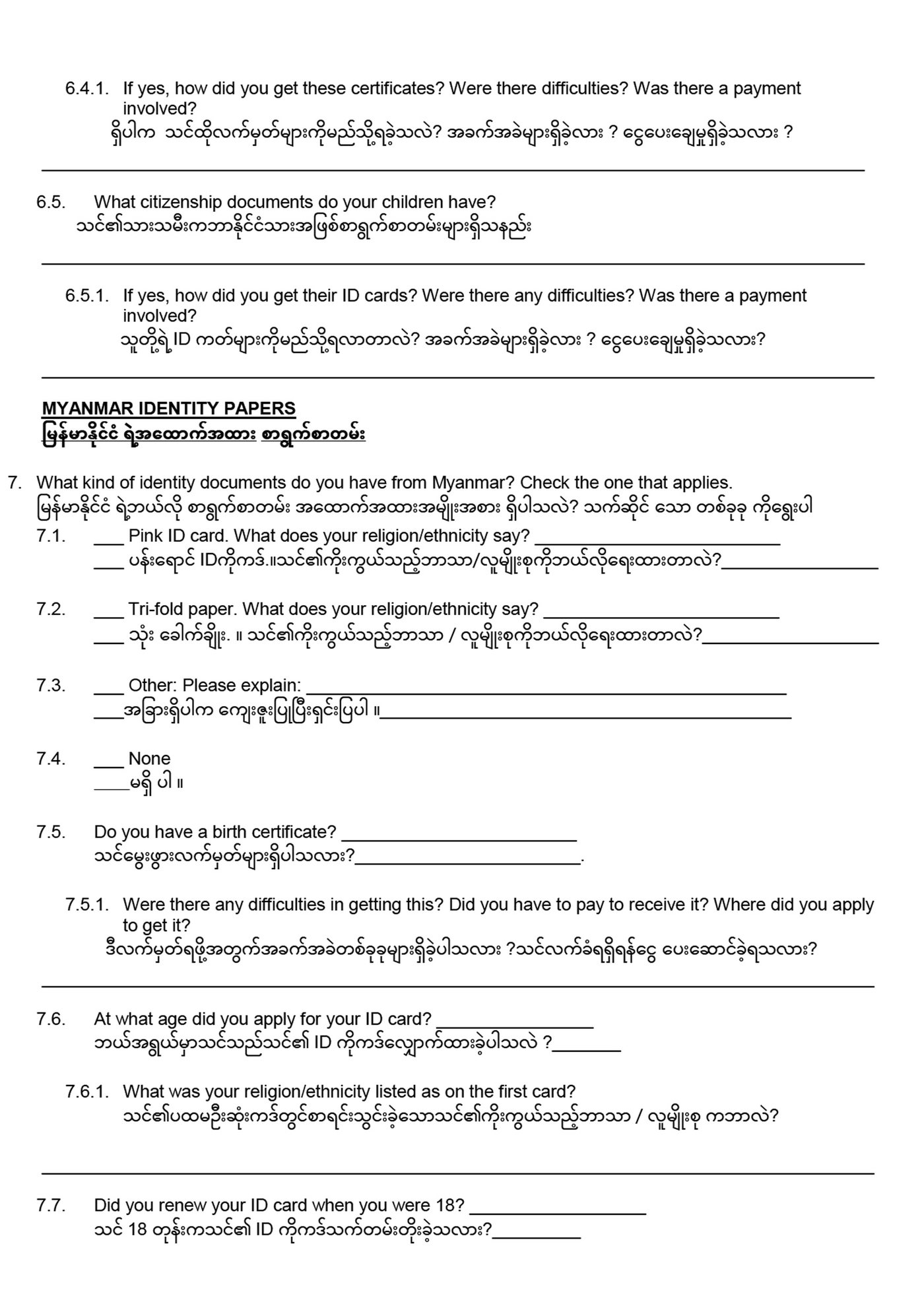
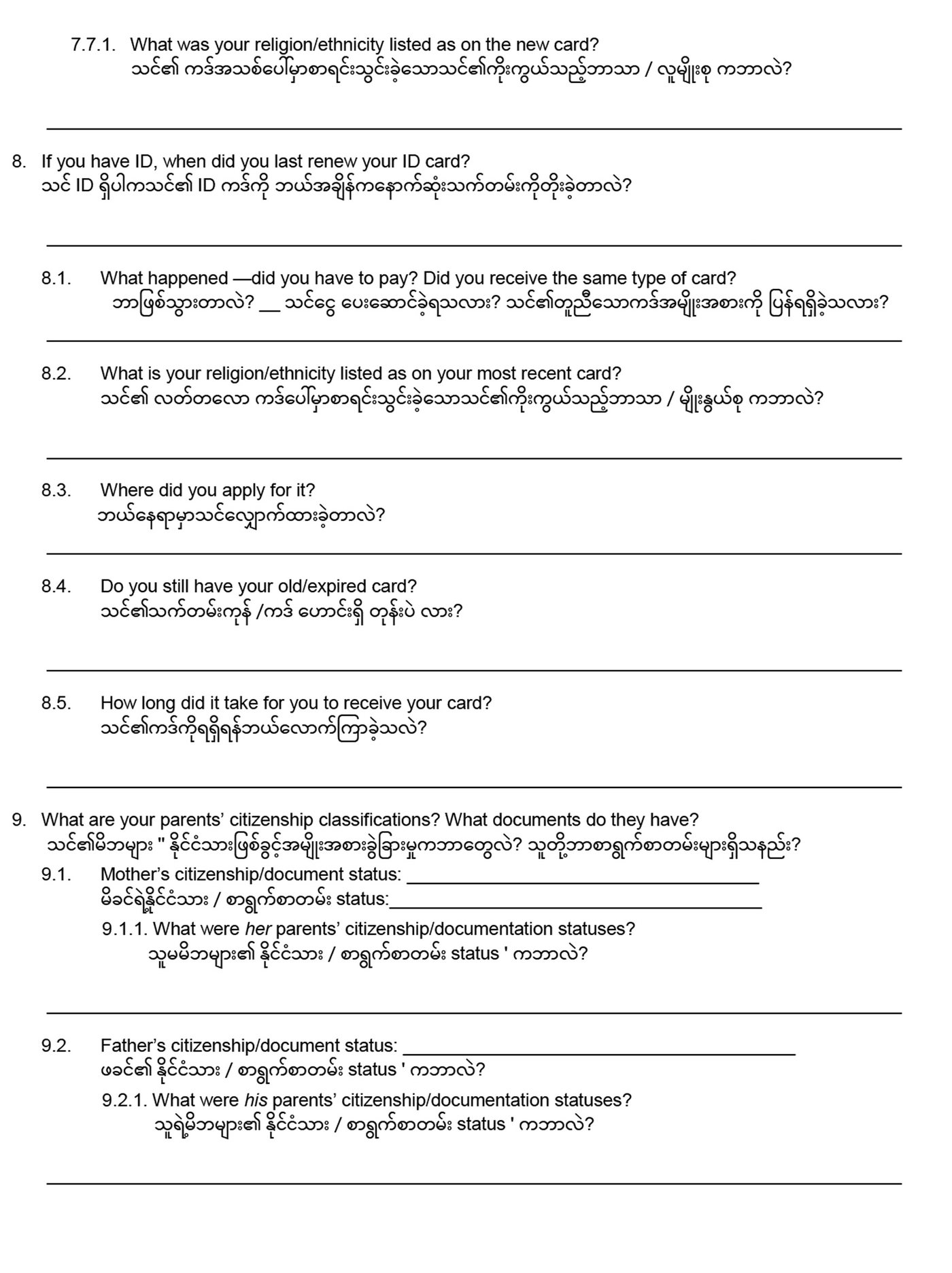
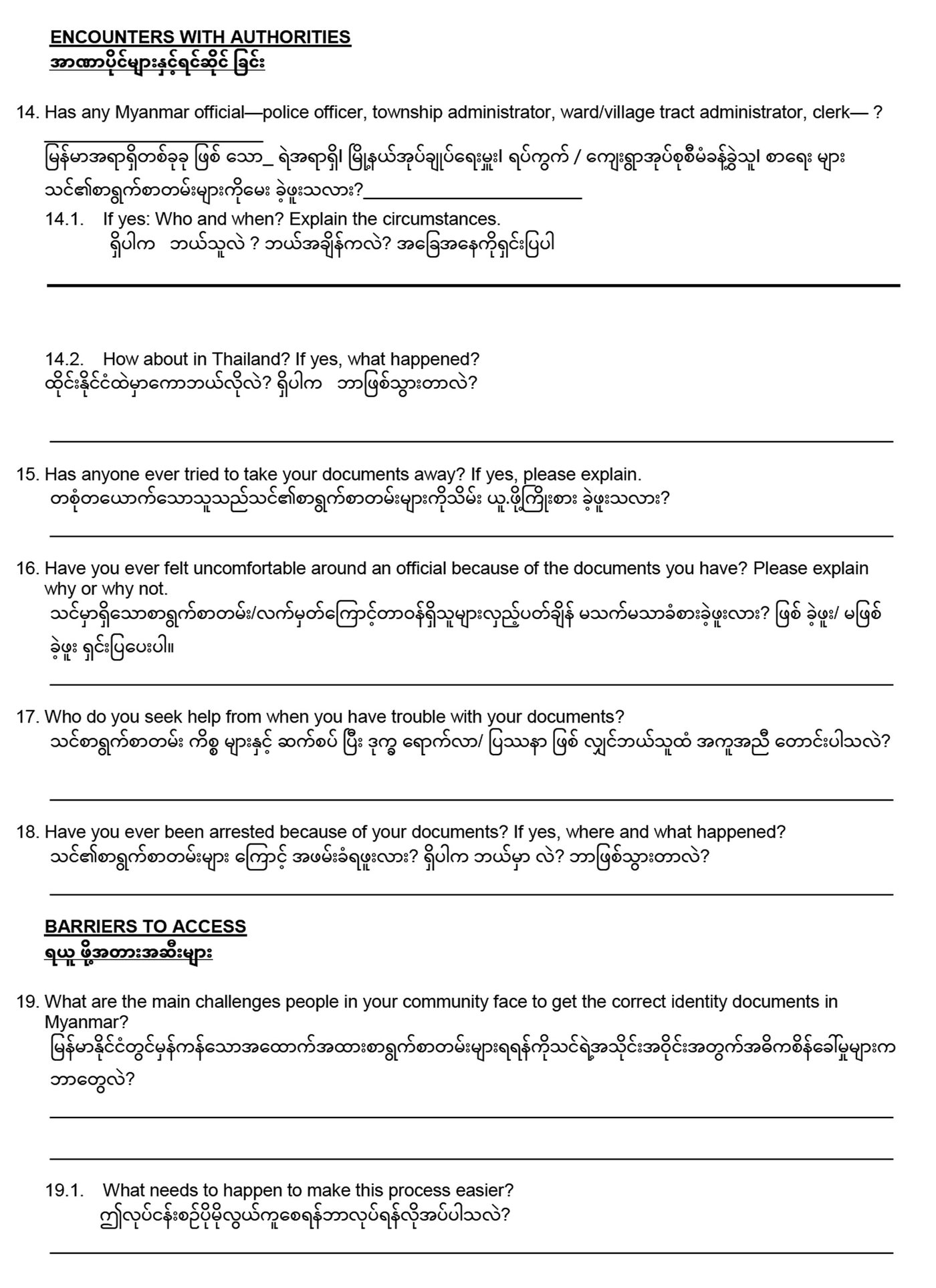
The researcher returned with an official questionnaire (see Appendix) to formalize the information that had originally been shared. In addition to documenting the experiences of these community members, BHRN also interviewed human rights lawyers, aid workers, and relevant international non-governmental organization representatives in Thailand on the issues facing Muslims on the border.
The results of the survey in Mae Sot serve as the foundation for this case study on the ongoing challenges surrounding citizenship and documentation among Burmese Muslims. BHRN believes that from this information, broader conclusions can be drawn about the citizenship struggles that continue to face Burmese Muslims at large.
In total, 36 people completed the questionnaire – participation in which was voluntary. It was delivered in Burmese language, and covered issues ranging from personal and family background and citizenship, to encounters with immigration authorities, to barriers in obtaining identity documentation.
Of note is that two-thirds of the community members BHRN surveyed in Mae Sot were women. Their average age was 38, and nearly all were mothers – with an average of more than 4 children. Because they became the most prominent voice in this case study, these women effectively became spokespeople for their communities on the issues of documentation, citizenship, and migration.
Around one-third of the individuals BHRN interviewed were illiterate, unable to read or write in any language. This research therefore would not have been possible without the assistance of a team of five interpreters, translators, and assistants, who sat patiently with these community members to ensure that their answers were recorded and that they could participate in the process. It is noteworthy that these individuals were ethnic Chin, Kachin, Karen, Rohingya, and Shan community and youth workers on the Thai- Burma border. It was because of their commitment to amplifying the voices from within the Burmese Muslim community – during a time of great tension – that this documentation project was possible.
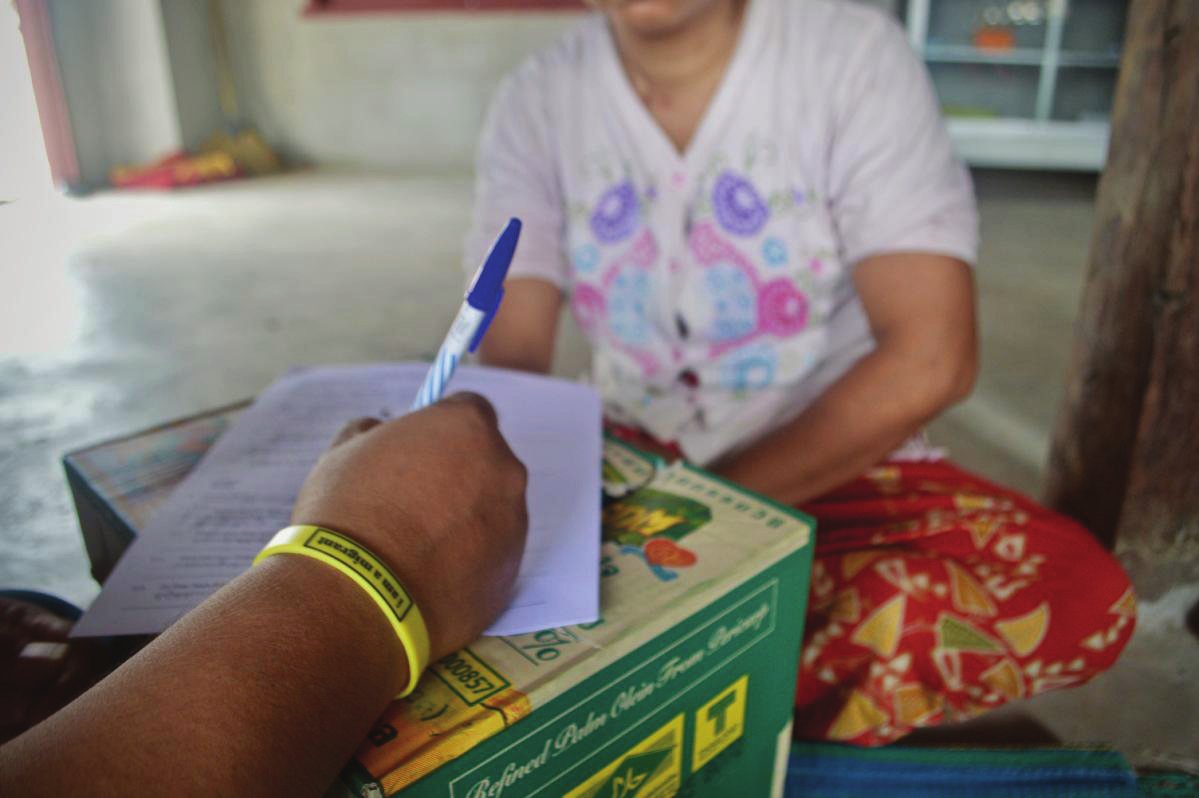
BHRN also visited a One Stop Service (OSS) Center in Chiang Mai, northern Thailand, a joint migrant documentation operation by Thai and Burmese authorities. Here, researchers spoke to a number of migrant workers representing a range of ethnic nationalities about their citizenship in Burma and their legal status in Thailand. Their answers also informed the conclusions and recommendations of this report.
It was also found during this study that Hindu and Buddhist members of the Burma- born Nepali Gurkha community reported similar patterns of discrimination by the immigration authorities. This report, while focused on the experiences of Muslims, does highlight testimony shared with the researcher from the Burma-born Gurkha community in Thailand (see p. 27). It is recommended that a wider, more comprehensive study on citizenship be undertaken that would draw further attention to parallels experienced by Burmese nationals who do not fall under the “135 ethnic groups” officially recognized by the government.
Acknowledgements. This report was written by a researcher who has opted to remain anonymous for security reasons, with the support o f BHRN’s Executive Director Kyaw Win . BHRN is grateful to the community members who shared their stories with us, and to the local, multi-ethnic team research assistants who worked in solidarity with Burmese Muslims to make this documentation project possible.
3Background
Certificate of Identity (CI) in Thailand

On June 23, 2017, Thailand introduced the Decree Concerning the Management of Foreign Workers, a law that authorities said was designed to fight human trafficking in the country.1 The move called for heavy fines to be placed on Thai employers with undocumented workers, and for employers to be prosecuted for seizing workers’ documents in an attempt to prevent them from seeking new jobs. However, soon after the law’s implementation, a widespread crackdown on undocumented and irregular migrants ensued, with tens of thousands fleeing the country.
To this end, Thailand has required between 1 and 2 million migrants – out of some 4 million in the country – to obtain a Certificate of Identity (CI). This is a verification of their nationality issued by immigration officials from their home country, in this case Burma. CI passbooks were intended for migrants who did not have a Burmese ID or household registration document. Those individuals who were in possession of these documents could instead apply for a Burmese passport either in Bangkok or in Burma.
Therefore, the CI has been described by migrant rights advocates as a “halfway -style verification document,” that is not a substitute for a passport.2
The most recent deadline for completing the CI process was March 31, 2018; this was later extended by the Thai authorities to June 30, 2018 when hundreds of thousands of people were found to be as yet unregistered at the end of March. CIs are issued at some 80 One Stop Service Centers (OSS) set up across the country by the Ministry of Labour and jointly operated with Burmese immigration authorities.3
The green CI passbooks bear an endorsement from Burma’s military-run Ministry of Home Affairs, but the scrutiny of applicants is carried out by officials from the Ministry of Labour, Immigration and Population, which falls under the authority of the elected administration headed by State Counsellor Aung San Suu Kyi.
Protocol requires that to obtain a CI, migrant workers must present Burmese immigration officials with a letter of employment from their employer, proof of their residence in Thailand, and their temporary migrant worker identification card from the Thai authorities. After being issued a CI and passing a basic health check, migrants then must apply for a Thai work permit. This work permit would then replace the temporary migrant worker identification card which has been the primary document used by Burmese employees. It will soon be made invalid.
Since March, Burmese Muslims have consistently reported to BHRN that when applying for CIs, they have been asked to prove their citizenship by presenting additional documents than what is required of other groups. Immigration officials have demanded that they present a current Burmese ID card, household registration document from Burma, and letters from both the local police and the section chairperson of their hometown verifying their ties to the community.
Only those who had the funds to travel back to Burma and the necessary connections and resources in the country were able to get the papers they were told they needed to obtain a CI. These documents were then further scrutinized at OSS centers, without guarantee of acceptance. Even when providing the extra documentation asked of them, many Muslim applicants reported to BHRN that the Burmese immigration officials still refused to verify their Burmese citizenship in accordance with the Thai requirement, reinforcing their statelessness.
Those who are unable to complete the migrant registration process will be seen as working illegally in Thailand.4 If caught, they face fines of 5,000-50,000 THB (US$160- 1,600), a particularly crushing penalty when a full-time job at Thai minimum wage, which many undocumented workers do not even receive, allows for a monthly salary of up to 8,000 THB ($260). In addition to being fined, migrants who lack official paperwork could be deported and prohibited from applying for another Thai work permit for two years.
Citizenship in Burma5
Past research published by BHRN in the September 2016 report revealed a long-term systematic refusal to issue national ID cards to Muslims. This current research has again highlighted the problem of statelessness among Burmese Muslims – this time among those who have left for Thailand and where their lack of documentation from their home country makes them increasingly vulnerable.
According to the 1982 Citizenship Law, Burma has three tiers of citizenship: full citizen, associate citizen, and naturalized citizen. To qualify for full citizenship, one must have parents who were citizens. Another way is to prove a lineage in Burma dating before 1824, when British rule began. Rights for associate citizens and naturalized citizens are severely limited – these designations are marked by the design ation of a “tri - fold” paper, rather than a national ID card, which is accompanied by restrictions on housing, employment, and can increase the likelihood of harassment by Burmese authorities. Several Burmese Muslims relayed experiences to BHRN of difficulties obtaining national ID cards, which indicate full citizenship. While some of those interviewed in Thailand reported that they or their parents held tri-fold papers or even national ID cards, most reported having no documentation at all.
Commonly reported problems by those attempting to obtain identity documents include the flat-out denial of a national ID card to Muslims; the requirement that Muslims provide extensive, and often difficult to obtain, documentation of their family lineage; and the refusal by immigration authorities to register a Muslim person as solely Bamar, the majority ethnicity in Burma. Instead they are required to add another nationality, usually one of a Muslim-majority country like Bangladesh or Pakistan, regardless of the fact that the applicant has no family or current connections with that country.
This refusal to issue national ID cards – which allows for the recipient to receive a passport and travel freely – effectively renders those without this form of identification stateless. BHRN is concerned that this constitutes a general move by the government towards reducing the citizenship status of Burmese Muslims throughout the country. This is in direct contravention of the Universal Declaration of Human Rights and Burma’s treaty obligations under the United Nations Convention of the Rights of the Child, making this a blatant violation of international law.
Religion, Ethnicity, and the State in Burma6
The vast majority of Burma’s population (at least 88%) is Buddhist. Christianity forms the second largest religious community (6%), and Islam the third (4%).7 The presence of the Muslim community can be traced back to the ninth century, when traders from Persia and India set up small communities along the western and southern coastline. Burma has no state religion, although since independence the government has channeled significant funds towards the teaching of Theravada Buddhism and has elevated it as the de facto state religion. Burma is divided into seven divisions and seven states, the latter of which are home to many of the country’s ethnic nationality groups.
The government adheres to a disputed narrative put forward by the military regime in the 1990s that the country is home to 135 “national races”.8 BHRN reported in 2016 that the difficulties faced by Muslims in obtaining national ID cards was reflective of an emboldened sense among authorities in Burma that Muslims are not and cannot be indigenous to the country.
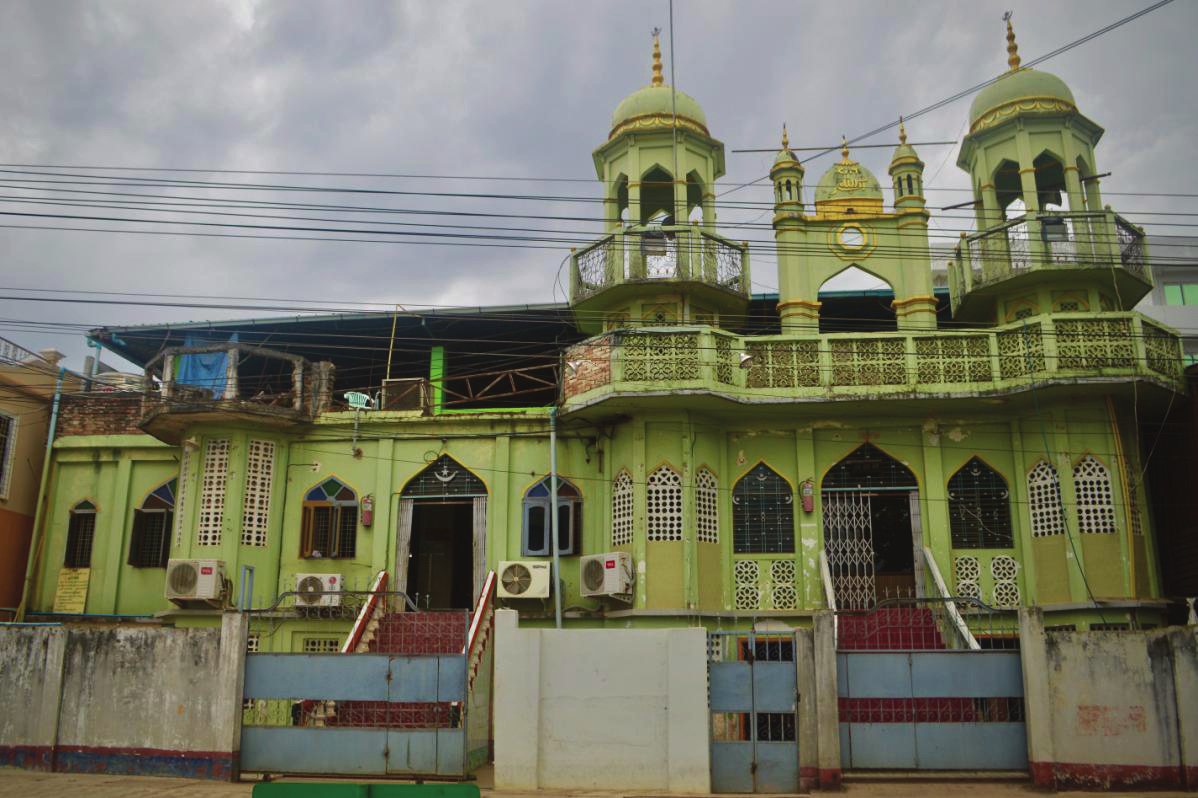
This amplifies the idea, vocalized repeatedly by ultra-nationalist groups like Ma Ba Tha —formed in 2013 to “protect race and religion”— that Muslims are not only foreign to Burma, but a threat to Burma’s Buddhi st culture. There appears therefore to be an attempt underway to weaken their position in society, and in doing so, stem the threat they allegedly pose to Bamar Buddhist supremacy. This has periodically led to outbreaks of mob violence against Muslims throughout the country.
The military – still the most powerful institution in the country – has exploited the support rallied around the dem onization of Burma’s Muslim minority. In 2015, the army- backed political administration led by ex-general Thein Sein passed a set of four highly discriminatory Race and Religion Laws put forward by Ma Ba Tha. These statutes were broadly seen as targeting Muslims and facilitated state regulation of religious conversion, interfaith marriage, and childbirth.
In 2015, the country elected the National League for Democracy (NLD) to head Burma’s government, alongside the military, the latter of which controls key ministries, claims 25% of parliamentary seats, and whose political role is entrenched in the 2008 Constitution. In the years that have followed, discrimination against Muslims has seemingly become more institutionalized. No Muslims were allowed to run for political of fice representing the NLD in Burma’s 2015 elections. Even after its landslide win, the NLD did not appoint any Muslims to leadership roles within its administration, leaving them politically unrepresented. At the time of reporting, the administration had still not amended or repealed the aforementioned controversial Race and Religion Laws. The slogan of the NLD-run Ministry of Labour, Immigration and Population continues to be one inherited from military rule : “The earth will not swallow another race to extinction, but another race will.”
NLD representatives have consistently made statements in line with the military’s rejection of the identity of the Rohingya Muslim minority and of their roots in Burma. The systematic displacement of nearly 700,000 Rohingya Muslims from Rakhine State to Bangladesh in a violent 2017 campaign by the Burma army has been described as a genocide by UN rights officials, scholars, activists, and advocacy organizations, including BHRN.
4Community Profile: Burmese Muslims in Mae Sot
Mae Sot is situated on the Moei River on Thailand’s western border with Burma. It is a hub of both black market and regulated trade, and has long been a transit point and destination for Burmese people fleeing persecution and poverty in their homeland. There is currently no official count of the number of people from Burma living in Mae Sot, let alone a survey indicating the population of Muslim migrants in the area. However, multiple sources told BHRN that the Burmese Muslim community in the city and the surrounding area likely exceeded 10,000. The number of Burmese Muslims dispersed throughout the whole of Thailand also remains unknown.

BHRN formally interviewed 36 members of four Burmese Muslim communities in Mae Sot between April and May 2018. The names of these communities and of the participants in the case study have been omitted to protect the security of those who took part in the research. Respondents ranged in age from 17 to 72, and two-thirds were women. The vast majority of Muslims who BHRN met were from Karen (42%) and Mon (33%) states.
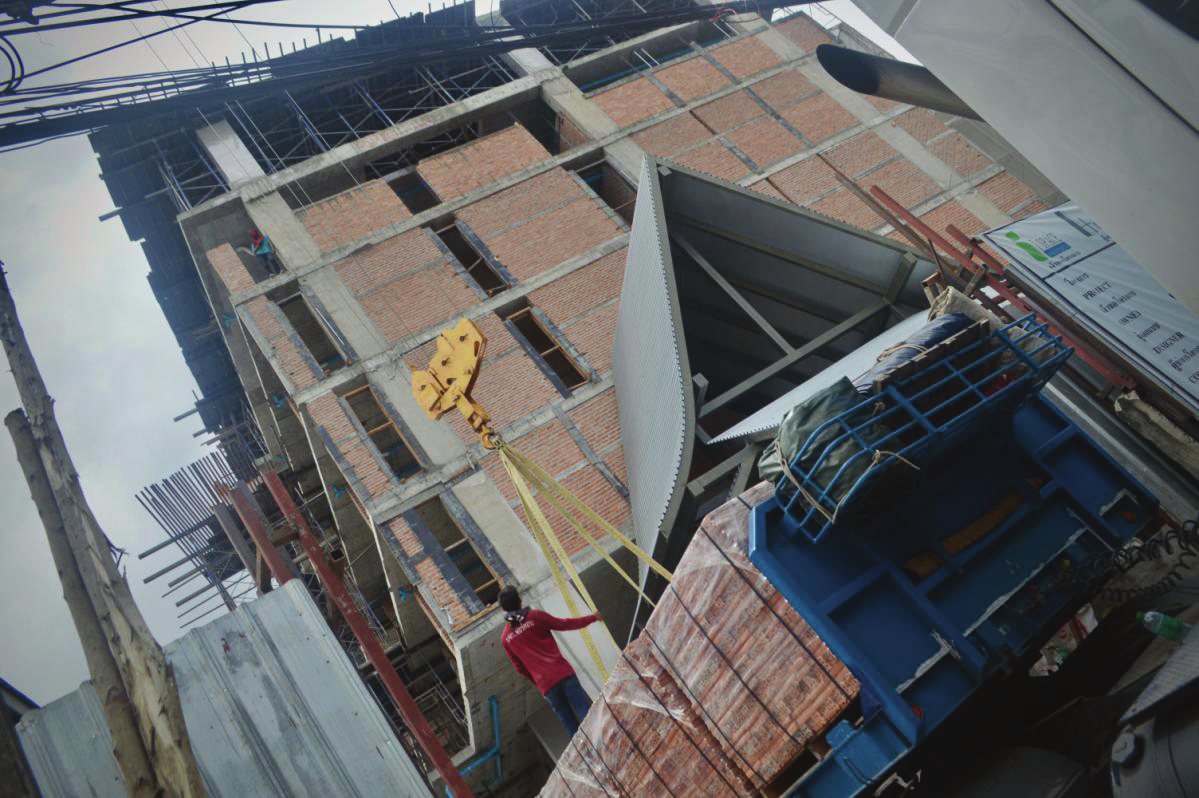
Most Muslims who spoke to BHRN’s researchers support themselves through daily labor.. Due to a widespread lack of legal documentation, many said they are typically paid 200 THB (around $6) per day, well below the standard Thai minimum wage of 325- 330 THB (around $10). Unlike other communities from Burma who are more likely to work in Mae Sot’s f actories and agricultural sector, many Burmese Muslims survive by filling in on construction sites, collecting and selling recyclable rubbish, working unofficially for Thai Muslim businesspeople, or selling produce locally for a small profit. This reliance on irregular work has contributed to the community’s significant insecurity in their host country.
The Muslims BHRN met and interviewed were not new arrivals in Thailand: on average, respondents had been in the country for 17 years, and more than half reported living in Thailand for 20 years or more.
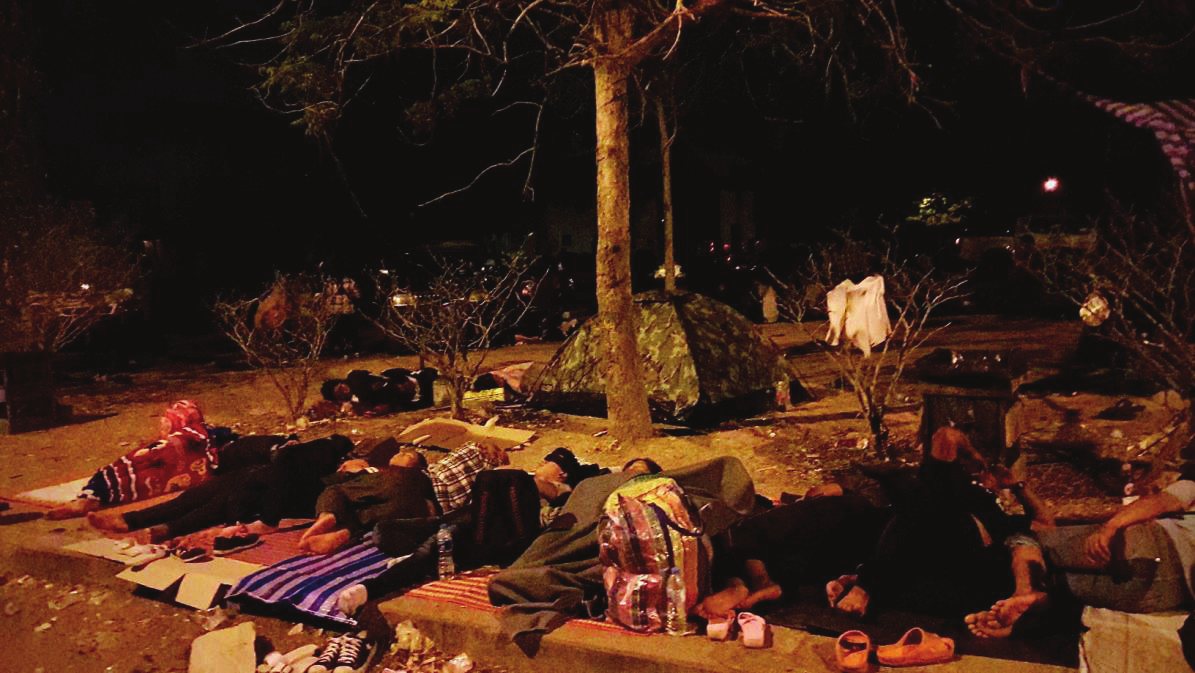
Respondent 36, who came to Mae Sot with his family from Karen State 20 years ago when he was a young child, explained that his parents had made the choice to migrate because there “wasn’t enough rice to eat,” but his father— also present at the BHRN community consultation – cited religious discrimination and abuse for their departure from Burma. Upon their arrival in Thailand, the son told BHRN, “we had no house— we slept under the trees.” Undocumented, t he family initially made their living collecting and selling plastic garbage before eventually securing work tending cattle for livestock brokers.
Three-quarters of participants said they initially left Burma because of the general difficulties of life there, citing the dire economic conditions in the country, which was ruled solely by the military for 50 years. A smaller but not insignificant number (22%) said they migrated specifically because of religious persecution, discrimination, or armed conflict; the Burmese army has also been engaged in a civil war against the country’s ethnic minorities for nearly 70 years.
Survey overview
| # | Sex | Age | Home in Burma | Job in Thailand | Years in Thailand |
|---|---|---|---|---|---|
| 1 | F | 40 | Hlaingbwe, Karen State | - | 26 |
| 2 | F | 67 | Kyaikmayaw, Mon State | - | 26 |
| 3 | F | 32 | Kyaikmayaw, Mon State | - | - |
| 4 | F | 43 | Mawlamyine, Mon State | Daily laborer | 22 |
| 5 | M | 72 | Myawaddy, Karen State | Tailor | 18 |
| 6 | F | 54 | Mawlamyine, Mon State | Homemaker | 20 |
| 7 | F | 34 | Hlaingbwe, Karen State | Daily laborer | 5 |
| 8 | F | 49 | Hlaingbwe, Karen State | Daily laborer | 15 |
| 9 | M | 49 | Waw, Bago Division | Small time trader | 8 |
| 10 | F | 50 | Hpa-an, Karen State | Unemployed | 5 |
| 11 | F | 42 | Mawlamyine, Mon State | Daily laborer | 22 |
| 12 | F | 43 | Hpa-an, Karen State | Caretaker of cattle | 5 |
| 13 | F | 38 | Hpa-an, Karen State | Caretaker of cattle | 20 |
| 14 | F | 28 | Mawlamyine, Mon State | Daily laborer | 22 |
| 15 | F | 33 | Thingangyun, Yangon Division | Collecting & selling plastic | 13 |
| 16 | M | 53 | Tamwe, Yangon Division | Seller | 18 |
| 17 | F | 53 | Kawkareik, Mon State | - | 25 |
| 18 | F | 50 | Tamwe, Yangon Division | - | 15 |
| 19 | M | 36 | S. Okklapa, Yangon Division | Daily laborer | 2 |
| 20 | F | 31 | Thingangyun, Yangon Division | Seller | 10 |
| 21 | M | 40 | Mawlamyine, Mon State | Daily laborer | 30 |
| 22 | M | 47 | Belu Island, Mon State | Seller | 15 |
| 23 | F | 56 | Dala, Yangon Division | Domestic worker | 20 |
| 24 | F | 22 | Hlaingbwe, Karen State | Daily laborer | 5 |
| 25 | F | 24 | Hpa-an, Karen State | Daily laborer | 21 |
| 26 | F | 21 | Karen State | Daily laborer | 19 |
| 27 | M | 17 | Karen State | Daily laborer | 7 |
| 28 | F | 24 | Hpa-an, Karen State | Unemployed | 9 |
| 29 | F | 45 | Hpa-an, Karen State | Childcare | 26 |
| 30 | M | 64 | Hlaingbwe, Karen State | Daily laborer | 23 |
| 31 | F | 32 | Mawlamyine, Mon State | Volunteer | 29 |
| 32 | M | 37 | Mawlamyine, Mon State | Unemployed | 30 |
| 33 | M | 33 | Buthidaung, Rakhine State Caretaker of sheep | 20 | |
| 34 | F | 22 | Mawlamyine, Mon State | Homemaker | 22 |
| 35 | M | 23 | Sittwe, Rakhine State | Translator | 3 |
| 36 | M | 23 | Hpa-an, Karen State 21 | Caretaker of cattle | 20 |
5Citizenship Among Burmese Muslim Migrants
BHRN learned that nearly 80% of Burmese Muslims interviewed in Mae Sot (28 out of 36 people) had no citizenship documents. All of the research participants and their parents had been born in Burma; none had any living memory of an ancestor being born outside of the country.
Of those participants who completed BHRN’s survey, only Respondent 10 was in possession of a national ID card denoting full citizenship. Now 50 years old, she explained that that she had received it only at age 20, but to do so, she had to list her ethnicity as “Bengali”— a loaded term in present day Burma.9
While seven people told BHRN that they had been issued tri-fold papers – denoting a lesser degree of recognition within Burma’s tiered citizenship system – five were no longer in possession of these documents or said they had expired. They reported having their papers seized by Burmese authorities, a refusal by immigration officials to extend their validity, or simply described them as “lost.” This places these individuals in a similar situation to those who had never been issued any documents at all.
Citizenship documents
Of the 36 Burmese Muslims BHRN surveyed in Mae Sot.“Myanmar is not safe for us. Being Muslim means experiencing discrimination,” said Respondent 31, a 32-year-old mother of three from Mon State who has never had a Burmese ID card, even though her father had been issued a tri-fold paper. Despite the insecurity she experiences in Thailand, she does not see a future for her or her family in Burma . “[The Burmese authorities] will never give us any documents – there is no chance,” she explained to BHRN.

Nearly three-quarters of the survey respondents said that their concerns about citizenship had become more urgent in recent years, citing a lack of stability, a fear of returning to Burma, and “religious conflict” in the country— a term frequently used to describe the persecution of religious minorities like Muslims. Others said that their worries had been brought to the forefront by the Thai-mandated process of applying for – and being denied – Certificates of Identity (CIs) by Burmese immigration officials who did not accept them as nationals of Burma.
Of those who said that their concerns had not changed, the most common answer was not because the situation regarding their documentation had improved, but because that they have “never had citizenship,” and that the present day struggle was no different than what they had experienced in the past.
The oldest participant in BHRN’s research, a 72-year-old man who had once worked as a tailor in Karen State, was among those who said he had “no hope” that he would receive a national identity card from Burma in his lifetime. After never having Burmese citizenship and spending nearly 20 years as an undocumented migrant in Thailand, he simply said, “I don’t need it anymore.”
If they were granted Burmese ID, the vast majority of participants in BHRN’s survey said they would want to simply be described as “Myanmar Muslim,” without reference to any other ethnicity or heritage, as they see themselves as culturally Burmese and religiously as Muslims. The significance of this kind of document and of this acknowledgement, Respondent 9 told BHRN, “means you were born here, you grew up here, and you drank the water from here. It recognizes you as a citizen from this country.”
National ID is the Most Important Thing for Us
Experience as told by Respondent 35, a 23-year-old Rohingya Muslim man
“I am the oldest kid in my family. In 2008, I got a white card—but this is not the same as citizenship, it’s useless [Editor’s Note: the white card is a temporary document issued to Rohingya, signifying that they have not been verified as citizens]. With it, we cannot travel to any other city. We have to apply for permission. I feel like they gave it to us just to ignore us, not because it gave us any advantages. My mother and father have pink tri-fold papers, which is the same thing my grandparents had.” I want national ID. That's the most important thing for us. We are citizens. We didn’t come from another country. My grandparents were born in Rakhine. Now when I go to make my ID, they call me ‘Bengali.’ Is this fair? I have no hope that I will get any ID from Burma. I will try my best to get some kind of ID in Thailand and stay here. I remember the violence in 2012. My family’s business was destroyed. All the schools closed. I used to go to a school with Rakhine [Buddhist] students and teachers, but after 2012, we weren’t allowed to study together. I had to go to a new school for Muslims, with a Muslim teacher. I was one of two people in my class to graduate and pass the matriculation exam, but no Rohingya could go to university. I applied to universities in Sittwe and Yangon, but I couldn’t go because the government didn’t give me permission to travel.
I decided Thailand would be safe for me and for my future, and I wanted to continue to study. In Burma, everywhere we go, they call us kalar, and treat us as slaves. [EDITOR’S NOTE: The slur ‘kalar’ is frequently used in Burma to describe someone perceived as being of South Asian descent.] I could not tolerate that. So that’s why I made the decision to leave [three years ago]. My brother wants to come and join me here, but I told him not to. ‘If they catch you on the way, you will get killed,’ I said. I’ve tried to get the CI in Mae Sot. I went with a Thai Muslim boss to the immigration office in December 2017. The officials said, ‘show us your ID [from Burma].’ I don’t have one—I told them I was waiting for it to be issued. I showed them the other [required] documents—the letter from an employer, the proof of residence in Thailand. He asked me for my family’s household registration. I showed him a photo of this document, sent to me by my father. As soon as they saw I was from Rakhine, they said, ‘this is not going to work.’ They told me to get a letter from the police saying that I was a good boy, a letter from the immigration office, and a national ID. So I knew I couldn’t get it, because I couldn’t go back home. It’s not safe for me.” Finally, I got a temporary Thai migrant card. I can keep it until June 30. After that, I don’t know what I will do.”
6Citizenship Among Earlier Generations
“We are stateless, because our parents did not have documents, so it has created difficulties when our children try to get them. We are being discriminated against because we are a different religion.”
Respondent 13, a Burmese Muslim mother of three from Karen State
Few of the respondents had knowledge of their grandparents’ citizenship status, but 23 of the people interviewed said that at least one of their parents had identity documentation10 in Burma. However, more than three-quarters of these people did not inherit their parents’ status and were left stateless, despite being entitled to citizenship.
Nine individuals told BHRN that their parents had lacked any form of citizenship in Burma, meaning that many of those who are currently undocumented are experiencing at least the second generation of statelessness in their families. The children of these individuals – through no fault of their own – will be the third generation to inherit this legacy unless measures are taken by the governments of either Burma or Thailand to acknowledge them.
Parents’ citizenship
Only three participants reported possessing the same up-to-date documentation as their parents had once had – two individuals with tri-fold papers, and one woman with a Burmese national ID card.
BBHRN’s findings suggest a gradual degradation in citizenship rights for Muslims in Burma over the last generation
These trends – if representative of the struggles facing community at large – suggest a gradual degradation in citizenship rights for Muslims in Burma over the last generation. This is also is a violation even of existing controversial statutes like the 1982 Citizenship Law, and is symptomatic of the perception of Muslims as foreign rather than as belonging to Burma.
7Documentation and Vulnerability Among Muslim Migrant Children
“If I don’t have ID, my children won’t have it either. That’s why it’s important—for our future generations.”
Respondent 32, an undocumented 37-year-old father of three
Because many Burmese Muslims face difficulty in obtaining identity documents, it is not uncommon for members of the same family to have different citizenship statuses, particularly within the migrant community.
All but four of the participants in BHRN’s survey were parents— each family had an average of four to five children. Two-thirds of participants told BHRN they were able to obtain birth certificates for all of their children born in Thailand without great difficulty. Yet more than one-third of participants have at least one child whose birth was not registered with the authorities either in Burma or in Thailand. These children are particularly vulnerable to statelessness and exploitation, as there is effectively no record of their existence.
Birth certificates
Citing poor political and economic conditions and their own lack of documentation, virtually no parents felt secure returning with their families to Burma.
While a birth certificate does not itself guarantee citizenship in either Burma or Thailand, it is seen as the first step in later procuring any identity documents to which a child may be entitled, particularly if laws change. However, the majority of parents interviewed said that their children – ranging in age from infants to adults – had no ID in either country. This leaves them – like their parents – vulnerable in Thailand to detainment and deportation to Burma, despite not being officially recognized by the Burmese authorities as a national. It also limits their ability to access public services in either country.
Only two participants said they had been able to procure Burmese national ID cards for their children —one was Respondent 10, the only woman in BHRN’s case study who had been able to land the same documentation for herself. She described getting an ID card for her 26-year- old daughter as “very difficult,” and that the officials at the immigration office had “asked a lot of questions” before finally issuing the identity document.
Children’s citizenship documents
“We need to see real democratic practices first,” said Respondent 32. “In Burma, there is no democracy for us.”
He, like many others, was instead focused on seeking out ways for his children to stay in Thailand legally, despite the significant insecurity present in the current conditions.

There is no document specifically issued to parents of migrant students to prevent them from being separated from their children in the event of arrest or deportation.
The children of Burmese nationals in Thailand are entitled to student ID cards from the Thai or migrant schools that they attend. These cards are issued in coordination with the Ministry of the Interior, and have a 13-digit code officially recognized by law enforcement and immigration authorities. When presented to the authorities during document checks or raids, local aid workers said these cards can stop the child from being detained or deported. However, these documents are only issued once every one to two years, and children who miss the window for receiving them, or who are not enrolled in school, are left vulnerable.
There is currently no such document that can be issued to parents of students to prevent them from being separated from their children in case of arrest or deportation over their lack of legal status in Thailand.
8Discrimination in Obtaining a Certificate of Identity (CI)
The Certificate of Identity (CI) is a passbook required by the Thai government in order to verify the nationality of foreign migrant workers in Thailand. Obtaining a CI is now necessary in order to be issued a new migrant work permit. These documents are also needed in order for migrants to move freely without fear of arrest, to rent a house, and to seek regular employment.
In addition to carrying out a survey on documentation in Mae Sot, BHRN spoke to Burmese Muslims about their experience applying for the CI in the Thai provinces of Chiang Mai, Phuket, and Songkhla. Migrants from all four locations similarly described being placed under extra scrutiny by Burmese immigration officers and being asked to prove their citizenship by presenting documents that were not required of other groups. These commonly included:
- A current Burmese national ID card
- Burmese ID cards belonging to the individual’s parents
- Household registration document from Burma
- Recommendation letter from local police in Burma
- Recommendation letter from village headperson in Burma Burmese Muslims described having to travel unofficially back to Burma to get these extra documents from local authorities – a trip made at great expense, and therefore frequently limited to only one member of each family. Even if the individual was successful and granted a CI, this still left others without legal status in Thailand.
Of the 36 people who participated in BHRN’s Mae Sot survey, only six were able to obtain a CI – twice that number applied and were rejected.
Certificates of Identity (CIs)
Those who were granted CIs said that they had to make multiple trips to the One Stop Service Center, pay extra “fees,” provide additional documentation from Burma, and be accompanied by a Thai employer. Many still described being treated in a discriminatory manner by the Burmese officials they encountered.
Burmese Muslim Granted CI
“When I applied for the CI, the Myanmar immigration officer said, ‘we are not giving CIs to Muslims.’ I went to the [OSS] center twice and was rejected in this way. Finally, I got it on my third visit. I had to travel back to Mon State to get the documents they asked for. I had to bring my household registration document, my father’s tri -fold paper, and a letter showing police clearance.”
Respondent 31
Those who were denied a CI and who were told their nationality could not be verified described the Burmese immigration officers as “aggressive and rude” (Respondents 14 and 19). When asked why they felt they had been turned down, participants were split between attributing it to the fact they were Muslim and their inability to obtain extra documentation demanded by the authorities implementing the process.
Burmese Muslim Rejected for CI
“I was told by immigration officials to prepare and provide 12 documents, including my family’s household registration, and my parents’ and grandparents’ IDs. So I went back to Hpa-an [in Karen State] and got the documents that I could. I spent around 5,000 THB ($160) getting documents. I returned to Thailand and took them in to the CI office, but they said, ‘you cannot get a CI, because you are Muslim.’ They just made it harder and harder, and they asked for more and more. It’s like there are no rules. I tried my best to ge t what they wanted, but I couldn’t do it. Finally, I had to stop pursuing the CI.”
Respondent 36
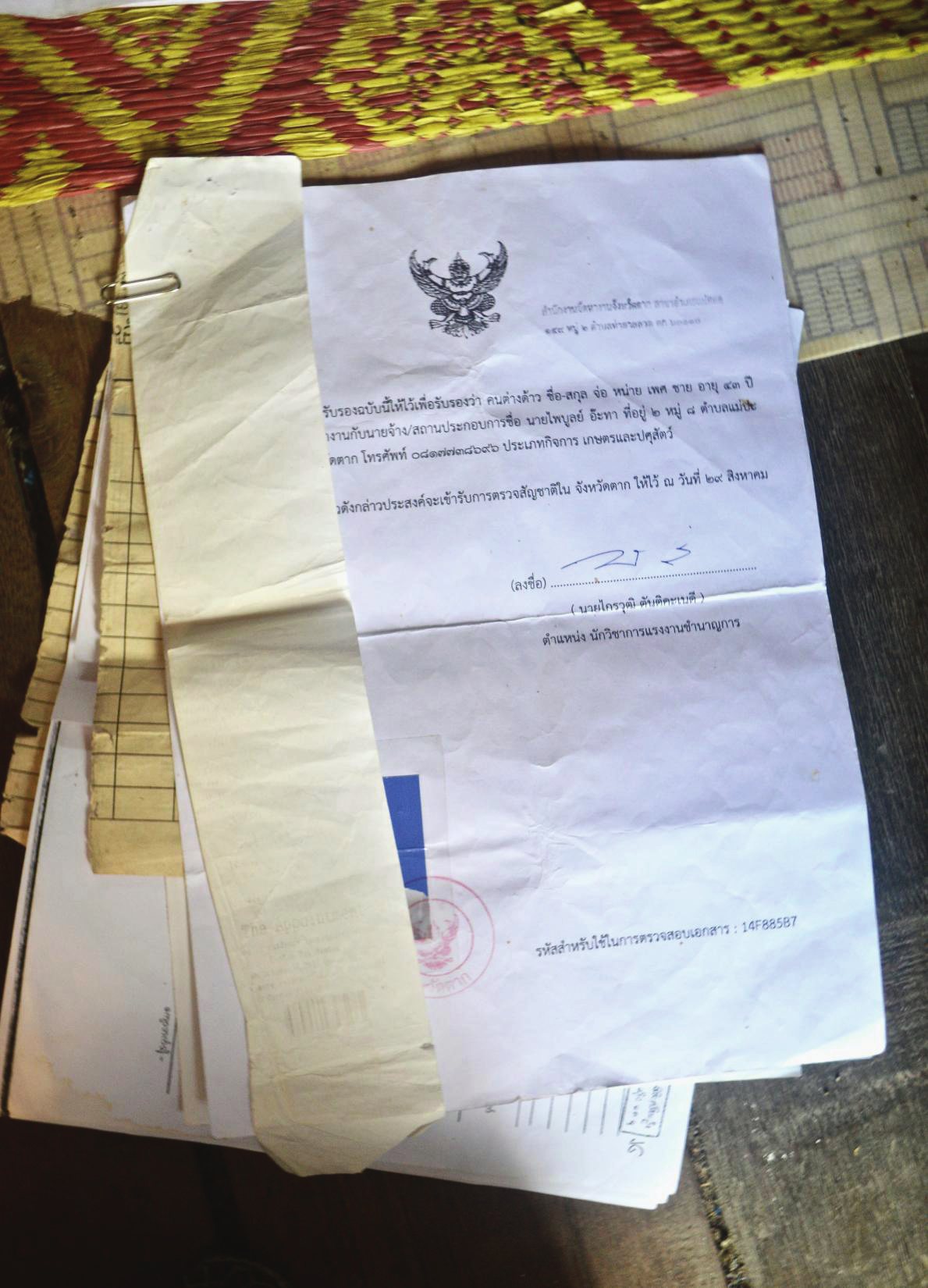
Those who chose not to apply for the CI said that they opted out because were elderly, or because they lacked identity documents and funds required of Muslims by the Burmese authorities.
Burmese Muslim Who Did Not Apply for CI
“It costs a lot of money and they ask too many questions. You have to have different documents – like recommendation letters – and you need your boss to go with you. So I couldn’t apply.”
Respondent 10
One Burmese immigration officer reportedly told aid workers, “If I give a CI to a Muslim, who will help me?”
A Thai lawyer assisting Burmese Muslims in applying for CIs in Mae Sot described witnessing the double standard to which they were held. This individual told BHRN that it had become impossible to know “what happens on the Myanmar side” of the decision-making process surrounding citizenship verification. Another Thai aid worker described the initiative as “ineffective,” and criticized what she said am ounted to “no standardization” in the issuing of CIs.
This individual told BHRN that when they confronted Myanmar immigration authorities about reports of discrimination, the officers responded that this was “beyond their p ower.” Suggesting that their scrutiny was a matter of policy, one officer reportedly told the aid workers, “If I give a CI to a Muslim, who will help me?”
An April 2018 news report11 on the issue revealed that an anonymous official from the Ministry of Labou r, Immigration and Population “did not deny the extra scrutiny being applied to Muslims and other groups,” in seeking citizenship verification, but directed the reporter to speak with the military-run Ministry of Home Affairs. These officials did not provide comment.
Further investigation is required to determine the extent to which orders from the issuing ministries have been formalized regarding the double standard to which the Burmese Muslim community is being held in proving their nationality.
Live Like Slaves or Become Stateless
Experience as told by a 31-year-old Burma-born Gurkha man living in Thailand, on the parallels experienced by his community—which has Nepali ancestry—and Burmese Muslims
“There is a huge gap in between the name and the practice of giving out the CI. If you are not from one of the ‘135 ethnic groups’ recognized by the government, you have to show extra documents to get a CI—like household registration, a valid ID, a letter from your section chairperson and the police. As soon as they see someone who looks like they are not [from one of these groups], they put you at the end of the line at the immigration office. Maybe they will see you at the end of the day, maybe not. As soon as you come to Thailand as a migrant worker, Burmese immigration accuses Gurkhas and Muslims of not being citizens. Here, I feel like I became a kalar. The immigration authorities speak rudely to us—they make people scared of dealing with them. They shout at us like animals. The only option is for people to use a broker, and pay more to get the documentation they need.
It feels like we are caught in a net and can’t go anywhere. People who don’t have money—they give up. People who don’t have ID—they give up. People can go home and live like slaves, or they can stay in Thailand and become stateless.”
9Arrests in Thailand and Deportation to Burma
“I have been arrested many times. I was deported back to Burma, but I always came back [to Thailand]. I even had to swim across the river in heavy rains.”
Respondent 31
When one Thai immigration policy concludes and a new one is implemented, it is standard practice for a crackdown to be carried out by law enforcement against those migrants who remain undocumented under the new law. This is typically seen as a demonstration by the authorities that updated rules are being enforced.
“These arrests happen almost every year. In these raids, Muslim communities are often the firs t target,” a Thai aid worker who works with Burmese migrants in Mae Sot told BHRN. “There is a widespread belief among people in Mae Sot that the group that is the problem are the Muslims. I assume that in their eyes they see Muslim Burmese as more of a threat than other groups.”
Following the initial March 31 deadline for migrant registration, Burmese Muslims from three communities in Mae Sot reported being subjected to an April 4 crackdown carried out jointly by Thai immigration, police, and the military. This led to their deportation back to Myawaddy, which lies across the Burmese border on the opposite bank of the Moei River to Mae Sot.
Children under 10 years old left home alone after their parents were arrested told aid workers: “We are afraid that our mom won’t come back this evening —what will we eat?”
While few individuals formally admitted during BHRN’s survey to ever having been arrested, researchers interviewed four women who were among those arrested and deported during the April raid on their community. Among them were three undocumented Burmese Muslims and one undocumented Bamar Buddhist woman living within the Muslim community. All were from Karen and Mon states and said that they had been residing in Thailand for more than 20 years.
“Our children were born here. We have no documents for the Thai side or the Burmese side. We have no m oney,” said one Muslim mother of four from Mawlamyine.
BHRN spoke to Thai aid workers who had reached out to the 70-plus people rounded up in trucks at 6 a.m. and detained for hours at the local Immigration Detention Center (IDC). They explained that women typically take their nursing infants with them to the IDC, but have to leave older children – who have school identification cards – at home.
“We found five women who had to leave their children at home alone. They told the kids, ‘stay at home. I’ll be back soon.’ The kids know what to do, but they are vulnerable,” the aid worker explained.
Upon performing a welfare check in the community, they said that they found four children under 10 years old who had been left alone after their parents were arrested. “The children said, ‘we are afraid that our mom won’t come back this evening— what will we eat?’”
The separation of parents from their children during these raids highlights the challenges facing migrant families with mixed forms of identity documentation: if students show their school ID, at times the arresting officials will refrain from detaining the parents, however there is currently no official policy in place to prevent parent-child separations from happening.
Of further concern is how Thailand determines that migrants can be deported to Burma if they are not in possession of documents giving them citizenship status in the country or declaring their nationality as Burmese.
The women who were deported across the border to Burma on April 4 said that they were able to return to Thailand unofficially by the evening. Yet they were issued a verbal warning by the Burmese authorities: “They told us to acquire ‘legal documents,’ or this might be the last time that the [Thai] immigration authorities arrest us and send us back to Burma without a court case,” one woman said.
10Conclusion
Despite attempts to ignore, remove, and even criminalize them, Burmese Muslims continue to exist, both in Thailand and in Burma. BHRN carried out this documentation project with the aim of making this community more visible so that they might receive greater support and solidarity. A continued failure to acknowledge the presence of Burmese Muslim migrants in their host country and to honor their origins in Burma will only prolong their vulnerability and violate their and their children’s most basic rights.
BHRN recognizes that state-led persecution exists against all ethnic and religious minorities in Burma, and that these abuses manifest in various forms. This includes targeted institutional discrimination against Muslims, as well as a bloody and ongoing civil war that has spanned seven decades.
The military has long employed a divide-and-rule policy that has exploited existing tensions and imposed violence and poverty on its own citizens, causing hundreds of thousands to flee the country. The injustices that have forced so many across Burma’s borders are yet to be redressed, thereby preventing these families from returning home and ensuring that the flow of migrants and refugees persists.
Burma’s political framework is designed so that any group in power must be complicit with the army responsible for this legacy. Since the NLD came to power in 2016, it has demonstrated – by failing to amend or repeal discriminatory laws and by continuing to deny citizenship to communities deemed as unwanted – that it is able and willing to take on this supporting role.
This is why BHRN is calling on concerned political actors in Burma and abroad to demand that mechanisms which ensure the militar y’s continued dominance in Burmese society be dismantled. It is our belief that only then will Burma have the opportunity to rebuild itself into a nation in which all of its peoples can live in dignity, including those who have been pushed to and beyond the country’s margins.
11Recommendations
1Recommendations to the Burmese government
- Immediately begin drafting a new, democratic, federal Constitution that removes the military from any political role in the country. Ensure that it is inclusive of Burma’s ethnic and religious diversity and clearly outlines mechanisms by which the rights of these minorities will be protected and promoted.
- The recognition of ethnicity must not be conflated with citizenship rights. Therefore, BHRN recommends the removal of ethnicity and religion from identity cards, as this currently serves as a primary tool for discrimination.
- Create a multi-ethnic, multi-religious commission of grassroots stakeholders to draft a citizenship law in line with human rights norms.
- Repeal the Race and Religion Laws.
- The immigration department must stop forcing Muslims to claim foreign nationalities as their ethnicity in an attempt to categorize them as “mixed blood”— a classification which is linked to further discrimination throughout their lives.
2Recommendations to the Thai government
- Immediately suspend the CI process and provide interim work permits to migrants already in the country.
- Partner withexisting migrant rights groups to determine a new system of documentation that would allow all migrant workers to live and work with dignity in Thailand.
- Draft a humane policy to address the legal status of dependents of migrant workers, including the elderly, children, and individuals with disabilities, and refrain from detaining and deporting their caregivers.
- Allow and facilitate greater access for aid organizations to provide support to undocumented migrant communities such as Burmese Muslims.
3Recommendations to international states and actors
- Ensure that no financial support or legitimacy is given to institutions and state bodies whose policies are driving Muslims and other vulnerable ethnic and religious minority communities out of Burma and into neighboring countries.
- Exert political and economic pressure on the Burmese government to draft and enact a federal, democratic Constitution that removes the military from any political role in the country and is inclusive of Burma’ s ethnic and religious diversity.
- Increase funding for community-based organizations in Thailand assisting migrants from Burma in meeting their basic needs, particularly during times of crisis and crackdowns.
12Appendix: the survey questionnaire
The questionnaire BHRN used in Mae Sot. Tap a page to see it full size.


Footnotes
- For more information on the statute, see Human Rights Watch’s July 2017 statement, Thailand: Migrant Worker Law Triggers Regional Exodus https://www.hrw.org/news/2017/07/07/thailand-migrant-worker-law-triggers-regional-exodus ↩
- Nyan Lynn Aung. (Nov. 17, 2016) “Renewed push to legalise migrant workers in Thailand to start later this month.” Myanmar Times https://www.mmtimes.com/national-news/23716-renewed-push-to-legalise-migrant-workers-in-thailand-to-start-later-this-month.html ↩
- http://www.bhrn.org.uk/en/press-release/44-burmese-migrants-report-discrimination-in-citizenship-verification-process.html ↩
- (June 11, 2018) “Migrant workers in Phuket warned of June 30 registration deadline.” The Phuket News https://www.thephuketnews.com/migrant-workers-in-phuket-warned-of-june-30-registration-deadline-67458.php#PKDztR8om7IqbuhV.97 ↩
- printed from BHRN’s Septe Persecution of Muslims in Burma by journalist Francis Wade, BHRN executive director Kyaw Win, and Queen Mary University’s Dr. Thomas http://www.bhrn.org.uk/en/report/20-bhrn-publishes-research-revealing-state-led-persecution-of-burma-s-muslim-minority.html ↩
- printed from BHRN’s Sept Persecution of Muslims in Burma. ↩
- ↩
- Lintner, Bertil. (June 3, 2018) “A question of race in Myanmar.” Asia Times http://www.atimes.com/article/question-race-myanmar/ ↩
- “Bengali” is a term used by the Burmese government, military and much of the general population to incorrectly Burmese Muslims elsewhere to identify as “Bengali” when they apply f Frontier Myanmar from Dec. 2017, Muslims pointed out that the term is “used in a racist way” and many have rejected it on that basis. The designation of “Bengali” on one family member’s ID card has also been Manch, Thomas. (Dec. 29, 2017) “For Muslims across Myanmar, citizenship rights a legal fiction.” Frontier Myanmar. https://frontiermyanmar.net/en/for-muslims-across-myanmar-citizenship-rights-a-legal-fiction ↩
- ↩
- Dunant, Ben. (April 4, 2018) “Myanmar Migrants in Thailand Face Barriers of Race, Religion.” VOA News https://www.voanews.com/a/myanmar-migrants-in-thailand/4331879.html ↩
About BHRN
BHRN is funded by the National Endowment for Democracy (NED), Unitarian Universalist Service Committee (UUSC), and private individuals. BHRN is based in London and operates across Burma working for human rights, the protection of minorities and religious freedom in the region.
Freedom and Human Rights for All from Birth
www.bhrn.org.uk · facebook.com/bhrnuk · @bhrnuk